A closer look
Italo-argentini: at a glance
(Marcello De Cecco - La Repubblica[5])
A Italian-Silver is an Argentine citizen of Italian origin or descendant of Italian emigrants.[6]
Deputy
The Italian-Argentine community, considering both the Italians resident in the country (over half a million those censused by AIRE ), and the Italian oriundi with double...Explore this chapter
The Italian-Argentine community, considering both the Italians resident in the country (over half a million those censored by the AIRE[7]), and Italians with dual passports, according to various estimates, exceeds 664,597 people[5][8][9]. Taking into account Argentines of Italian origin, they represent the largest ethnic group in the South American country with 30 million people[5][8][9], more than 70% of the Argentine population recognizes some descent from Italian ancestors. The Italian-Argentine community would also be, in absolute terms, the second in the world after the Italian-Brazilian one and followed by Italian Americans[10].
The component of Italian origin, together with the Spanish one, is in fact the main bone of Argentine society. The culture of the country also has many connections with the Italian one, including language, customs and traditions[11].
History
Explore this chapter
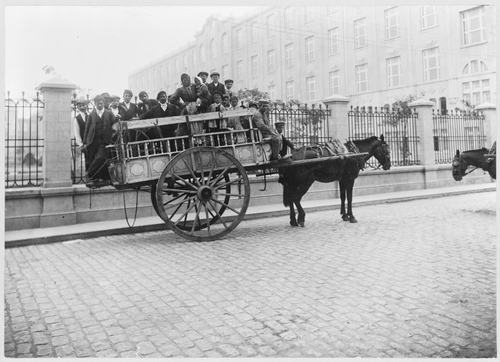
«Article 25: The federal government will encourage European immigration; it will not restrict, limit or burden with any tax the entry into the Argentine territory of foreigners who have to cultivate land, improve industries, introduce and teach sciences and arts."
| Italian Emigrants arrived in Argentina and regional distribution[12] | ||||
| Period | Italy North-Western |
North-eastern Italy and central |
Southern Italy and insular |
Total |
| 1880-1884 | 59,80% | 16,80% | 23,40% | 106.953 |
| 1885-1889 | 45,30% | 24,40% | 30,30% | 259.858 |
| 1890-1894 | 44,20% | 20,70% | 35,10% | 151.249 |
| 1895-1899 | 32,30% | 23,10% | 44,60% | 211.878 |
| 1900-1904 | 29,20% | 19,60% | 51,20% | 232.746 |
| 1905-1909 | 26,90% | 20,10% | 53,00% | 437.526 |
| 1910-1914 | 27,40% | 18,20% | 54,40% | 355.913 |
| 1915-1919 | 32,30% | 23,10% | 44,60% | 26.880 |
| 1920-1924 | 19,70% | 27,40% | 52,90% | 306.928 |
| 1925-1929 | 14,40% | 33,10% | 52,50% | 235.065 |
Small groups of Italians began to arrive in Argentina since the second half of the 18th century[11], however it was between 1870 and 1930 that the great influx of the so-called period of great emigration. According to estimates, around 3 million people left Italy for Argentina between 1876 and 1976, with peaks between 1905 and 1914.[13].
If, on the one hand, Italians riding between the end of the 19th and early 20th centuries left to escape from conditions of widespread poverty, high demographic pressure and strong taxation[11], on the other hand, in that period Argentina was a country with a strong need for immigrants: the commitment to welcome, enshrined in the 1853 constitution, found its reasons in a country that was actually underpopulated (the Argentine population, a country whose territory includes 9 times the territory of Italy, in 1850 was only 1,100,000 units[14]) and eager to populate the large regions conquered in the recent war of the triple alliance and with the so-called conquest of the desert (Patagonia). Furthermore, a law passed by the Argentine government in 1876 offered the possibility of free assignments of land or payable in installments at very low prices, while in 1882 the government decided to grant twenty-five hectares of land free of charge to all families[15].
Initially, most of the departures were from the northern regions (Veneto, Lombardy and Liguria), while later on it greatly increased the percentage of people coming from almost all the noon of Italy.[11].
The major concentration can be seen in Buenos Aires (main entry point in the country) and neighbouring areas, in large majority Genovesi, so much that in a crisis of 1882 the exasperated residents established the flag of Genoa and proclaimed the independent Genovese Republic of Buenos Aires, and only the intervention of the president of the republic managed to reconcile the animi without the use of violence; there were also substantial groups of Italians who[11]. Ushuaia, which is defined the most southern city of the world, was largely built (and today is populated) by Italian workers, between 1948 and '49[16].
| Italian immigrants in Argentina from 1871 to 1985 | ||||
|---|---|---|---|---|
| Period | Italian immigrants | |||
| 1871–1880 | 86.000 | |||
| 1881–1890 | 391.000 | |||
| 1891–1900 | 367.000 | |||
| 1901–1910 | 734.000 | |||
| 1911–1920 | 315.000 | |||
| 1921–1930 | 535.000 | |||
| 1931–1940 | 190.000 | |||
| 1941–1950 | 278.000 | |||
| 1951–1960 | 24.800 | |||
| 1961–1970 | 9.800 | |||
| 1971–1980 | 8.310 | |||
| 1981–1985 | 4.000 | |||
| Arrivals | 2.941.000 | |||
| Substance* | 750.000 | |||
| Salt | 2.191.000 | |||
- The term "participations" means the number of Italians returned to their homeland or moved to other countries.
Influence in Argentine culture
Language · Religion · KitchenExplore this chapter
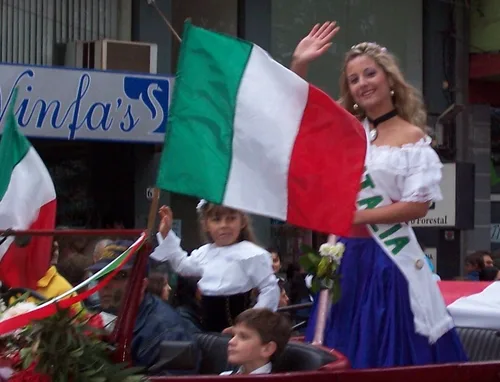
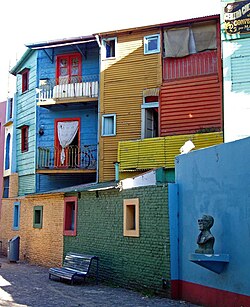
"The Argentineans are Italians who speak Spanish and believe in English."
(Octavio Paz[17])
Language
Contrary to what can make Italians think of the great penetration in Argentina, the Italian language has never had a predominant position in Argentine society. This was mainly because, given the period in which the greatest wave (the last decades of the 19th century) and the social characteristics of Italian migrants (mainly peasants or however low-school people), these people spoke essentially local languages and not standardized Italian. Moreover, given the origin of several regions of Italy, these languages had difficulty in forming a critical mass so that they could be imposed and indeed, proximity to the Spanish language favoured rapid linguistic assimilation.
According to estimates of Ethnologue there would be in Argentina 1.500.000 italophons[18]; among these over 500,000 Italians censored by the AIRE[7], of which 63% participated in the 2008 political elections (the highest percentage ever, with a world average of 44.88%)[19], thus demonstrating a non-negligible interest in Italian issues.
About 40,000 Italian migrants who, starting from the beginning of the '900, moved throughout the country, but mostly to Luján, Buenos Aires and Santa Fe, still speak in domestic environment - where it was maintained - the ancient Albanian language, typical of the areas of South Italy, from which they came. Since 1955 in the Palermo area of the Argentine capital there is the "Italo-Albanese Frascineto" Association[20][21].
There are also several Italian cultural associations in the country (among these 126 offices of Dante Alighieri Society[22]) and a large number of periodicals in Italian. Among these newspapers stand out La Patria degli italiani, Il Mattino di Italia, The Echo of Italy, Italian World and the Corriere degli Italiani. The Italian is the only Argentine daily in Italian.
As for influences, several scholars agree to find a similarity between the intonation of Spanish reoplatense and Italian brought by immigrants[23].
Much more evident however the influences in the lunfardo (from "lombardo"), a jargon used in the poor areas of Buenos Aires and Montevideo towards the end of the XIX century, and in the cocoliche, an Italian-Spanish pidgin spoken by Italian immigrants until the middle of the twentieth century.
Religion
Italo-Argentine are Catholic Christians of Latin rite.
A group of Italian-Albanian faithful from Argentina, belonging to the Catholic Church in Albanian and observing the Byzantine rite, meet at Luis Guillón, in the Esteban Echeverría district of Buenos Aires. Italo-Albanians were about 12,000 at the time of the creation of the Ordinariate and were mainly concentrated in Luján. However, most of them have passed to the Latin rite. In Buenos Aires there is the rectory of the Church of San Jorge for the numerous Italian-Albanian faithful of Byzantine tradition.
Kitchen
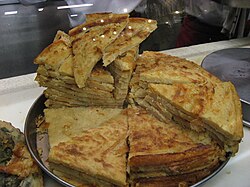
In Argentine cuisine there are different influences of Italian cuisine, with derivations from all regions of the peninsula.
Surely the most striking aspect is the great use in the country's cuisine of pasta dishes; we find therefore heels (fettuccine), ravioles (ravioli), ñoquis (gnocchi), lasañas (lasagna), e doglones (cannelloni), often served with large amounts of I'm not doing it (sauce in Genoese). Also present are the pesto, sauce blanca (bechamel) and other varieties (pomarola - tomato, you can't get away - puttanesca, filed). Also widespread polenta.
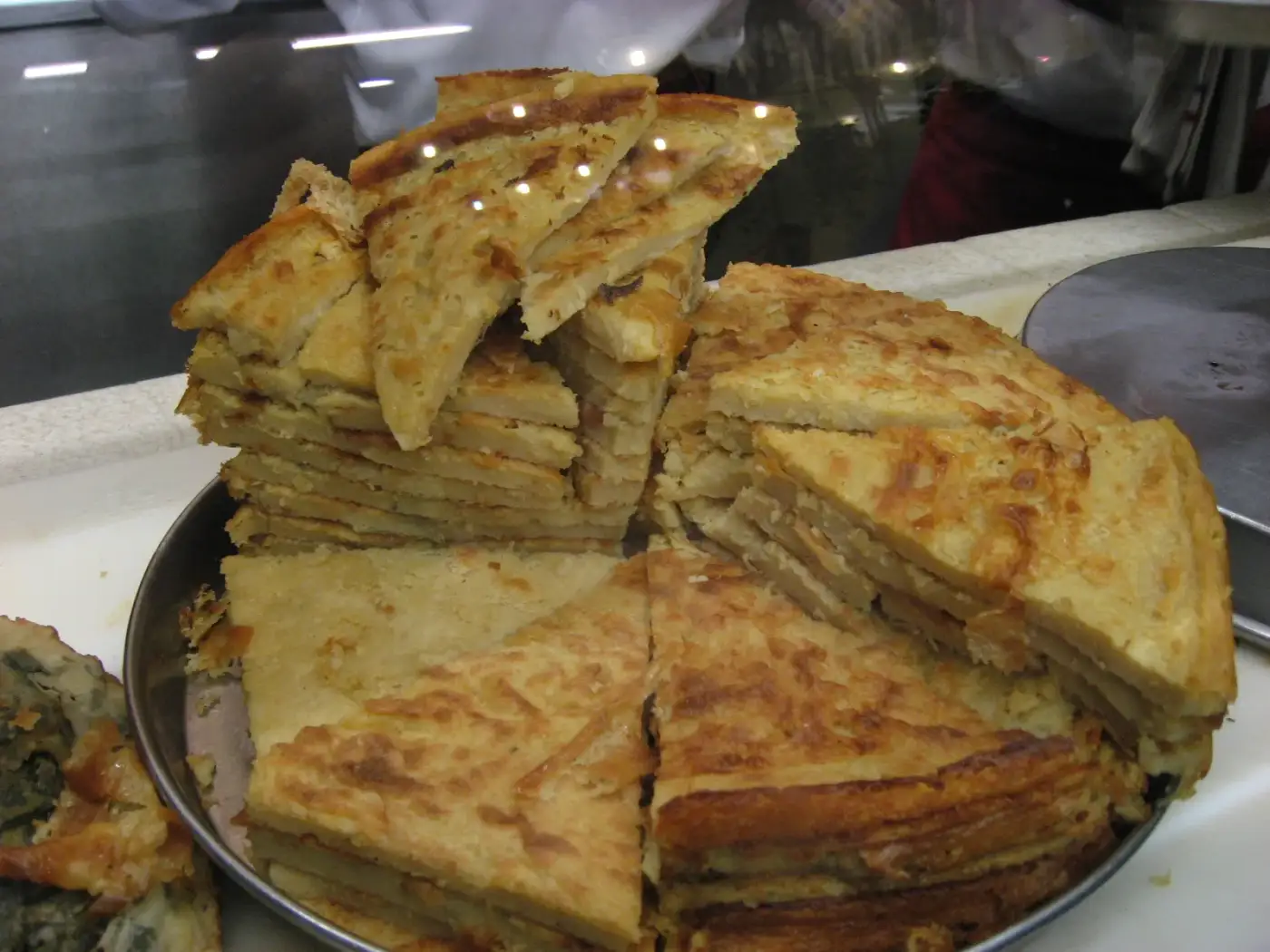
Again, we find the fainting, derived from Ligurian chickpea farinata, and the Escape with quesus, from the Genoese focaccia. Also present is pizza, of Neapolitan origin and topped with tomato and Muza, derived from mozzarella from Campania.
Other similarities are found in the presence of bañacada (bagna càuda), as well as of Milanese (Milanese cutlet).
Among the foods that Italian immigrants have reproduced in Argentina are also some cheeses. Among the best known cases stand out reggianito, one of the very first reproductions of Parmigiano Reggiano, the Sardinian, which unlike Sardinian pecorino is made with cow's milk, the Roman Roman, revisitation of pecorino romano and provolone.
Among the desserts we find pastry fag, derived from the Italian tart, il pandulce, originating from Genoese pandolce and ice cream.
Among the liqueurs Chitronlo (limoncello) and the I'm sorry (grappa).
In mass culture
To the feeling of distance from the emigrants from Italy are dedicated the songs of Ivano Fossati Italiani d'Argentina, contained in the album Discanto , and Argentina by Francesco...Explore this chapter
To the feeling of remoteness of emigrants from Italy are dedicated the songs of Ivano Fossati Italians of Argentina, contained in the album Discanto, and Argentina by Francesco Guccini, present on the album Guccini.
Notes
Explore this chapter
- ^ (ES) Departamento de Recho y Ciencias Políticas de la Universidad Nacional de La Matanza, Historias de inmigrantes italianos en Argentina[interrupted link], up infouniversidades.siu.edu.ar, 14 November 2011."If estima que en la actualidad, el 90% de la población argentina keeps alguna ascendencia europea y que al menos 25 mlones están relacionados con algún inmigrante de Italia".
- ^ (ES) Historia de la colectividad, up baxcolectividades.buenosaires.gob.ar (archived fromoriginal url on 11 September 2013).
- ^ Italy-Argentina: exceeded the million Italian residents. In Bahía Blanca gathered the representatives of the community, up ambbuenosaires.esteri.it, 16 September 2019.
- ^ (ES) Herencia italiana en Argentina, ¿por qué somos como somos?, up nine hundred web.com, 2023.
- ^ to b c Argentina y los europeas Sin Europa. Retrieved 13 November 2008 (archived fromoriginal url on 26 June 2017).
- ^ Italians in Argentina (PDF). Retrieved 2 October 2017 (archived fromoriginal url on 27 January 2012).
- ^ to b Census at 31-12-2007, Source Ministry of Interior - AIRE 664.597.
- ^ to b Unos 20 milligrams de personas que viven en la Argentina holdn algún rank de descendencia italiana - Asteriscos.Tv.
- ^ to b Copy filed (PDF), up migrants.torino.it. Retrieved 19 May 2010 (archived fromoriginal url on 10 February 2012).
- ^ Source - Italian Embassy of Brasilia. Retrieved 13 November 2008 (archived fromoriginal url on 15 July 2015).
- ^ to b c d And Olimpiadas Nacionales de Contenidos Educativos en Internet - Instituto Nacional de Educación Tecnológica, up oni.escuelas.edu.ar. Retrieved 13 November 2008 (archived fromoriginal url on 12 June 2014).
- ^ General Commissariat of Statistics and Central Statistical Office, up oni.escuelas.edu.ar (archived fromoriginal url on 24 September 2015).
- ^ Source: Istat data reprocessing in Gianfausto Rosoli, A century of Italian emigration 1876-1976, Rome, Cser, 1978.
- ^ Del Pozo, José (2002). Historia de América Latina y del Caribe (1825-2001), Santiago de Chile, LOM, page. 20
- ^ Emigrati.it - Italian and Calabrian emigration in Argentina.
- ^ The story is us - Italians at the end of the world (archived fromoriginal url on 15 April 2008).
- ^ Cited in Mercosur notocias[interrupted link].
- ^ Etnologue - Languages of Argentina.
- ^ data of the Ministry of Foreign Affairs diffused by Italiaestera.net.
- ^ Në Argjentinë, traditë shqiptare (In Argentina, Albanian tradition, up kosovotwopointzero.com. Retrieved 26 April 2021 (archived fromoriginal url on 20 June 2019).
- ^ www.rtklive.com Arbëreshët and Argjentinës Pjesa 1 RTK, up youtube.com. Retrieved 26 April 2021.
- ^ The offices of the Dante Alighieri Society divided by country (archived fromoriginal url on 24 November 2009).
- ^ Convergence and intonation: historical evidence from Argentine Spanish.
Bibliography
Explore this chapter
- Eugenia Scarzanella, Italian Fascism in Argentina: at the service of business, in Fascists in South America ,Florence, Le Lettere, 2005
- Fernando J. Devoto, History of Italians in Argentina, Rome, Donzelli, 2007.
- Federica Bertagna, The Italian press in Argentina, 2009, Rome, 2009.
Continue your journey