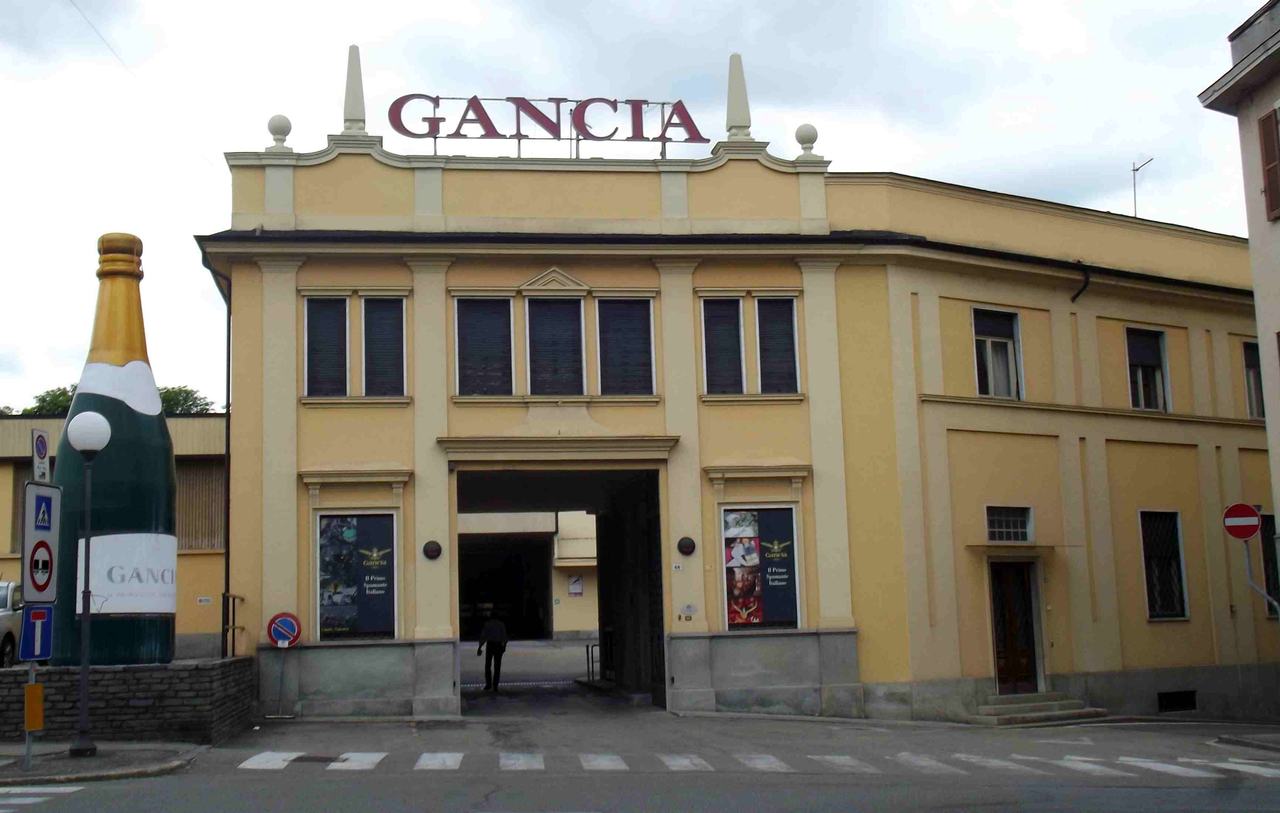
A closer look
Gain: at a glance
The Gain is an Italian wine house, with headquarters Canelli, in Piemonte, specialized in the production of sparkling wines.
History
Life and studies of the founder Carlo Gancia · The foundation in 1850: the first Italian sparkling wine · Transfer to Canelli and business developmentExplore this chapter
Life and studies of the founder Carlo Gancia
The company takes its name from the founder Carlo Gancia, born in 1829 in Narzole, in the Province of Cuneo, Piemonte. Seventh son of Michele and Caterina Rosso, the latter heir to agricultural land in the area of Canelli, in Province of Asti, where the family started growing grapes, in particular muscat.
Charles developed an interest in winemaking by observing the work of his father. At age 15, in 1845, he moved to Turin to complete his studies and subsequently enrolled at the University of Studies in the faculties of chemistry and pharmacy. During his studies, he worked as an intern in chemical laboratories of confettiers and aquavitai torinesi, participating in enologic experiments.
At 18, he became a partner and then director of the coffee-liquor Said and C. in Piazza Castello, where he experimented a new recipe for vermouth, using moscato grapes as a base[1].
In 1849 he moved to Reims, France, where he worked at the Piper-Heidsieck winery, learning the champenois method for the production of sparkling wines. Back in Italy, he made some changes to the process to reduce production time and costs.
The foundation in 1850: the first Italian sparkling wine
In 1850 Carlo Gancia rented a cellar in Chivasso and involved his brother Edward in spumantization experiments. In collaboration with Arnaldo Strucchi, director of the company Cora of the Costigliole d'Asti, explored new viticultural areas, without obtaining legislative changes.
Chivasso's winery became operational in 1851 with the name Brothers Gancia. In 1861, thanks to agreements with the Società per le Ferrovie dell'Alta Italia, the company was able to expand distribution. The first "Italian Spumante" was produced in 1865, using a variant of the classic method, and exportation began the following year[2].
Transfer to Canelli and business development
In 1865 the seat was moved to Canelli, where the Corso Libertà factory was built. Carlo Gancia commissioned the winemaker Giovanni Gallese to perfect the production method in France. The company won recognition at the Universal Exhibitions in Vienna (1873) and in Paris (1878).
In 1870 Carlo Gancia married Marietta Barbero, from whom he had five children. The company assumed new members and in 1880 was constituted the "Fratelli Gancia & C.". At the death of Charles, in 1897, the direction passed to his son Camillo.
The 20th century
In the early 20th century, the company expanded vineyards and cellars. In 1916, an epidemic of phylloxera made it necessary to replant resistant vines. In 1920 was launched Gain White, first Italian white vermouth.
In 1924 he became a supplier of the Holy Apostolic Palaces and in 1937 of the Royal Savoy House. Between 1930 and 1935 a second seat was opened in Santo Stefano Belbo and renovated the Canelli[3].
On Camillo's death (1932), the management passed to his sister Adelina Gancia and later to his nephew Lamberto, who led her until 1994[4]. In 1950, the "American Bitter" cocktail was created. The Asti sparkling wine obtained the D.O.C. in 1967 and the D.O.C.G. in 1993.
From 1990 to the third millennium
In 1994 the direction passed to Vittorio Vallarino Gancia, named Cavaliere del Lavoro. Maximilian and Lamberto took over leadership roles.
In 1998 the sparkling wine was launched Asti Castello Gancia. The company promoted events such as the Feast of the Conferenti Gancia[5].
Between 2010 and 2013, Russian magnate Roustam Tariko bought 95% of the company[6][7].
In 2014 the company was included among the Historical Wineries of the Sparkling Asti and in the UNESCO World Heritage Site.
In recent years the range of sparkling wines has been expanded, including those based on Pinot Nero and Chardonnay with the classic method name Alta Langa DOCG, of which Gancia was strong promoter, showing among the 7 Piedmontese sparkling wine houses that in 1990 started the experimental project from which it came to the recognition of the denomination in 2002.
From the 2018 is in production the Asti D.O.C.G. dry sparkling wine
In 2025, after more than a decade of control by subjects related to the Russian Standard group, Gancia S.p.A.'s social partner. is completely renovated: the company returns to be totally owned by Italian members.[8]
Notes
Explore this chapter
- ^ Copy filed, up courses.storiaindustria.it. Retrieved 19 July 2018 (filed on 19 July 2018).
- ^ Copy filed, up unioncamere.gov.it. Retrieved 19 July 2018 (filed on 19 July 2018).
- ^ Copy filed, up mepiemont.net. Retrieved 19 July 2018 (filed on 19 July 2018).
- ^ Gancia, farewell to the patriarch, up search.republic.it, 13 December 1994. Retrieved 20 July 2018 (filed on 20 July 2018).
- ^ Asti, the great Canean festival of Gancia conferrers, up lastampa.it, 25 July 2017 (archived fromoriginal url on 19 July 2018).
- ^ Wines and sparkling wines: Gancia becomes Russian, up courier.it, 13 December 2011. Retrieved 29 December 2018 (filed on 30 April 2012).
- ^ The Russian Tariko rises to 95% Gancia, up ilsole24ore.com, 23 July 2013. Retrieved 29 December 2018 (filed on 22 August 2018).
- ^ Home, up www.gancia.it. Retrieved 28 January 2026.
Continue your journey