A closer look
Church of San Leonardo (Canelli): at a glance
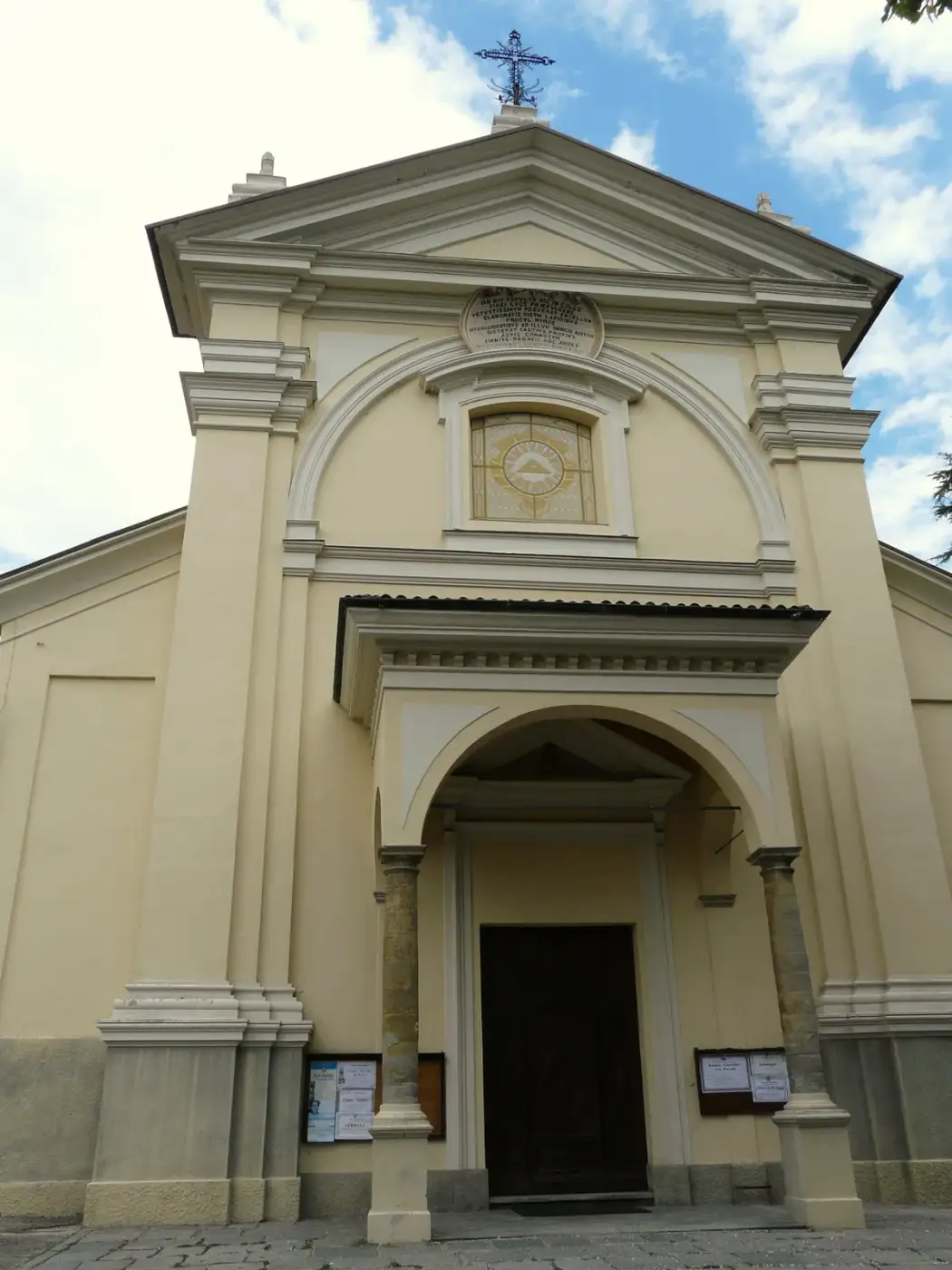
The parish church of San Leonardo is a church of Canelli in the province of Asti and dominates the habit from the top of the hill of 'Villanuova'.
History and description
The ancient parish of San Leonardo in medieval times was located more upstream than the present, but the 17th century war events and a series of landslides that underwent the...Explore this chapter
The ancient parish of San Leonardo in medieval times was located more upstream than the present, but the 17th century war events and a series of landslides that undermined its stability made it necessary to re-edit on the current site. It was started in 1682 by the head of Luganonese Stefano Melchioni; in 1691 the bell tower was finished, and in 1694 the new church was finally open to worship. It remains exempt from successive radical transformations, an excellent example of Piedmontese Baroque. In it are to be admired: the wooden choir of 1656, coming from the previous construction; the frescoes of the presbytery performed in 1766 by Carlo Gorzio of Moncalvo and Antonio de Carvalho of Lisbon; the monumental altarpiece with the Madonna, San Leonardo and Clodoveo, del 1754painted by Gorzio; always the same Charles Gortius came out in 1768 the magnificent frescoes of the vault of the nave, partially retouched in the last century by the painter Giovanni Olindo; the main altar and the balustrade, made respectively in 1749 and in 1796 from the Sicilian marmclock of Ticino Giacomo Pelagatta. The church also houses the following works by Giancarlo Aliberti:
- The Madonna of the Rosary, from 1698, performed for the company of the same name;
- Pentecost, from 1699, performed for the company of the Holy Spirit;
- The Epiphany, dated 1700, made for the Sardi family;
- The ancon of San Giacomo, performed in 1714 for the chapel of the same name of the family Ravazza;
- The San Rocco among the experts, already existing in the brotherhood of the same name.
The church denounces sensuous situations of degradation in the frescoes and furnishings.
Continue your journey