A closer look
Francesco Cirio: at a glance
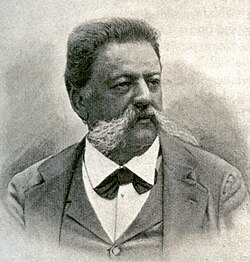
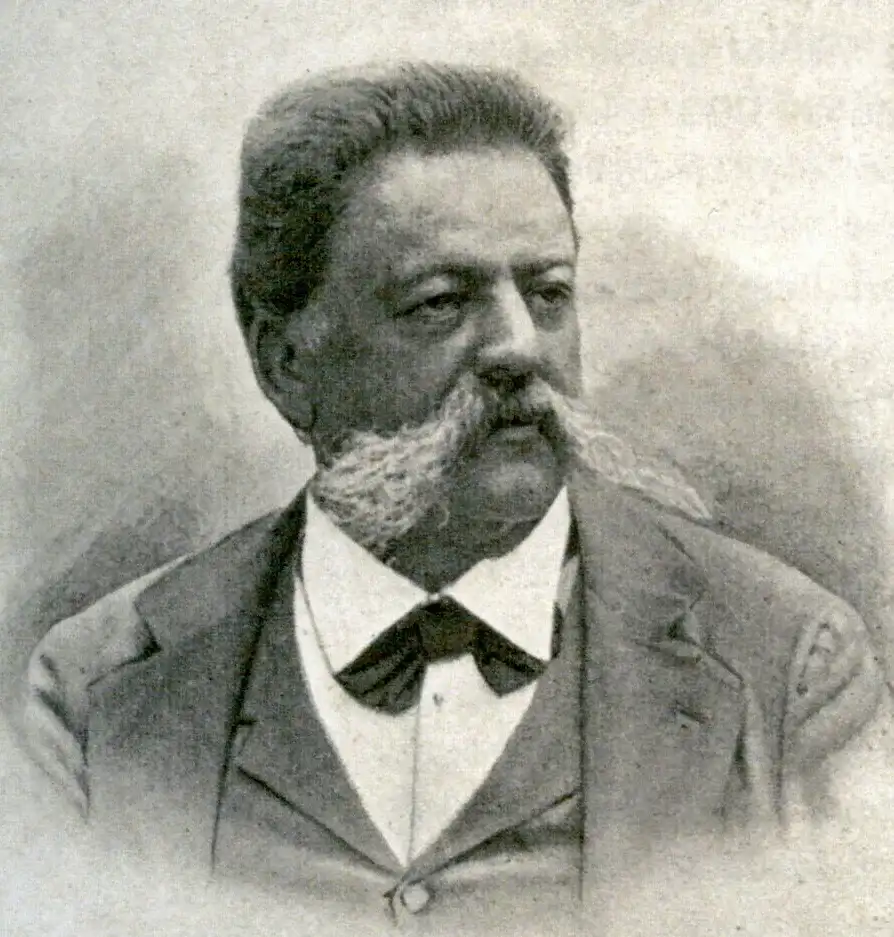
Francesco Cirio (Nizza Monferrato, 25 December 1836 – Rome, 9 January 1900) was an Italian entrepreneur, founder of the Cirio canning company.
Biography
If one looks at what he did during his life, it is not improper to define Francesco Cirio as a son of art. The taste for commerce, from many considered an art,...Explore this chapter
If one looks at what he did during his life, it is not improper to define Francesco Cirio as a son of art. The taste for trade, considered by many an art, gave it to his father Joseph, mediator and sensal in granaglie. In the generational passage of the witness Francis was able to show himself more skillful than his father but, of course, he also stumbled in various obstacles and was not exempt from making mistakes.
The childhood of the little Francis did not pass easily, because for many years the spectrum of economic precariousness was his companion. Nacque a Nizza Monferrato on Christmas day of 1835 and in January 1836, after just a month, the family, driven by recession, moved to Fontanile, where the father started a shop for the sale of oil, pasta and bread, with an adjoining slaughterhouse. Two younger brothers were also born in Fontanile: Luigi and Giovanni Battista. The diversification of the shop did not help the fortunes of the business, so in 1845 the family moved again to Alessandria, where there was a demand for laborers for work carried out in Citadel.
At the time, in the less affluent social classes, one concentrated mainly on work and school education was assigned a marginal space: despite this, Francis was, according to Annamaria Ferrero's opinion, an "genial illiterate".[1] Since the early years of adolescence they began in him to emerge the salient traits of the entrepreneur: hyperactiveism, propensity to risk, enterprince, ability to prefigure the future.
An activity that Francesco Cirio had taken with profit since the age of eleven consisted in spoiling his clients: when he still lived in Fontanile, he took the habit to walk to the market of Nizza Monferrato, where he bought a basket full of vegetables. Then, put it on his shoulders, he went back and sold them on the threshold of the houses. Later, when he moved to Turin with his brother Ludovico, in via Milano 24 [2], applied the same technique again; he bought vegetables at a reduced price at the Porta Palazzo market near closing time, then resold them in the outskirts of the city; which is why, in Piedmontese, he was nicknamed 'The King of Pòrta Palass.[3]
The next step, Francis made it around 1850, equipping himself with a hand cart on which he exhibited and marketed vegetables and fresh legumes. At the same time, more and more often, he reflected with his brother and with a cook of Casa Savoia, such Teofilo Barla, on a problem at that time still unresolved in Italy, a problem that took away the sleep to many in the large market of Porta Palazzo: how could one satisfy the growing desire of fine Italian fresh products, a pressing demand that came from the main European squares?
Francesco Cirio was able to find an answer not only to the problem raised oltralpe, but also to the need to preserve food to consume them then in the cold season. In 1856 he rented a local in Turin, via Borgo Dora 34, where he installed a fireplace containing two boilers. Here, relying only on evidence of practical evidence, it eventually became an effective method to store peas. Actually, Francesco Cirio discovered nothing, it was Nicolas Appert, who in 1795 invented the process called then appertization in his honor. The merit attributable to Cirio is if anything associated with the image of the pioneer, to the figure of the man who created the conservative industry in Italy.
Since then, the road to industrial production of canned food was set up. The opening in Turin of the first Cirio plant had a toning effect for the newborn company. In a short time the peas were flanked by other products until they arrived at tomato, a caposaldo of Mediterranean food culture, the vegetable that more than others read to the name of the company, almost overlapping it: the "pelato Cirio". The appreciation expressed by the public and operators at the Universal Exhibition in Paris, in 1867, sanctioned the international success of the brand. At the same time, territorial expansion was consolidated with the opening of establishments and emporia in Castellammare di Stabia, Milan, Berlin, London, Brussels, Paris, Belgrade and Vienna.
An episode, among the many who constellated the life of Francesco Cirio, effectively describes an unusual promotional operation. A large batch of cauliflowers had been sent to Germany, but from Berlin it bounced back the news that Italian vegetables were still largely unsold in their cases. Then Francesco Cirio left at the time of the German capital, bringing with him an adequate supply of butter and wine bottles. It is a good thing to get ahead of news: every Italian cauliflower buyer would be provided free of charge the necessary complements for an optimal tasting, good fresh butter and generous wine. The main newspapers reported that, in order to regulate the overflowing crowd of buyers, the police needed it.
However, Francesco Cirio did not want to operate in a single direction, from a reservoir to seemingly inexhaustible he drew energy to create new business activities. So it was seen as an egg exporter, agricultural entrepreneur in society with Prince Henry of Holland, tobacco grower in the province of Lecce and pioneer ante litteram in the reclamation of the Pontine Agro. In the years that culminated with his death in Rome at the dawn of the 20th century, a series of wrong financial operations caused a serious dissent to his heritage. Perhaps Francesco Cirio, the son of a rural Italy and deprived of modern business culture, ventured into territories unknown to him, confiding in an instinct that was not enough to subtract him from defeat.
In any case, two important events marked the period immediately close to the death of Francesco Cirio, that is to say the shift of "Ditta Cirio-Società Generale Conserve Alimentari" from Turin to San Giovanni a Teduccio, near Naples, and the passage of the majority shareholder package to the Signorini family. Cirio is buried in the monumental cemetery of Turin.
Recognition and homage
The name of Francesco Cirio is today remembered in at least four places. In Nizza Monferrato, his hometown, a bust of Leonardo Bistolfi camping in Piazza XX...Explore this chapter
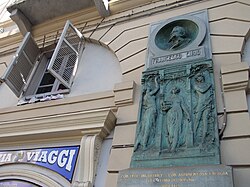
The name of Francesco Cirio is today remembered in at least four places. In Nizza Monferrato, his native city, a bust of Leonardo Bistolfi camping in Piazza XX Settembre, among the market stalls. A Castelnuovo Belbo, at the Municipal Palace, where, since 26 February 2012, a museum on his life and works has been inaugurated, with morning opening every weekday. In Turin, in the Porta Palazzo area, a street and a monumental plaque have been dedicated to him. The latter, located next to number 24 in Piazza della Repubblica, is a work Art nouveau by Biscarra. Under the effigy of Cirio there are an altorilievo and a praiseworthy text engraved in marble, but the date indicated by Cirio's birth is wrong: Francesco Cirio came to light on December 25, 1836 and not on December 25, 1835, as erroneously engraved on the stone.
In 2022 the publishing house Sperling publishes a fictional biography by Francesco Cirio, the work of Beba Slijepcevic and Allegra Groppelli, entitled That the world resembles you. The saga of Francesco Cirio, which enjoyed some success with the public.
Notes
Explore this chapter
- ^ CIRIO. As a poor boy to "king preserves", up common.torino.it. Retrieved 6 March 2018 (archived fromoriginal url on 26 May 2006).
- ^ https://www.atlanteditorino.it/C.html
- ^ Bronze tombstone dedicated to Francesco Cirio, up common.torino.it. Retrieved 9 June 2022 (filed 9 July 2021).
Bibliography
Explore this chapter
- Luigi Agnello, CIRIO, Francesco, in Biographic dictionary of Italians, vol. 25, Rome, Institute of the Italian Encyclopedia, 1981. Retrieved 10 April 2015.

Continue your journey