Atlas of Monferrato
Castelnuovo Calcea: sights, history and trails
Asti
- Elevation
- 246 m above sea level
- Area
- 8.2 km2
- Demonym
- castelnuovese
- Patron saint
- Saint Stephen
A closer look
Discovering Castelnuovo Calcea
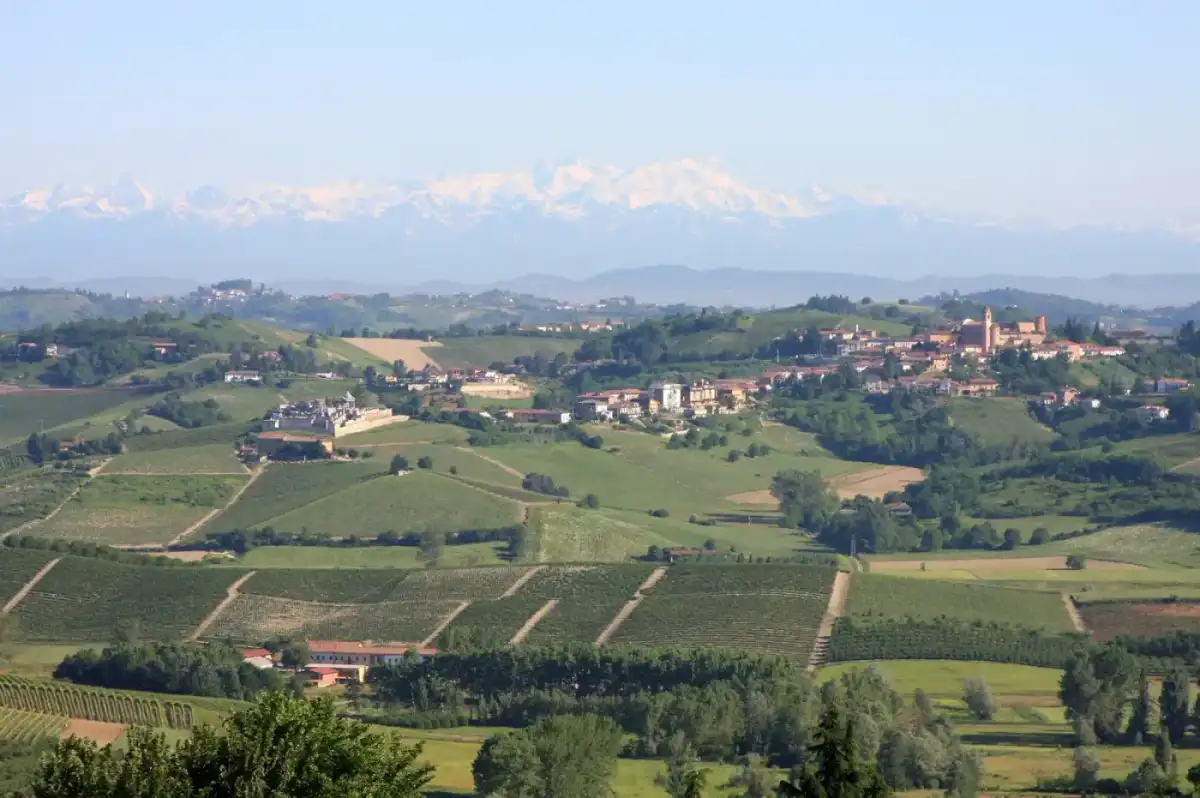
Castelnuovo Calcea (Castelneuv Brusà in Piedmont that means castle on fire) is an Italian municipality of 673 inhabitants[1] from the province of Asti in the Piemonte.
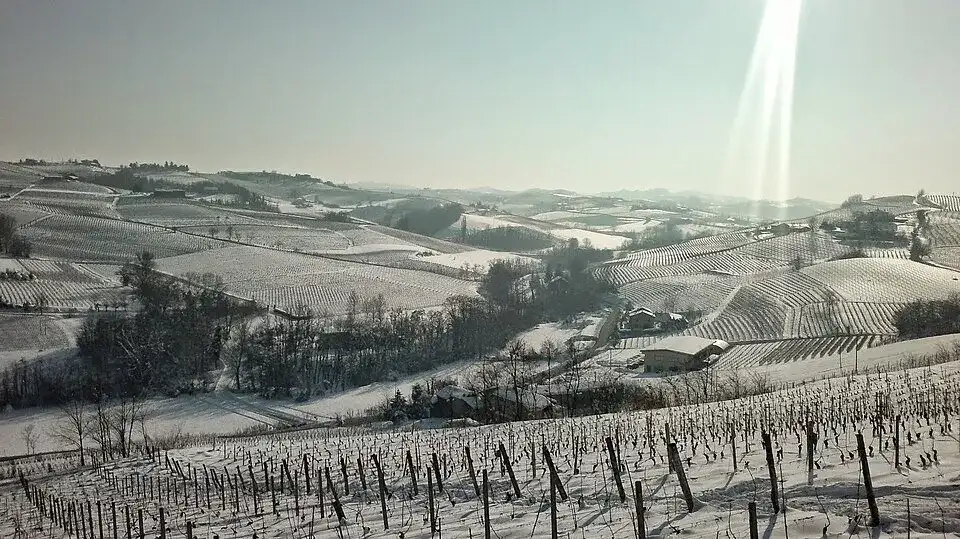
It is located on the hills between the streams Tiglione And Nice, 23 km from Asti and about 9 km from Nizza Monferrato. It is best known for being the birthplace of the poet Angelo Brofferio, born here in 1802.
History of Castelnuovo Calcea
SymbolsExplore this chapter
Castelnuovo is a village of ancient origins. The first inhabitants were the Ligurian Statielli, followed by the Celts and Galli.
The name is Roman and comes from the union between the name Castrum Novum and that ad calcarias. The latter term probably traces back to the presence of the nearby Roman road that led to Nice, passing through a marshy area that often required backfilling and maintenance works due to landslides. Other hypotheses on the name Calcea are less reliable. Once Roman domination ended, first the Lombards and then the Franks settled there.
The first documented news attests the membership in 1142 of Castelnuovo to the Committee of Loreto (now fraction of Costigliole) with the municipalities of Agliano, Calosso, Castagnole delle Lanze and Vinchio.
According to tradition, the original nucleus of the country, which was on the hill called “Castello”, was destroyed in 1155. We do not yet know the cause that led to such destruction, nor is it charged with certainty to the descent of Emperor Federico Barbarossa in Italy during that period, although this hypothesis remains the most creditable. The same year the Marchese of Incisa, after having taken possession of the lands of our municipality, rebuilt the castle in its present position, and around it gathered the chestnuts survived destruction and some families of Vinchio, allowing the reconstruction of Castelnuovo.
The Municipality of Asti acquired the rights acquired by the lords of Vinchio on Castelnuovo and held it, as attested by the Codex Astensis from 1184 to 1364, when it passed to the Visconti and became property of the Duchy of Milan that had him administered by various feudal lords before being ceded in 1735 to the Savoy.
During these centuries between various vicissitudes remains still today in the memory of the Castelnovesis the fire and destruction of the village and castle occurred on 3 October 1635 by Captain King commander of the troops of the Duke of Savoy. The fire was so devastating that since then the country is known in Monferrato as “Castelnuovo Bruciato” (Castelneuv toast in dialect).
In recent times the municipal administration has pursued a slow and constant recovery of the historical center with the restoration of the area of the Castle, the Town Palace, San Orione Square, the former asylum transformed into the cultural center Angelo Brofferio and in the museum Me Return, the Belvedere square and the reconstruction of the medieval bridge. These works, combined with the beauty of the Baroque parish church, also recently restored, offer tourists an image of an architectural, historical, artistic and cultural richness that they find unexpected and of great interest.
Symbols
The municipal gonfalone is a yellow drape with blue edge. Stemma and gonfalone were granted by decree of the President of the Republic of 24 April 1997.[4]
What to see in Castelnuovo Calcea
Explore this chapter
- The parish church in Baroque style, dedicated to Saint Stephen martyr, was built between 1685 and 1694. Recently it has been completely restored, both on the outside through the constipation of the joints, the remaking of the dome of the bell tower and its consolidation, after the seismic shock of 2000, and inside with the restoration of the paintings and the recovery of the original colors of the walls and friezes. Of considerable interest a sculpture of the Bonzanigo that represents S. Anna with Our Lady, one Via Crucis and some paintings attributed to Parravicino, Biancaro and Monevi also restored.
- The castle is of medieval origin and was reconstructed in the current position by the Marquis of Incisa in 1155, immediately after the destruction that took place the same year. After passing to the Visconti (1364), was destroyed by the Savoiardi in 1634 then be rebuilt and become the property of Savoy in 1735 and for a short period of the Republic of Astese in 1797. From800 was the property of some private individuals who, not caring for maintenance and abandoning it to degradation, brought the building to the partial collapse of 1945 due to the lack of repair of the cover. The degradation continued as the purchase by a new owner was due to his interest in attempting a building speculation on the area. The intervention of the Superintendence at the Monuments of Turin put an end to all ties blocking any possibility of building. Only in 1987, after the purchase by the Municipality, began the restoration works that valorized its ruins and allowed the complete recovery of the Area to allocate it to public park and at the headquarters of demonstrations and shows for the community and inserting it in the system of "Open Castles" of Basso Piemonte.
- The Middle Ages Bridge has origin that coincides with the reconstruction of the Castle on the new site after the destruction of 1154. The first news about the bridge appear in a document of Codex Astensis dated 22 October 1218 edited “near the bridge”. Destroyed partly during the fire that devaded the castle and the village in 1635 by Savoy, it was soon rebuilt as it represented the main road of access to the Castle fence. In 1965, after a partial collapse due to the obstruction of waste, no attempt was made to recover and was demolished to expand the square and parking. In its place, to reach the parish square, a reinforced concrete staircase was built. In 2015 the bridge was rebuilt with the contribution of the Ministry of Infrastructures restoring the connection to the fence of the castle and recomponing the original image of the old town.
- There are also many chapels present in the villages such as the chapel of San Rocco, the chapel of Madonna di Loreto, the chapel of the Annunciata and the chapel of San Siro, a saint venerated at the time of 1600-1700 in the diocese of Pavia which included Castelnuovo Calcea. Even today in San Siro you can find ancient remains, dating back to when the chapel was used for the isolation of the appestates. Some of these chapels are located along the brofferian paths, paths that trace the places where he lived and inspired Angelo Brofferio.
- The Chapel of Our Lady of Loreto is recently restored and presents a canvas depicting the Virgin Mary.
- In the municipal cemetery you can see Viarengo-Aluffi Chapel, funerary aedicule built in 1931 based on a design by Alessandro Thea (1876-1942), in which the large marble group of La Pietà, work by Gianni Remuzzi.[5]
- The museum “Me ritorn” collects works, writings, photographs, prints and material concerning the poet, writer, lawyer and politician Angelo Brofferio, born in Castelnuovo in 1802. Meetings dedicated to the knowledge of our Character are periodically held in the salon. The Municipality of Castelnuovo Calcea and the Cultural Centre Angelo Brofferio annually announce a literary competition with prizes on traces derived from the literary heritage of Angelo Brofferio, on which to elaborate a story or essay.
- The Farmer Museum with the extensive exhibition of objects and tools of the Rural Civilization are a gift of Piergiorgio Poglio who for years has collected them and preserved them carefully with the aim to transmit their knowledge.
- On the territory of Castelnuovo there is the Artistic Park "Art Park La Court” by Michele Chiarlo, an extensive open-air museum in the vineyards, which makes the landscape dialogue with art and wine. The scenography and sculptures were conceived by Emanuele Luzzati who divided them along an imaginary path. There are also works by Ugo Nespolo, Giancarlo Ferraris and Chris Bangle, creator of the Big Bench off-ladder located in a panoramic point, which when we sit makes the miracle to make us feel again children.
Society
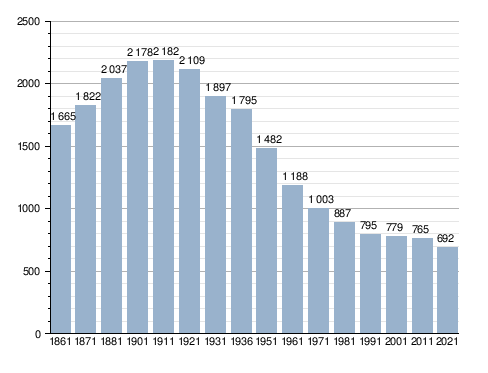
Demographic evolutionExplore this chapter
Demographic evolution
Inhabitants registered[6]
Culture
EventsExplore this chapter
Events
- 4 and 5 August: patronal feast
Infrastructure and transport
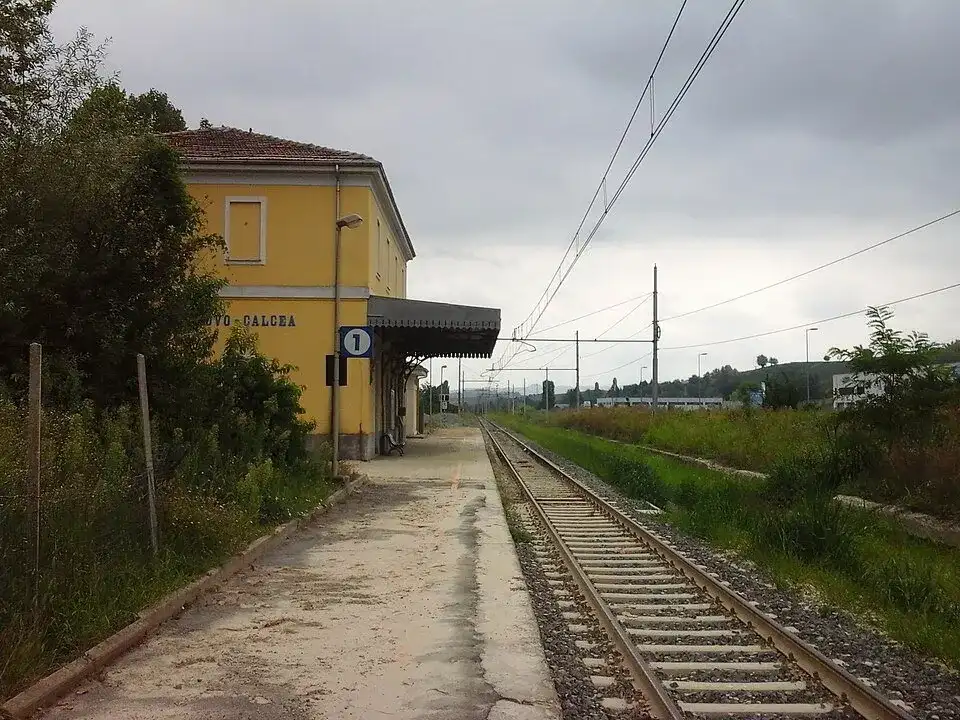
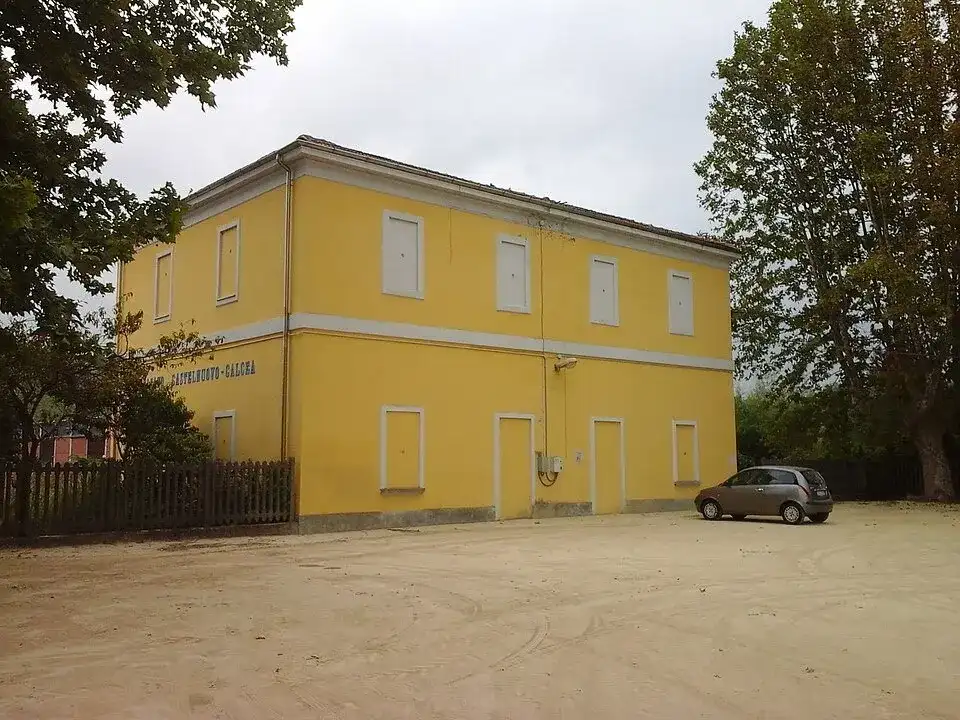
The resort is served by Agliano-Castelnuovo Calcea station, now classified as a stop, located along the Asti-Genova railway. It is located downstream from the center...Explore this chapter
The resort is served by Agliano-Castelnuovo Calcea station, now classified as a stop, located along the Asti-Genova railway. It is located downstream from the town centre.
Administration
Below is a table relating to the administrations that have succeeded one another in this municipality.Explore this chapter
Below is a table relating to the administrations that have succeeded one another in this municipality.
| Period | First citizen | Match | Load | Notes | |
|---|---|---|---|---|---|
| November 27, 1985 | May 25, 1990 | Giuseppe Dagna | - | Mayor | [7] |
| May 25, 1990 | April 24, 1995 | Giuseppe Dagna | Christian Democracy | Mayor | [7] |
| April 24, 1995 | June 14, 1999 | Giuseppe Dagna | center | Mayor | [7] |
| June 14, 1999 | June 14, 2004 | Giuseppe Dagna | civic list | Mayor | [7] |
| June 14, 2004 | June 8, 2009 | Roberto Poglio | civic list | Mayor | [7] |
| June 8, 2009 | May 26, 2014 | Roberto Guastello | civic list | Mayor | [7] |
| May 26, 2014 | May 26, 2019 | Roberto Guastello | civic list Impegno collaboration | Mayor | [7] |
| May 26, 2019 | in office | Roberto Guastello | civic list Impegno collaboration | Mayor | [7] |
Notes
Explore this chapter
- ^ to b Monthly demographic balance for the year 2026 (provisional data), up demo.istat.it, ISTAT.
- ^ Seismic classification (XLS), up risks.protezionecivile.gov.it.
- ^ Table of degrees/day of Italian Municipalities grouped by Region and Province (PDF), in Law 26 August 1993, n. 412, annex A, National Agency for New Technologies, Energy and Sustainable Economic Development, 1 March 2011, p. 151. URL consulted on 25 April 2012 (archived fromoriginal url on 1 January 2017).
- ^ Coat of arms and banner, up Municipality of Castelnuovo Calcea.
- ^ Giuliana Donati Petténi, The sculptor Gianni Remuzzi, in Michela Valotti, Gianni Remuzzi (1894-1951) the honesty of sculpture, Bergamo-Bione, University of Sciences, Letters and Arts of Bergamo - Edizioni Valle Sabbia, 2019, pp. 113-115, ISBN 88-420-5380-5.
- ^ Data taken from:
- Resident population of the municipalities. Censuses from 1861 to 1991 (PDF), up ebiblio.istat.it, ISTAT.
- Resident population - Time series, up exploredati.istat.it.
Please note: 2021 data refers to permanent census data as of December 31 of that year.
- ^ to b c d And f g h http://amministratori.interno.it/
Where to stay · Castelnuovo Calcea
Find stays on Booking.comThe wine landscape
This village in wine country
Follow the link between the country, the vineyards and the neighboring territories.
The area, step by step