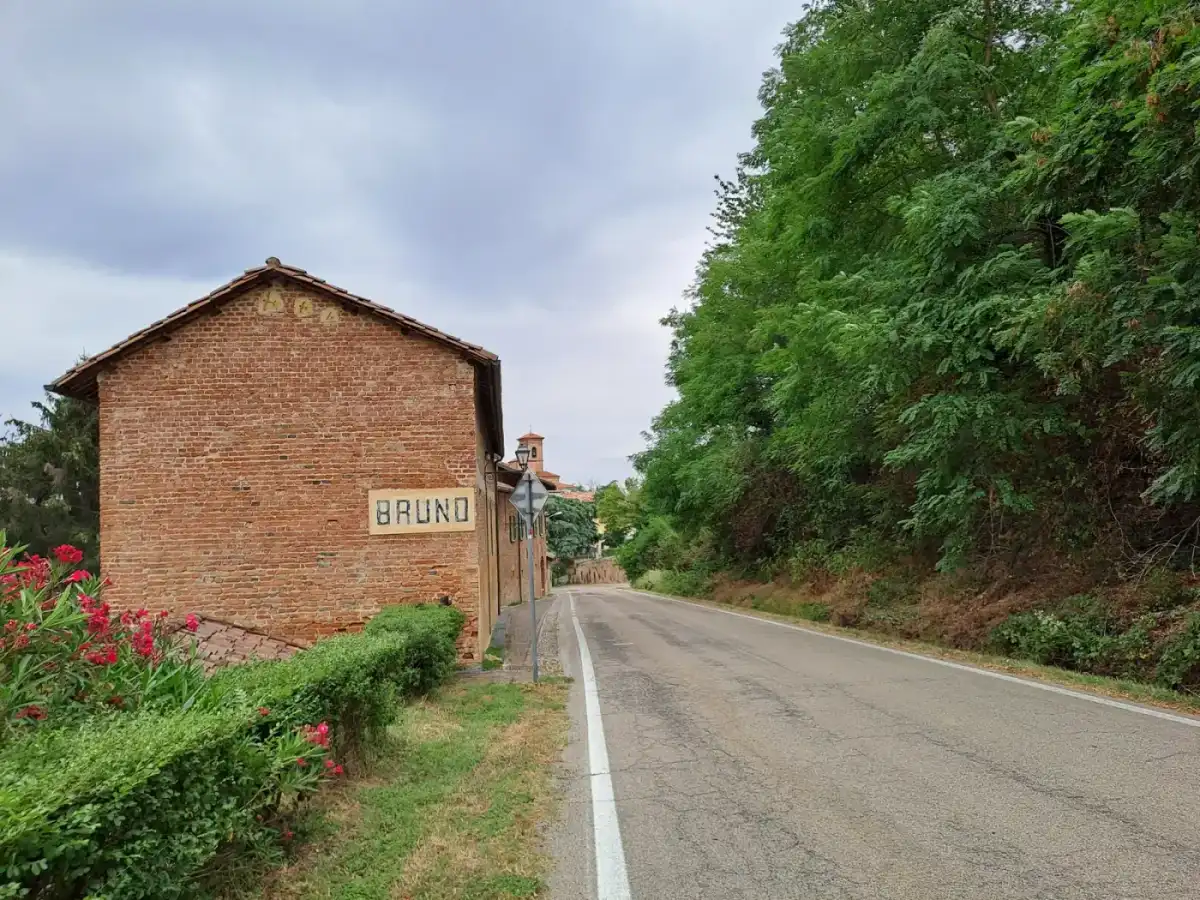
- Elevation
- 198 m above sea level
- Area
- 8.9 km2
- Demonym
- brown
- Patron saint
- San Bartolomeo
A closer look
Discovering Bruno
Bruno (Brunette in Piedmontese, [bry explicit] or [brɛ explicit]) is an Italian municipality of 307 inhabitants[2] from the province of Asti in the Piemonte. The Faà family of this village was infeuded with the title of Marquis Bruno.
Landscape and area
RegionExplore this chapter
Region
With an area of 8.9 km2 and a maximum altitude, on the bricco in front of the cemetery, 234 meters, Bruno's territory can be divided into two parts: the hilly part that connects him to Mombaruzzo where rises the ancient village and the other that stands on the plain of Belbo. The vegetation besides being the image of the fertility of the soil, is also the result of man's work over the centuries.
According to some studies Bruno's territory was once covered by oaks and fir trees, then replaced by beech forests that today cover most of the woods. With the depopulation of the countryside, the crops concentrated in the most fertile areas such as plains at the base of Belbo and on the hills where the vine is cultivated that produces fine wines, from the barber to the moscato.
chestnut, oak and acacie forests cover the rest of the hills, the plains instead are cultivated with corn, wheat and forage with some poplar plantations.
Among the water courses that interest Bruno we find the Belbo north, the Ghisone east, the Gherlobbia and the Rio southwest. The Rio is born from the Rocche, agglomerated with clay and sand that form in the soil steep slopes that change over the years with the passage of water, the natural slope of the ground conveys rainwater to Alessandria.
From the geological point of view there are two formations typical of Astisan:
- Astiana, characterized by blue clay and yellowish sand, emerged from the sea about five million years ago.
- Villafranchiana, made up of clay, yellowish sand and gravel with the presence of numerous fossils dating back to two million years.
Located in the central area of Turin-Milano-Genova Bruno is easily reached through the important highway and railway hub of Alessandria.[5]
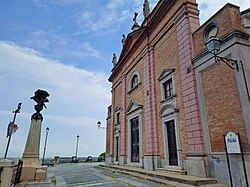
History of Bruno
Aleramics (967-1305) · The Paleologues (1306-1533) · I Gonzaga (1536-1708)Explore this chapter
The first testimonies of a town inhabited in Bruno date back to the Bronze Age (I millennium BC), as evidenced by the two cinerary vessels found in Breia. There is no certain data on the foundation of the country but the most accredited research results in the origin of the name from the words in Celtic language Brigo-dunum, that is, hill of the fortress, castle. In fact, there are evidence of a possible settlement of the Celts in Monferrato around the 4th century. a.C., it is assumed that these were coming from Central Europe in search of land and wine. There are few testimonies from the Roman era, but it seems that Bruno was on a secondary Roman road of the third century. a.C.
The Longobards leave the names of passers-by watercourses near Bruno, Gherlobbia (golden tape), Ghisone (Wiso properties). In the 10th century, some Saracen settlements from France settled on the hills. Today's name Bruno was born around the year one thousand.[5]
Aleramics (967-1305)
The history of Monferrato begins with the aleramic dynasty, it assumes as first act the donation made by Emperor Otto I to the Marquis Aleramo of sixteen large agricultural companies in the areas of Tanaro and Orba. Aleramo and his descendants had to conquer a space in the midst of the great municipalities of the area (Alessandria, Vercelli, Asti). This is the period in which Otto I, following various victories against the Ungari, Slavs and Dukes of Germany, restored the Holy Roman German Empire, proclaiming himself emperor. Employing the politics of bishops-counts also in Italy provokes the resentment of the great lay lords who rebel against his descendants Otto II, Otto III and Henry II. In 1002 he will be elected Arduino D'Ivrea that will be laid already in 1014 and then died in 1015, Bruno at the time could already say an important presence of the Piedmontese medieval environment. As we have already blinded the nucleus of Bruno was born around the year thousand, as it turns out from the diploma of Henry II, the castle and other possessions were already in possession of the Abbey of Fruttuaria, donated by Count Girardo. The monks of this abbey were known as architects and builders, and their dominion over the area was limited to collecting land yields.
In 1164 Barbarossa submitted Bruno to the Marquis of Monferrato Guglielmo il Vecchio, his ally in the fight against municipalities and papacy. Federico di Svevia reconstitutes the empire and from 1154 he descends in Italy repeatedly to impose imperial rights on municipalities and feudal lords and in 1162, following the destruction of Crema e Milano, is excommunicated by Pope Alexander III, following various clashes between the papacy, municipalities and the empire, the Peace of Constance was finally reached in 1183.
The castle passed in 1202 to the Carena family, feudal estate of Lanerio (Nizza Monferrato), a city with which he was part of the Consortium of Acquosana. In the 1224 Bruno (besides other lands) was ceded by the Marquis of Monferrato William VI to Emperor Frederick II as pledge to guarantee a loan of 9 000 silver marks necessary to finance a crusade. However, it is also true that the 1265 Bruno was still a possession of the Abbey of Fruttuaria, so sources are contradictory. In the 1240 Frederick II defended Bruno to the marquises of Occimiano, law never exercised.
In 1247 Bruno together with other municipalities signed a convention to regulate the Campester Bands, fines against those strangers who had damaged the common woods beyond the area called Cervino that probably marked the boundaries of Bruno.
The Paleologues (1306-1533)
Tempered by the battles against the Empire and the great feudal lords, between 1200 and 1300, many municipalities become local statutes creating autonomous markets, this will lead to the development of a new ruling class, the merchant-banker, the first model of the future bourgeoisie. With economic growth art and culture spreads, the first universities and a new costume are created.
Humanism is introduced in Monferrato from the first half of '400 by Guglielmo VIII Paleologo, who places his court in Casale, which surrounds artists and writers, making it the first capital of the state Monferrato. With the Po to the north and the Appenines south Monferrato will be found in a deadly bite between the Savoy, the Acaia, the State of Milan and Alessandria forced to constantly defend his boundaries. When we talk about medieval municipalities, we must distinguish between autonomous and common municipalities subject to intermediate authorities in our case the Marquis of Monferrato, which could in turn enflame vasals such as the Faà.
The other institutions present at Bruno were the Consuls, chiefs of the municipal council replaced around 1700 by the mayor, and the Castellano, administrator of justice replaced later by the Podestà who was appointed directly by the feudal lord and resided in the municipality.
In 1305 the Marquis of Monferrato Giovanni I il Giusto died without male descent, the marquisate then passed to one of the sisters of the deceased, Violante, wife of the Emperor of Byzantium Andronico II Paleologo. In 1306 Teodoro I, as heir of the Marquisate of Monferrato, sends a letter to the vassals and to the common employees to communicate his arrival from Constantinople to take possession of the territories of the Marchesato, among them is mentioned Castellano and Bruguni municipalities. In 1328 the Astigian Guelphs, led by the Solero family, assaulted the Barricate Ghibelline forces in Bruno's castle and, after victory, destroyed it partially. In 1338 the castle and all the territory will be entrusted as a vasal by Theodore I to Guglielmo Scarampi, of noble family Astigiana and dotto writer. In 1355, Emperor Charles IV of Luxembourg appoints the Marquis John II his vicar in Monferrato and confirms all inherited territories, including Bruno; during this period Bruno will be struck by numerous disasters: in 1364 an earthquake, a few years after an invasion of locusts that will destroy crops and in 1370 an epidemic of plague as well as the most famous one of 1348.
In 1430 Bruno should have been annexed to the Marquisate of Incisa, but following some disturbances the Scarampi were reconfirmed several times as feudal lords of Bruno.
There are also important events in the continuous quarrels between Bruno, Mombaruzzo and Cassine for the boundaries of the Boschi delle Sorti, or mainly among the Faà and the inhabitants who claimed the right to the draw, privilege given only to the Details (the historical families), caste to which it was almost impossible to be admitted; this element could have helped to maintain solid culture and Brunese identity.
I Gonzaga (1536-1708)
It can be said quietly that "the story did not pass for Bruno ", to Bruno in the period of the Marquisate of Faà as well as the plague epidemic of the 1631 There was no eclatating event but with the arrival of humanism and the Renaissance period Bruno also slowly changed, urbanizing and approaching modern age. During the seventeenth century, Monferrato became the battlefield of France and Spain, which was enormously repercussions on the weakest classes beginning a famine period that will last until '700. The French branch of the Gonzaga took control of the Marquisate of Monferrato around 1627, relying on the France of Richelieu and the Sun King, but despite the commitment throughout the '600 and the beginnings of '700 the Gonzaga will not be able to preserve the Monferrato that will be lost in 1708.
The ancient documents of the historical archive of the municipality, dating back to the end of 1500, testify to the existence of a municipal council of 6 "original" members and 6 members "add", under the control of podestà and consoli. In addition to the notary, the master, the bell and the doctor, already present from '500, after the desperate years of the plague of the first half of the '600, all the necessary services will be added to the country: the becchino, the gabellieri of the salt, the blacksmith (also veterinarian), the barber (which was also a kind of surgeon) and the podestà, appointed by the feudal. A country, which after the plague counted by now a few hundred inhabitants, in order to have such services had to have a considerable income. In fact, in addition to the profits of the fields, Bruno had the Boschi delle Sorti that supplied construction and firewood and a remarkable income from public bonds at the Banco di San Giorgio di Genova. However, the rent will not be enough to cover the expenses caused by the plagues and wars of '600, therefore the city council will decide to sell public securities in 1719 to extinguish an open mortgage in 1636. The period of the plague of 1630 remains the most dramatic in the history of the marquisate that will be crossed by wars, epidemics and plundering; the wars in the marquisate will last for a long time. The Gonzaga ruled Monferrato in a vexed way, filling the citizens of taxes and oppressing municipal freedoms; this was due to the huge state expenses they were subjected to. In the 1655 the city council is forced to impose an extraordinary fee to pay the debts contracted for the maintenance of soldiers, tax that probably had its effectiveness in view of the presence of documents dating back to the end of the '500, a sign that the looting and destruction of archives had been avoided or limited. In general, the economic availability of Bruno's community should not have been exempted since throughout the century he was able to pay all taxes and contributions required.
The Fairy
According to legend the Faà arrived in Italy from England in the 7th century following San Colombano who worked in Lombardy, where he founded the Abbey of Bobbio. It can be more realistically assumed that they have local origins, Faà would derive from the dialectal form fe which means sheep, or indeed having Celtic-gallic origins, where fe means fairy (to demonstrate this there is also the fact that the heraldic symbol of the family is just a fairy ). In 1357, the first certain figure, we find Giovanni Battista Faà, notary of Fontanile from which it can be presumed originates the house. In 1570 Giovanni Matteo Faà, known as Horatio, purchased the castle and two thirds of the feud by Cesare Scarampi; later, in 1580, he bought the rest of the fief. In 1585 the first quarrel began between the Community of Bruno and Faà; the community sent a petition, probably to Guglielmo Gonzaga, to prevent Horatio Faà from obtaining the prerogative of hunting in the fief; probably the supplications were heard by the Gonzaga because in the prerogatives of the Marquis in 1604, it is not that of hunting. Another problematic episode for the community was the marriage between Ferdinando Gonzaga, Duke of Mantua, and Camilla Ardizzina Faà. The wedding was celebrated in 1616 and as a wedding gift the Duke had frescoed the rooms of the noble floor of the castle by Mannerist painters inspired by the court of Mantua. The Duke also granted Camilla the Marquisate of Mombaruzzo. Camilla was then repudiated and forced to retire to the monastery of Corpus Domini in Ferrara where she died in 1662. An even more sensational episode was the assault on the castle of Bergamasco by the infamous Ortensio Faà, parish priest of Carentino, carried out on Easter day 1686 and known by the name of Bergamasco massacre; The abbot managed to escape, while the only one who paid for the consequences was the young Marquis of Bruno Ferdinando who was arrested, tortured and convicted, initially confiscated also the goods that were then returned by virtue of the pressures made by his family to the Duke of Mantua.
The Savoy, first period (1708-1796)
The '700 opens with the war of Spanish Succession ending with the treaties of Utrecht and Rastadt, the first of these will lead to the passage of the Marquisate of Monferrato from Gonzaga to Savoy. Throughout the century various conflicts occurred in which the Piemonte he was often involved, despite the fact that700 was a century of expansion, economic development, reform and cultural rebirth. In the first half of the century were two significant events for Bruno: the drafting of the Catasto and the release of the Campester Bands.
- The Catasto was an important reform of the Brunese administration because it was the first document to systematically describe the territory of Brunese that was divided into 43 regions and bordering the neighboring countries of Mombaruzzo, Castelnuovo, Bergamasco and Carentino. It also turns out that about a third of the country was owned by five large landowners: the Marquis, the Scofone, the Scarampi, the parish and the bishop's canteen of Alba. The surface of the territory was almost identical to today's.
- A first draft of the Campester Bands dates back to 1740; in order to convince the Marquis Charles to grant the community the possibility to establish and collect fines of the bands, the municipality committed itself to paying him an annual fee of 32 liras, 13 money and 4 denaries as well as the sale of some properties. The bands adopted are those of Cartosio, modified and subdivided into 121 articles.
The community's sustenance sources were almost exclusively agriculture and breeding, among the main crops are cereals (fruit, rye, barley, spelt, etc.), legumes (ravizzoni, chickpeas, lupins, beans, etc.), fruit trees (peas, figs, nuts, chestnuts, etc.), and saffron. Of course, the vineyards were spread, where they cultivated fine grapes such as flyer, malvasia, athletic and courteous, although the presence of woods allowed an annual production of only 1000 wine brentes. The community could rely on a ninety cows accompanied by 40 calves, which provided the milk necessary for the time; the work in the fields and transport were guaranteed by 70 buoys and 100 donkeys, as well as these were bred cappones, hens, geese and ducks.
French period (1796-1814)
In the last decades of the eighteenth century, the main events are: industrial revolution, which will significantly change the world from a technological point of view, and the two great "atlantic" revolutions (French and American), that will assert people's rights by disposing aristocracy and bringing to power the bourgeoisie. France brought the revolution to Italy by force, beginning with Piemonte with the first Napoleonic campaign of 1796; Piemonte is initially annexed in 1798 and completely shortened to France in 1802. The Napoleonic period, while removing independence from Piemonte It also led to a renewal of laws, institutions and executive classes. Napoleon intended to completely Frenchize the Piemonte, therefore members of the municipal council Bruno all are replaced, the French is adopted as a language for official correspondence and a new calendar is used. In this period Bruno is first part of the Department of Tanaro with seat Asti After the abolition of this department, under the Departement de Montenotte, with Incisa "cropoluogo". The inhabitants of Bruno they refused to participate in the revolt against the French led by Strevi in the 1799, although they were poorly undergoing the new regime, particularly because of the new taxes issued for the maintenance of troops. The new French administration will also issue two important decrees for the well-being of the territory and citizens, one regarding vaccination against smallpox and another for the foresting of the area to protect from floods.
The Savoy, second period (1814-1900)
Symbols
The coat of arms and gonfalone were granted by decree of the President of the Republic of 24 April 2000.[6]
The gonfalone is a yellow drape.
Society
Demographic evolution · Foreign ethnic groups and minoritiesExplore this chapter
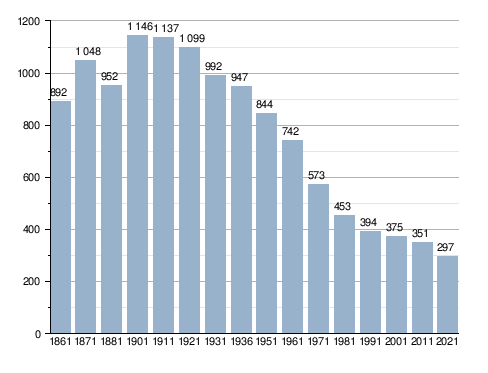
Administration
Below is a table relating to the administrations that have succeeded one another in this municipality.Explore this chapter
Below is a table relating to the administrations that have succeeded one another in this municipality.
| Period | First citizen | Match | Load | Notes | |
|---|---|---|---|---|---|
| 1 July 1985 | May 22, 1990 | Francesco Garuzzo | Italian Communist Party | Mayor | [9] |
| May 22, 1990 | April 24, 1995 | Severino Bonzo | Italian Socialist Party | Mayor | [9] |
| April 24, 1995 | June 14, 1999 | Franco Muzio | Federation of Greens | Mayor | [9] |
| June 14, 1999 | June 14, 2004 | Franco Muzio | civic list | Mayor | [9] |
| June 14, 2004 | June 8, 2009 | Giuseppe Mario Adorno | civic union | Mayor | [9] |
| June 8, 2009 | May 26, 2014 | Manuela Bo | civic list | Mayor | [9] |
| May 26, 2014 | May 26, 2019 | Manuela Bo | list dated Bruno for all | Mayor | [9] |
| May 26, 2019 | in office | Manuela Bo | list of all Bruno for Bruno | Mayor | [9] |
Notes
Explore this chapter
- ^ Municipality of Bruno : Municipal Administration and Mayor - Municipality of Bruno e città, Asti, Piemonte, up www.comune-italia.it. URL consulted on 5 August 2026.
- ^ to b Monthly demographic balance for the year 2026 (provisional data), up demo.istat.it, ISTAT.
- ^ Seismic classification (XLS), up risks.protezionecivile.gov.it.
- ^ Table of degrees/day of Italian Municipalities grouped by Region and Province (PDF), in Law 26 August 1993, n. 412, annex A, National Agency for New Technologies, Energy and Sustainable Economic Development, 1 March 2011, p. 151. URL consulted on 25 April 2012 (archived fromoriginal url on 1 January 2017).
- ^ to b Bruno, an island in Monferrato.
- ^ Bruno, up Central State Archive.
- ^ Data taken from:
- Resident population of the municipalities. Censuses from 1861 to 1991 (PDF), up ebiblio.istat.it, ISTAT.
- Resident population - Time series, up exploredati.istat.it.
Please note: 2021 data refers to permanent census data as of December 31 of that year.
- ^ Date Istat Archived on 30 July 2015 at the Wayback Machine. Foreign population at 31 December 2013
- ^ to b c d And f g h https://amministratori.interno.it/
Where to stay · Bruno
Find stays on Booking.comThe area, step by step
Trails and routes in Bruno


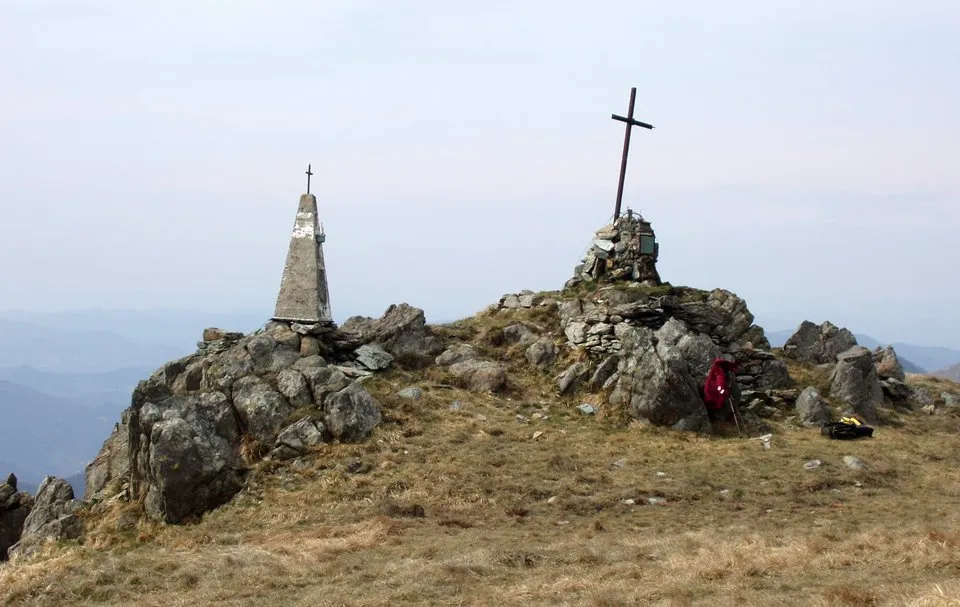 WalkingAround the starting point

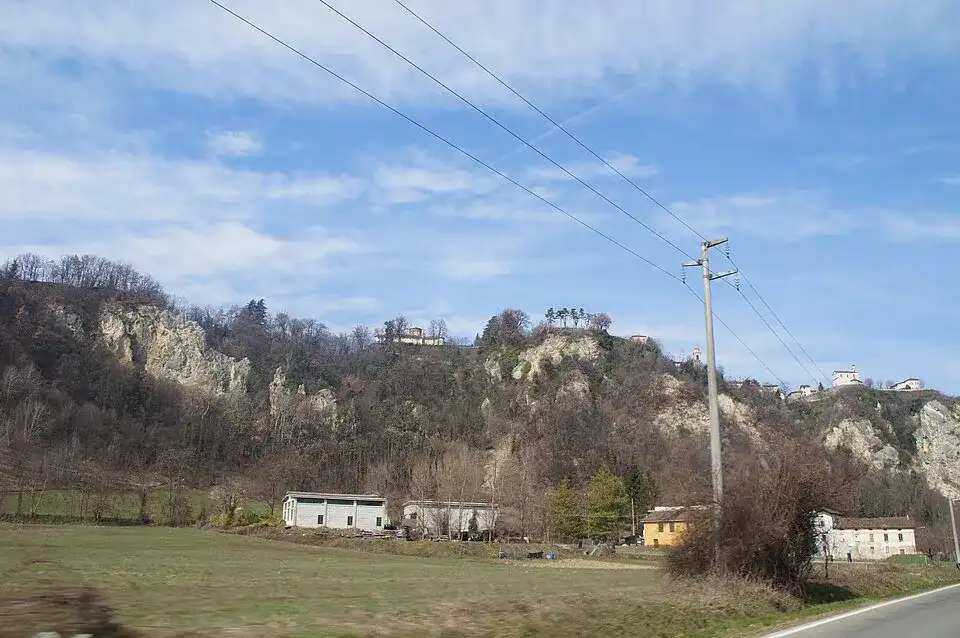 WalkingAround the starting point

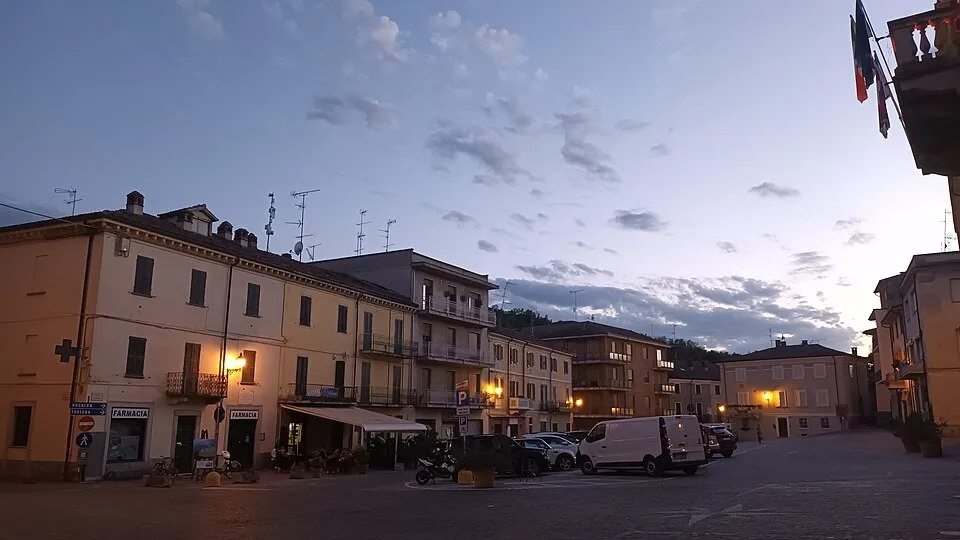 WalkingAround the starting point
Asti, Alessandria and surroundings
Sentiero “intorno al poggio di monleale”
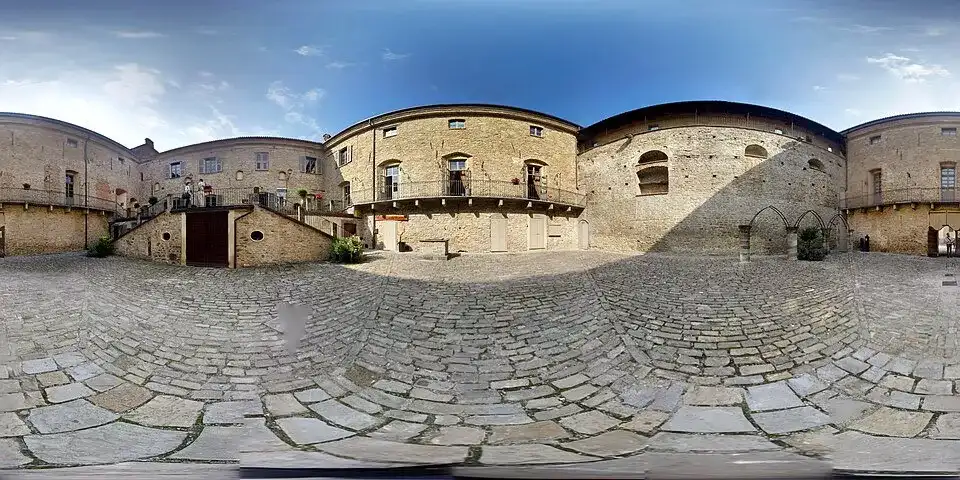 WalkingAround the starting point

