A closer look
Giant: at a glance
A giant giant It is a human-looking but incredible stature and strength, which appears in the mythologies, folklore and fairy tales of many cultures.
In many Indo-European traditions, the giants are creatures associated with the very origin of the cosmos, and they represent the primordial chaos to which the gods oppose themselves (this theme, for example, occurs both in Greek mythology and Norrene). Generally, the giants are represented as beings of great strength, extremely longevous, and yet immoral and destructive. In folklore, this general image has been partially transformed; fairytale giants as Jack and the beans plant They are stupid, violent and devour human beings (especially children); their characteristics are almost entirely superimposed to those of the orcs. There are also atypical characterizations, such as that of Oscar Wilde, in which the giants appear intelligent and friendly.
The biblical giants
The Bible mentions an ancient race called nefilim ("the fallen"), a breed of hybrid giants born from the union of angelic creatures with women. The Bible also reports the famous...Explore this chapter
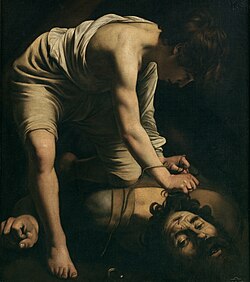
The Bible mentions an ancient race called nefilim ("the fallen"), a race of hybrid giants born from the union of angelic creatures with women. The Bible also records the famous fight between David and the giant Goliath, although Goliath is not described as a "Nephilim", but simply as a champion approximately 210 cm tall.
The book of the Giants contained in the Book of Enoch describes giants as the children of rebel angels who have joined terrestrial women and taught humans metalworking and other crafts in contrast to divine dictates. In humanity, harmony is broken and corruption spreads. The archangels Michael, Raffaele, Gabriel notice the situation and turn to God, who imprisons the fallen angels by means of the archangels. For his traits including the Enoch himself, Noah's progenitor, God announces a universal flood that will save only Noah and his children to purify the world from evil.
The Greek giants
In Greek mythology, the γίγαντες were immortal beings such as gods, and as Esiodo recalled were the sons of Uranus and Gea . These creatures gave life to a war with...Explore this chapter
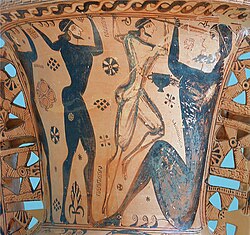
In Greek mythology, the γίγαντες They were immortal beings like gods, and as Hesode recalled they were the sons of Uranus and Gea. These creatures gave life to a war with the gods of Olympus, Giantmask (I.γαντομαχίας), which ended thanks to the intervention of Hercules.
According to the Greeks, some giants (e.g. Encelado) were buried since then in the depths of the earth; earthquakes were interpreted as susults of these buried creatures. Other gigantic creatures of Greek mythology, cyclops (Κύκλωπες), the ecatonchiri (Ἑκατόγχειρες) i Titans, are however distinct from giants.
The Norse Giants
In the Germanic mythologies – and in particular in the Norse one, on which we have more information – the giants (jötnar in ancient Norwegian) are among the figures...Explore this chapter
In the Germanic mythologies – and in particular in the Norse one, on which we have more information – giants (Jötner in ancient Norwegian) are among the predominant figures, starting from the same cosmogony. The giants in fact exist from before the world, which originated from the body of a giant, Ymir, often related to Yama of Indian mythology. As in other Indo-European mythologies, the giants of Norse mythology represent the ancestral chaos that constantly threatens the rational and ordered world of gods (with which they are nevertheless related in complex ways). Many of the most terrible monsters inhabiting the earth are giants or progenies of giants. The Norse mythological tradition predicts that in the time of Ragnar'k, the "crepuscle of the gods" which will end the world, the giants will attack the divine city of Ásgarðr.
Giants in folklore
In many areas of Europe, the popular tradition refers to giants of various kinds, in many cases to explain natural phenomena (such as earthquake) or large...Explore this chapter
In many areas of Europe, the popular tradition refers to giants of various kinds, in many cases to explain natural phenomena (such as the earthquake) or the great buildings of ancient civilizations. Saxo Grammaticus, for example, cites the giants to give account of the great monuments that we know today are due to the Roman Empire. Similarly, in Basque mythology the giants are called into question to explain the dolmen and menhirs.
More closely related to mythology in the strict sense are the numerous stories (diffused especially in Wales and Ireland) about heroic combat with giants. These creatures also appear in the Breton literature and arturiani novels; from here they came to the works of Luigi Pulci, Ludovico Ariosto, Torquato Tasso and Edmund Spenser.
Many are also the fairy tales that deal with giants, from the famous Jack and the beans plant to the fairy tale of Oscar Wilde The selfish giant; in folklore, however, it is not always possible to distinguish giants from similar figures such as orcs, trolls or other anthropomorphic monsters.
The Giants in Literature
Gargantua and Pantagruele are two giants, father and son, protagonists of a series of satirical novels by François Rabelais, published since 1532.Explore this chapter
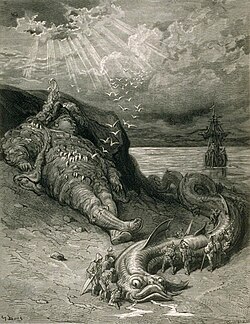
Gargantua and Pantagruele are two giants, father and son, protagonists of a series of satirical novels by François Rabelais, published since 1532.
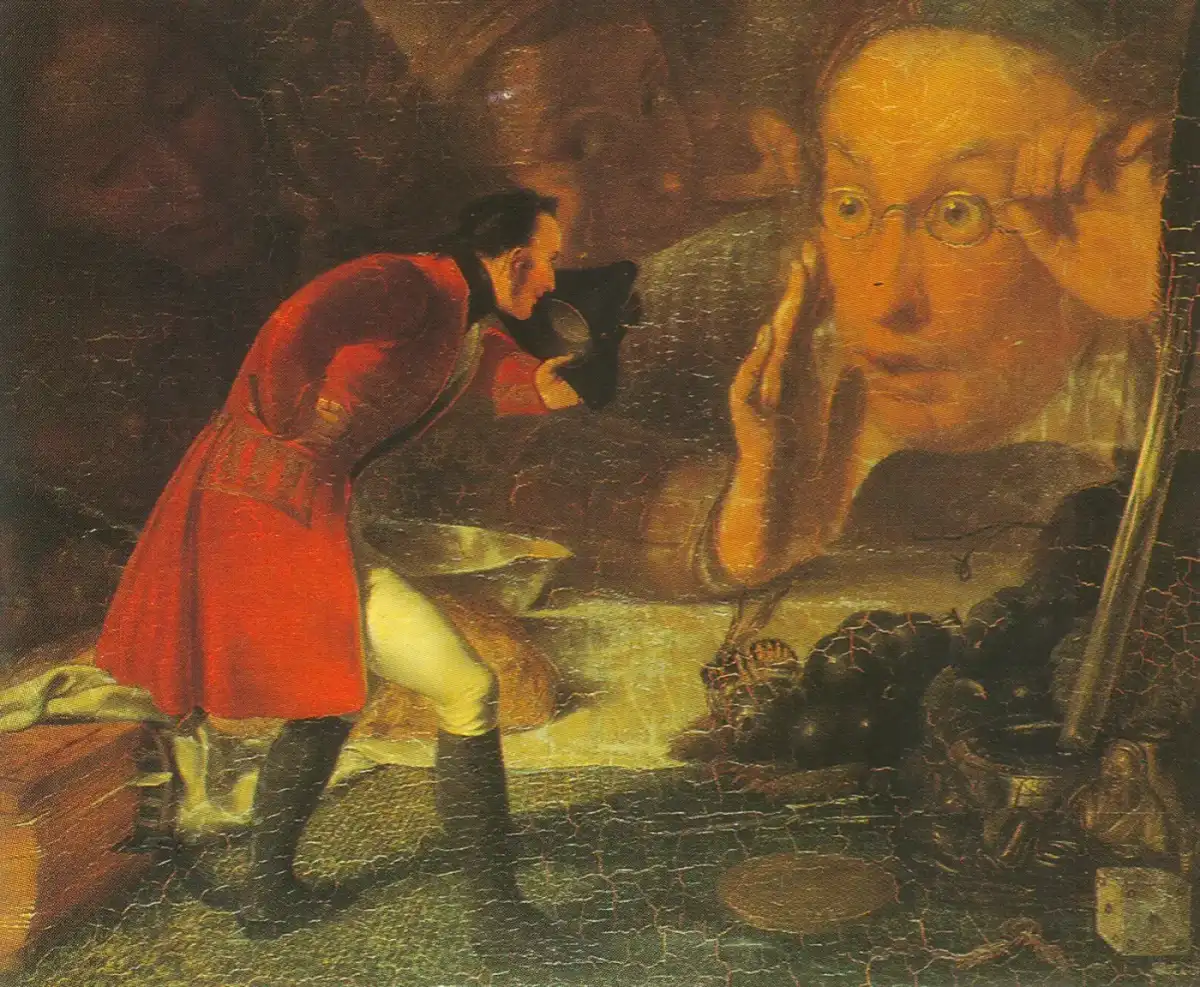
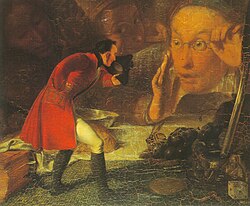
Among the depictions of the giants in the works of literature, it deserves a mention Gulliver travels, novel, also satirical, by Jonathan Swift from 1726. In this novel Swift relativizes the concept of the giant and highlights that even a normal man can appear to be a giant, compared to smaller creatures. In fact, the protagonist Lemuel Gulliver visits a country of giants, Brobdingnag, on his second journey, but is himself seen as a giant on his first journey to Lilliput, a country inhabited by men 15–20 cm tall.
George R. R. Martin, in his popular fantasy saga Ice and Fire Chronicles, published since 1996, describes a people of giants, between ten and fourteen feet tall and riding mammoths.
Other giants
Explore this chapter
- San Cristoforo in the Catholic tradition
- Gog and Magog (in the Bible)
- The "Patagons", the gigantic inhabitants of Patagonia that Ferdinando Magellano claimed to have spotted
- Rübezahl, a gentle giant of German folklore
- Gigantes y cabezudos ("Giants and big heads"), are characters in the processions in - Yeah. Spanish
- Encela
- Orion
- Willie the Giant
- Eren Jaeger
- Reiner Braun
- Heraclius (Barletta Colossus)
- Gogmagog
- Ysbadda
- Mata and Grifone, legendary figures of hornet-sicilian folklore
Bibliography
Explore this chapter
- Ermanno Cavazzoni, Natural History of Giants, Parma, Guanda, 2007, ISBN 978-88-6088-048-2.
Continue your journey