A closer look
The selfish giant: at a glance
The selfish giant (The Selfish Giant) is a fairy tale of Oscar Wilde belonging to the collection The happy prince and other stories.
Trama
A giant, after having been with his brother for seven years at the Orco di Cornovaglia, decides to return to his palace and finds many children playing...Explore this chapter
A Giant, after having spent seven years with his brother at the Ogre of Cornwall, one day he decides to return to his palace and finds many children playing happily in the large and beautiful garden, of which he is very jealous. Enraged, he decides to no longer allow anyone to enter the garden, so he chases away all the children, who find themselves forced to play on the street, builds a wall around the garden, and hangs a sign on the gate warning that entry is prohibited and violators will be punished.
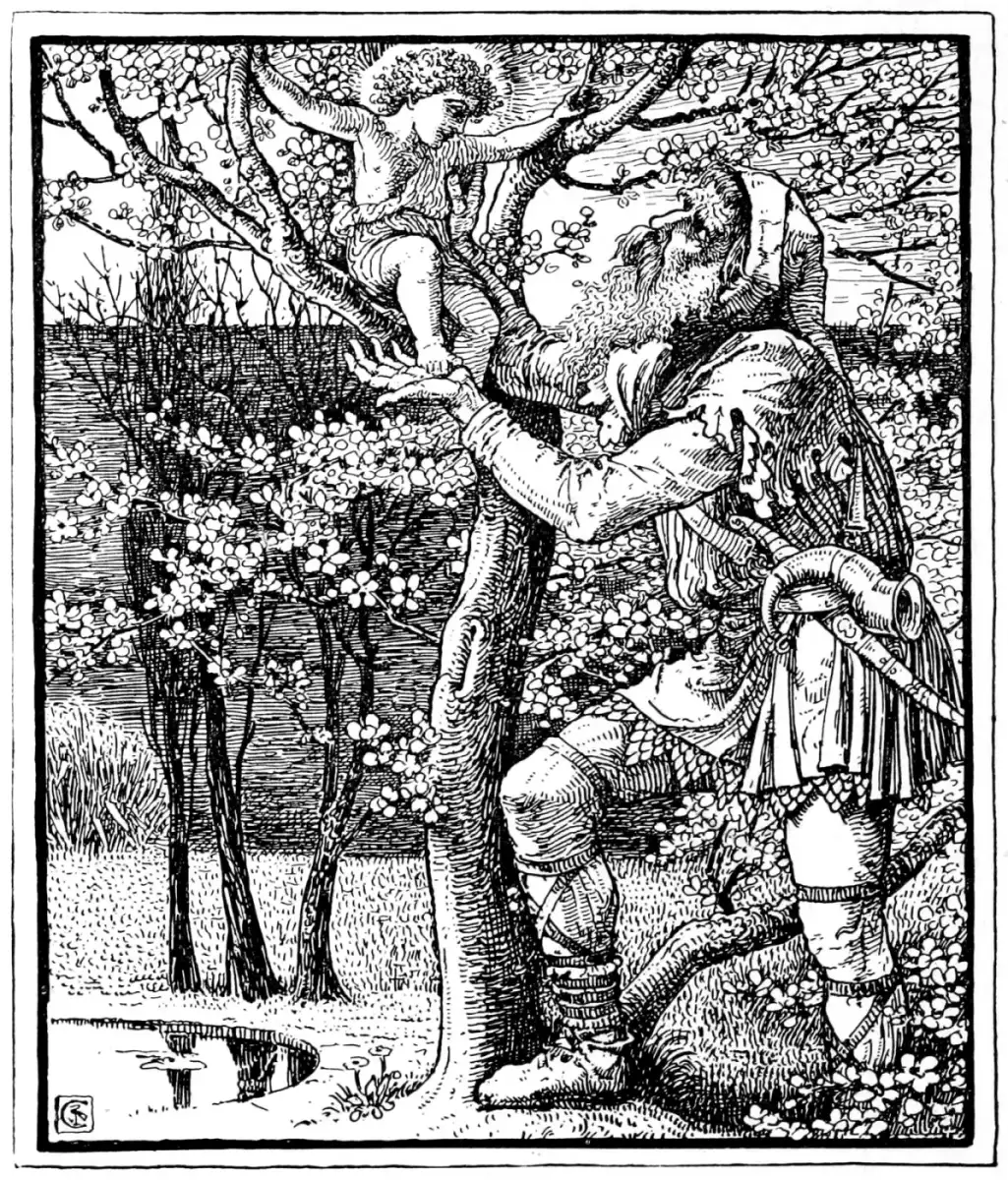
After spring and then summer arrive in the city, but not in the garden of the Giant, where the north wind, hail, snow and frost continue to persist, making him worried. One day, from his bed, the Giant hears a bird sing and seems to him the most beautiful song I've ever heard, so look out and see that spring has finally arrived in her yard and, above all, that some children have managed to enter through openings in the wall and are climbing on trees; only in the farthest corner of the garden still reigns winter and just in that corner there is a very small blond child who is unable to be because of it. Extended by this vision, the giant realizes that he was really very selfish and repented, so he comes out and first raises the child helping him to climb the tree, receiving in return a kiss from the little one, then lowers the wall and allows again children (who initially had run away terrified in seeing it, then come back when they realized that he was no worse) to play in his yard, playing with them too.
The children, from that moment, always go back to play in the garden, but the favorite child of the Giant, what he had kissed him, no longer shows. The Giant asks the children if they know where it is, but everyone tells them that they don't know him and never saw him before.
Over the years the giant ages, stops playing with children and is satisfied to watch them happy sitting in an armchair. One morning in winter, while dressing, the Giant sees the blond child at the foot of a golden tree with silver fruits, in the farthest corner of the garden. Happily running to the child, he sees that he leads to the hands and feet of the signs of nails and, angry, asks him who was the author of such cruelty, claiming he wants to kill him with his sword. The child responds by saying that it is the wounds of love, so the Giant, pervaded by a strange reverential fear, asks the child who he is, and it tells him that, as once the Giant had allowed him to play in his garden, he is going to return him favor by bringing him to play with him in his garden, namely Paradise (the blond child, therefore, would be a representation of Jesus).
When the children, that afternoon, enter the garden, find the dead giant, lying on the ground, covered with white flowers and smiling face.
Related Works
The selfish giant is part of the collection The happy prince and other tales together with:Explore this chapter
The selfish giant is part of the collection The happy prince and other stories together with:
- The Happy Prince;
- The nightingale and the rose;
- The devout friend;
- The exceptional rocket.
Adaptation
Explore this chapter
- The selfish giant (1971), animated short film directed by Peter Sander.
- The selfish giant (1977), episode of the anime series The most beautiful fairy tales of the world.
- The selfish giant (2013), film directed by Clio Barnard, loosely based on the story.
Issues
Explore this chapter
- Oscar Wilde, The selfish giant, illustrations by Guido Pigni, Beccogiallo, Milano, Mursia, 1993, ISBN 978-88-425-1543-2.
Continue your journey