A closer look
Giovanni Andrea Casella: at a glance
Giovanni Andrea Casella (Carona, 1619 – Carona, circa 1685) was a Swiss-Italian painter.
Biography
The beginnings and works in Piemonte · Travel to SwitzerlandExplore this chapter
The beginnings and works in Piemonte
Active in Piemonte After learning about the fundamentals of the trade perhaps in the Roman workshop of Pietro da Cortona, he married Caterina Casella, sister of his collaborator Giacomo. With him, from 1642 to 1650, he worked at the Castello di Rivoli, the Palazzo Reale in Turin and the Duomo of the Piedmontese city. Here he made the shovel Santa Cecilia in front of the Virgin with the Child (certainly created no later than 1652, when it was mentioned in an inventory) and later, in 1660, the fresco Four episodes of the life and martyrdom of Saints Cosma and Damian (in the chapel of San Giovanni Battista) and the altarpiece Apparition of the Virgin and the Trinity to Saints Cosmas and Damian (created for the chapel of Saints Cosmas and Damian, but today preserved in Silvano d'Orba in the church of San Sebastiano[1]). Other of his works in the Piedmontese city, but both now moved, are the altarpiece of the Chapel of Saints Cosma and Damiano, today preserved in Tortona, and theApparition of the angel to Saints Maximus Bishop and Antonio Abbot (today in Carmagnola, in the church of San Luca a Vallongo). In 1655 he painted, again with Giacomo Casella, the altarpiece San Carlo Borromeo in adoration of the Holy Shroud for the church of San Carlo. In the same year he collaborated with Bartolomeo Caravoglia and Sebastiano Carello at the decorations of the chapel of the Compagnia di San Luca and, between 1658 and 1659, with them he was appointed to decorate that of the Society of Sant'Anna dei Luganesi in the church of San Francesco d'Assisi in Turin. From 1660 to 1666, he dedicated himself - with Giovanni Battista, Giovanni Paolo Recchi, Jean Miel and Charles Dauphin - to the construction of frescoes in the villas and palaces of some local nobles. In the same period, however, he also obtained the task of painting the frieze of the Sala delle Virtù of the Royal Palace and that of the Hall of Congregations of the City Palace. Here he also realized the Figures anthropomorphic and putti and the Justice in the Council Hall. Between 1662 and 1664, he also painted paintings in the room of the Magnificenze del Castello del Valentino and, in collaboration with Giacomo Casella, Britomarte delivering a temple to Diana for the Hall of the Temples in the Royal Venaria Palace[2]. His last work in Turin was the fresco created with his brother-in-law in the vault of the church of Santa Cristina (1666), which he also decorated with five canvases.
Travel to Switzerland
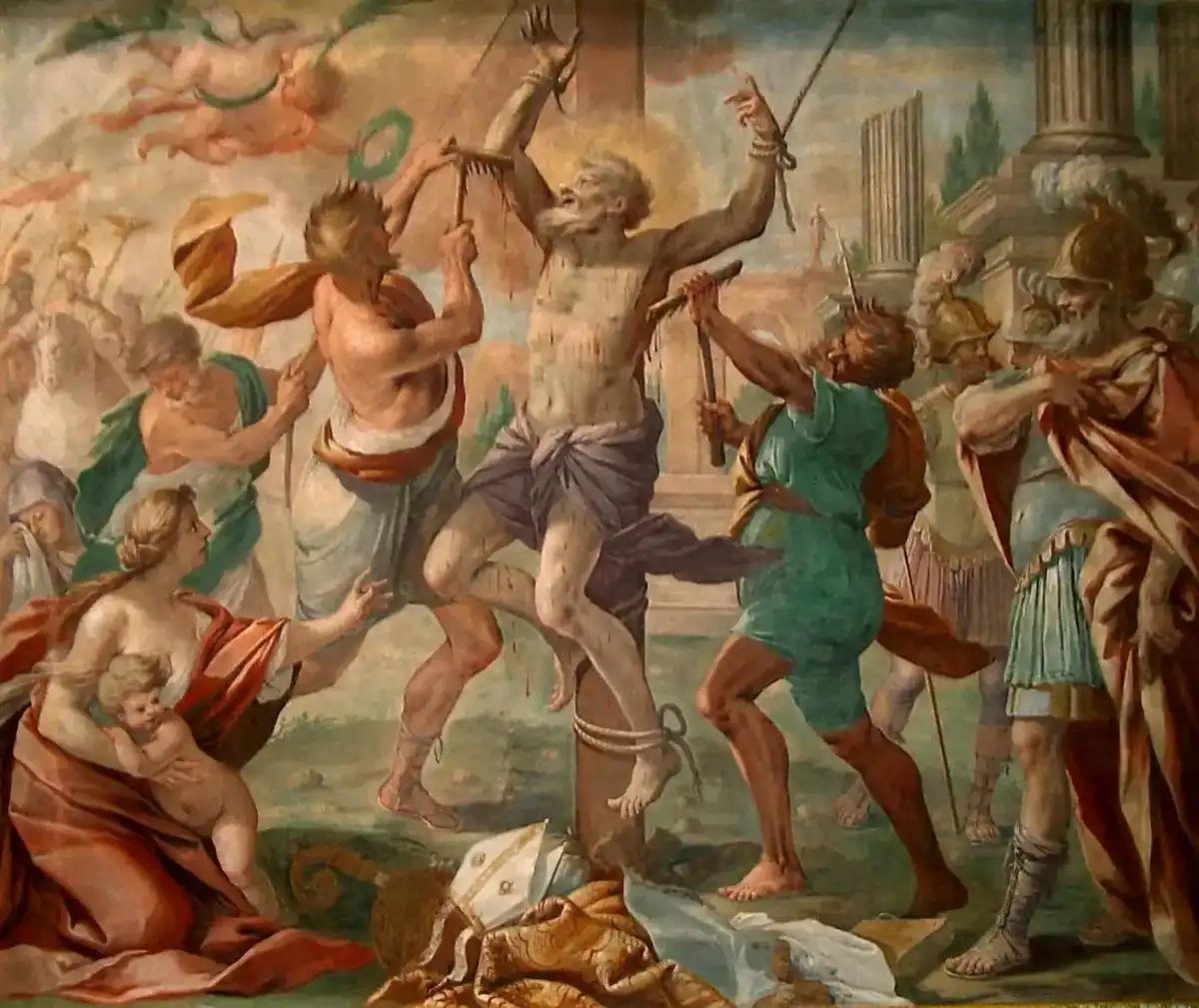
With Giacomo Casella, however, he also worked in his homeland, Switzerland: in 1655 the two were active in Carona, where they painted two altarpieces in the church of Santa Maria d'Ongero and the Scenes of the Life of the Virgin, in three boxes, and the Vision of St. Anthony the Patavino in the presence of San Carlo Borromeo (1659) in the chapel of Sant'Antonio da Padova. In 1660 they were in Sala Capriasca, where they created the canvases Saint Anne And Saint Joseph in the church of Sant'Antonio Abate. Then, in 1662, the two moved to Lugano, where they made two frescoes, the Martyrdom of Saints Biagio and Sebastian, in the presbytery of the church of San Rocco, and a third fresco, probably earlier, which represents theApparition of the Child to Saint Anthony of Padua and is preserved in the church of Our Lady of Loreto. Finally they moved to Castagnola, where some other frescoes were made in the church of San Giorgio. attributed thresholds are St. Joseph with the Child, preserved in the parish house of Balerna and the fresco in the chapel of the Madonna and the altarpiece with theAssumption of the Virgin before the twelve Apostles kept in the church of San Cristoforo di Caslano. Less certain is the paternity of four frescoes in the same church: the Pietà, the Presentation of Jesus at the Temple and two Sibille. The last work certainly attributable to his work, however, is the altarpiece San Rocco and the angel, painted for the chapel of San Rocco in the church of Santi Pietro e Paolo, in Camignolo.
Bibliography
Explore this chapter
- Federica Bianchi, Edoardo Agustoni, The Casella di Carona, in the Artists of the Lakes Series. European itineraries, number 6, Editrice Fidia, Lugano 2002.
- Andrea Spiriti, Swiss artists and architects in Turin. The reasons for continuity, in Giorgio Mollisi (ed.), Swiss in Turin in history, in art, in culture, in the economy from the sixteenth century to today, «Arte&Storia», year 11, number 52, October 2011, Edizioni Ticino Management, Lugano 2011, 56-65.
- Laura Damiani Cabrini, Giacomo and Giovan Andrea Casella. Two Carolinian painters in the 16th century Turin, in Giorgio Mollisi (ed.), Swiss in Turin in history, in art, in culture, in the economy from the sixteenth century to today, «Arte&Storia», year 11, number 52, October 2011, Edizioni Ticino Management, Lugano 2011, 294-309.
Continue your journey