Atlas of Monferrato
Buttigliera d'Asti: sights, history and trails
Asti
- Elevation
- 299 m above sea level
- Area
- 19.16 km²
- Demonym
- Patron saint
- San Bernardo di Chiaravalle
A closer look
Discovering Buttigliera d'Asti
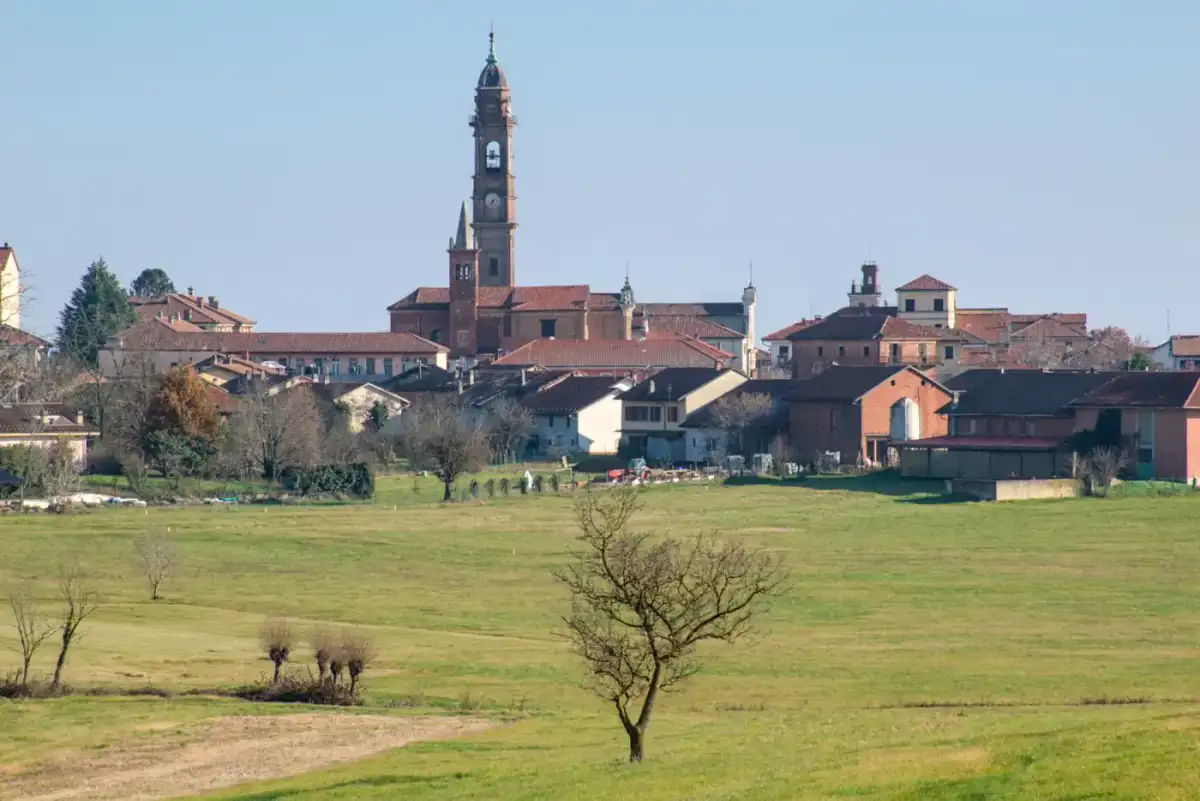
Buttigliera d'Asti (Butijah or Butijera d'Ast in Piedmont) is an Italian municipality of 2 507 inhabitants[2] from the province of Asti in the Piemonte.
It is part of the Union of Municipalities - Community Collinare "Alto Astigiano" and the "Sportello unico per le attività productive Nord Astigiano"
History of Buttigliera d'Asti
SymbolsExplore this chapter
In 1263 the commune of Asti had conquered the castle of Mercury to the Dukes of Biandrate and created a settlement (villa nova) in the named territory Butigeria, near the castle. The settlement had extensive autonomy (attested by a statute dated 1471) which it retained even after passing under the Savoy in 1559. From 1619 it became a fiefdom of Ernst von Mansfeld and subsequently passed in the first half of the seventeenth century to Matilde of Savoy and Bernardino Gentile. The ownership of the fief then passed to the Baronis counts, and in 1725 to the Freylino (or Freylin) counts.
The country suffered from epidemics, famines and troop passes since the 16th century. After the peace of Aquisgrana, the situation improved: a renowned production of terracotta pots developed (terraced vessels) and agriculture, with the production of cereals and wine.
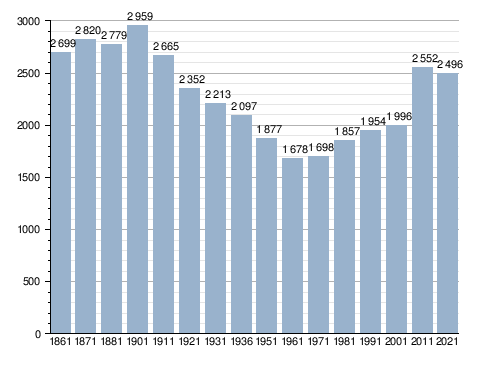
From the beginning of the 20th century, the population decreased due to emigration to Turin (in 1901 2 959 inhabitants were reviewed).
The territory is part of the production area of Barbera d'Asti, DOC wine.
Symbols
(Presidential Decree of 16 November 1994)
The coat of arms and gonfalone were granted by decree of the President of the Republic of 16 November 1994.[5] The oldest representation of the coat of arms appears on the copy of the municipal statutes of 1546. Its use was confirmed in 1614 by the ducal commissioners, following the edict of Carlo Emanuele I on the kind weapons.[6] The gonfalone is a white drape, richly decorated with silver embroidery and loaded with the coat of arms described above.
What to see in Buttigliera d'Asti
Church of San Biagio · Other buildingsExplore this chapter
Church of San Biagio
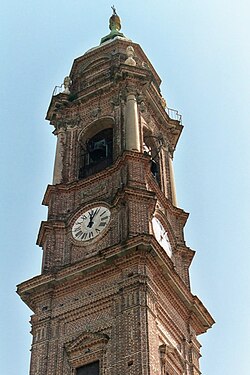
- Parish church of San Biagio, built in the 15th century in Gothic style, presents at the sides of the portal the statues of St. Blaise and Saint Bernard, patron saint of the country. The three aisles interior, with marble-covered pillars and modern frescoes on the vaults. The main altar of 1796 houses a wooden crucifix by Carlo Plura; there is also a painting by Vittorio Amedeo Rapous that comes from the chapel of Santa Elisabetta and depicts the saint. St John Bosco was believed in the church. The organ, from the church of Santa Teresa in Turin, was purchased in 1836.
- Next to the church stands the bell tower, finished in 1789, designed by architect Mario Ludovico Quarini, which reaches a height of more than 52 m, making it the highest of Monferrato.
Other buildings
- Palazzo Freylino, built around the middle of the 17th century by the will of Count Amedeo Baronis, was sold together with the fief in 1771 to Count Lorenzo Freylino, who installed a botanical garden. The palace was inherited by Maurizio Pangella in 1820, but the garden no longer cared for went into ruin and disappeared.
- Other religious buildings are:
- Chapel of St. Martin, Romanesque and belonged to the Order of Malta, today chapel of the cemetery
- Chapel of St. Bernard by Chiaravalle at the pond of Furnas (which takes its name from a brick furnace that is active here in the 15th century)
- Chapel of St. Elisabeth, built in 1702 as an oratory for the Brotherhood of the Humiliates of Saint Elizabeth (constituted in 1646) and since 2002 the seat of the municipal library
- Chapel of St. Anthony of Padua built in the current forms around 1744
- Church of San Michele Arcangelo, work by Bernardo Antonio Vittone of 1758 and seat of the Brotherhood of the Most Holy Name of Jesus
- Chapel of St. Joseph of 1624, rebuilt in 1828
- Church of San Rocco
- The Madonnina
- Other palaces:
- Lombard Palace of the end of the 17th century
- Palazzo Biglione, 17th-XVIII century
- Palazzo Cillio di Mombello, seat of the chaplains of an ecclesiastical benefit
- Cascina Bergandino in the hamlet of Serra, country villa with attached chapel of Santo Stefano in the eighteenth century
- Cascine Colombaro, farm of the eighteenth century of the Carmelites order Asti
- Melyna Palace of the 18th-XIX century
Society
Demographic evolution · Foreign ethnic groups and minorities · Institutions, bodies and associationsExplore this chapter
Demographic evolution
Inhabitants registered[7]
Foreign ethnic groups and minorities
According to ISTAT data, at 31 December 2018 the resident foreign population was 126 people, equal to 5% of the resident population.
The nationalities most represented by their percentage of the total foreign population were:
- Romania 84 (66.7 %)
- Morocco 20 (15.9 %)
Institutions, bodies and associations
- Municipal band
- Municipal polyphonic choir Santa Cecilia
- Celebration Committee Serra-Crivelle
- A.S.C.D. Buttiglierese95 amateur cultural sports association
- Equestrian Association "Don Bosco"
- Oratory of St. Joseph
- Tourist Association "Pro Loco Buttigliera d'Asti", up sites.google.com. Retrieved 11 September 2013 (archived fromoriginal url on 27 March 2014).
- Association Friends of Crivelle
There are also local offices of the Association for Hospital Volunteers and Fidas (blood donors) and a Alpini Group.
The municipality also retains the archive of the "Worker Society of Buttigliera d'Asti", active in the period 1869-1929.
Culture
EventsExplore this chapter
Events
- Traditional Fair of the Upper Astigiano "Le contrade del Freisa" (1 May)
- Patronage of San Bernardo (20 August)
- Feast of garlic, turkey and blonde chicken (19 August).
Anthropic geography
HamletsExplore this chapter
Hamlets
- Crivelle: it takes its name from the family of the Crivelli, landowners in the 16th-XVII century. The chapel of Santa Maria di Celle (attested in 1282 as Sancte Marie de Celer), the chapel of San Bartolomeo from the early 19th century and the parish church of Santi Vito, Modesta and Crescenzia, built in 1914 by the engineer Antonio Vandone di Cortemilia.
Based on the 2001 census data, the village has 284 inhabitants, of whom 217 live in the hamlet, 21 in the hamlet Fabbri, 39 in the township Meliga and 7 in the town of San Bartolomeo
- Serra: settlement already attested in 1034 and rises on a soil rich in fossils: in the 19th century the geologist Bartolomeo Gastaldi discovered remains of elephant. The chapel of the village is dedicated to San Grato.
According to the 2001 census data, the fraction counts 143 inhabitants.
Administration
Below is a table relating to the administrations that have succeeded one another in this municipality.Explore this chapter
Below is a table relating to the administrations that have succeeded one another in this municipality.
| Period | First citizen | Match | Load | Notes | |
|---|---|---|---|---|---|
| June 4, 1985 | May 25, 1990 | Roberto Bechis | Christian Democracy | Mayor | [8] |
| May 25, 1990 | April 24, 1995 | Louise White | Christian Democracy | Mayor | [8] |
| April 24, 1995 | June 14, 1999 | Marco Maccagno | center | Mayor | [8] |
| June 14, 1999 | June 14, 2004 | Silvio Manello | civic list | Mayor | [8] |
| June 14, 2004 | June 8, 2009 | Silvio Renzo Manello | civic list | Mayor | [8] |
| June 8, 2009 | May 26, 2014 | Roberto Bechis | civic list | Mayor | [8] |
| May 26, 2014 | May 27, 2019 | Francesca Capellino | civic list | Mayor | [8] |
| May 27, 2019 | in office | Guido Fausone | civic list | Mayor | [8] |
Notes
Explore this chapter
- ^ Municipality of Buttigliera d'Asti : Municipal Administration and Mayor - City of Buttigliera d'Asti e città, Asti, Piemonte, up www.comune-italia.it. URL consulted on 5 August 2026.
- ^ to b Monthly demographic balance for the year 2026 (provisional data), up demo.istat.it, ISTAT.
- ^ Seismic classification (XLS), up risks.protezionecivile.gov.it.
- ^ Table of degrees/day of Italian Municipalities grouped by Region and Province (PDF), in Law 26 August 1993, n. 412, annex A, National Agency for New Technologies, Energy and Sustainable Economic Development, 1 March 2011, p. 151. URL consulted on 25 April 2012 (archived fromoriginal url on 1 January 2017).
- ^ Buttigliera d'Asti, up Heraldic Office, Municipal Issues, Central State Archives. Retrieved 17 June 2023.
- ^ Buttigliera d’Asti, up araldicacivica.it. URL consulted on 9 November 2021.
- ^ Data taken from:
- Resident population of the municipalities. Censuses from 1861 to 1991 (PDF), up ebiblio.istat.it, ISTAT.
- Resident population - Time series, up exploredati.istat.it.
Please note: 2021 data refers to permanent census data as of December 31 of that year.
- ^ to b c d And f g h https://amministratori.interno.it/