Atlas of Monferrato
Chiusano d'Asti: sights, history and trails
Asti
- Elevation
- 261 m above sea level
- Area
- 2.42 km²
- Demonym
- closed
- Patron saint
- Madonna del Carmine
A closer look
Discovering Chiusano d'Asti
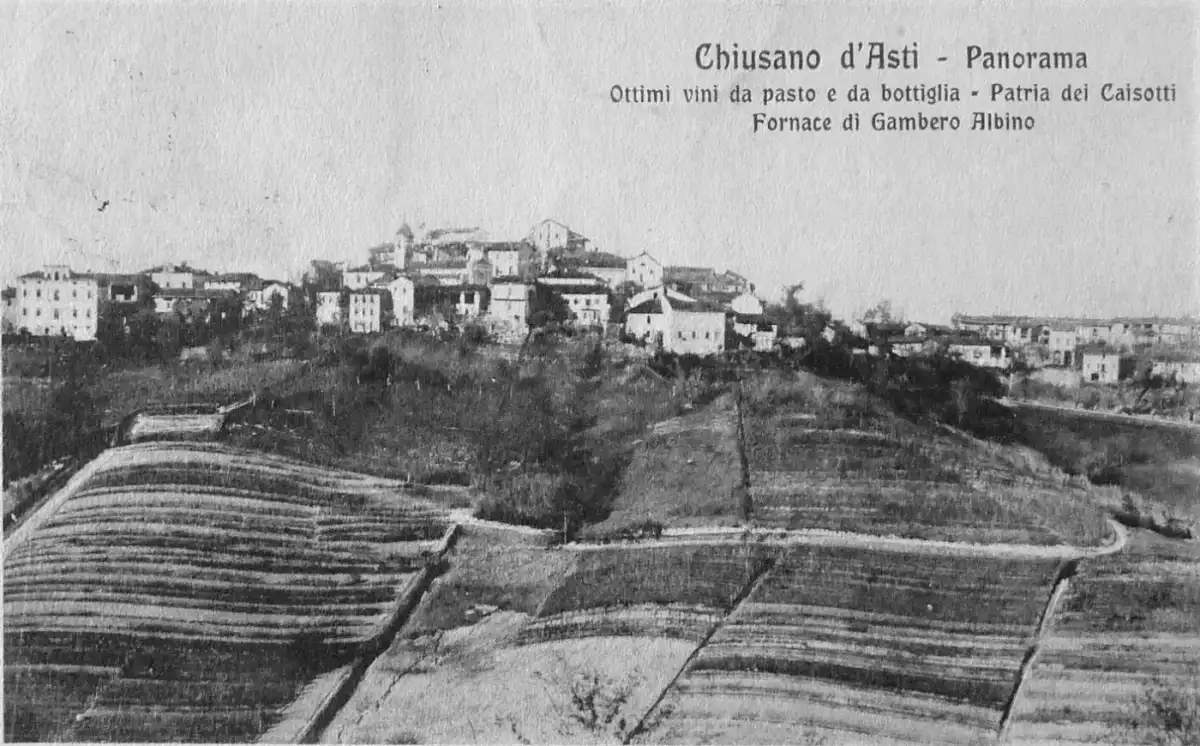
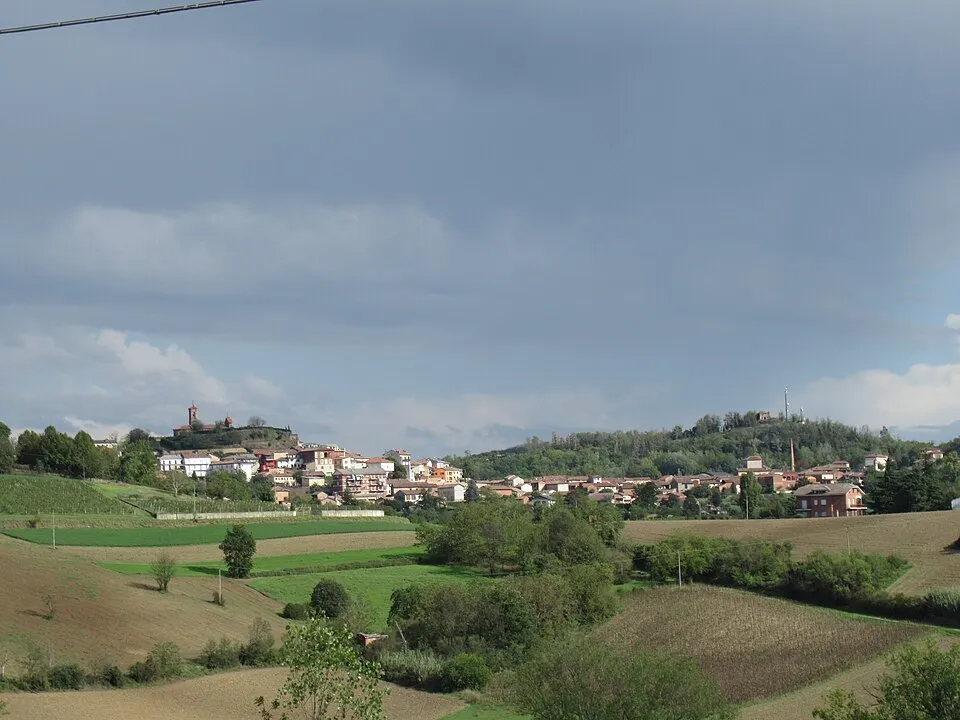
Chiusano d'Asti (Ciusan in Piedmont) is an Italian municipality of 239 inhabitants[1] from the province of Asti in the Piemonte.
The municipality is part of the Municipal Union Community Collinare Val Rilate
Origins of the name
The Latin name Cixanum, from which Chiusano derives, would indicate, according to some historians, the possessions or pods of Cixius. According to other hypotheses, the name would indicate...Explore this chapter
The Latin name Cixanum, from which Chiusano derives, it would indicate, according to some historians, the possessions or pods of Cixius.
According to other hypotheses the name would indicate the "closed" of the Rilate Valley as a defense of Asti to the north.
History of Chiusano d'Asti
SymbolsExplore this chapter
Between the end of the 15th century and the first half of the next name changes in Clusal and finally in Chiusano.
The origin of the center is uncertain. It can be safely affirmed that it is, since 962, possession of the bishop of Asti by the will of Emperor Otto I. The time of the struggles between Guelphs and Ghibellines, passes into fief to the lords of Cossombrato, who voluntarily join the town of Asti in 1198.
In 1387 his name appears among the places granted in dowry to Valentina Visconti. Subsequently it is divided by Cossombrato and becomes autonomous municipality in 1619, although the Pelletta family still believed it to be part of its own lordship.
Under the Duke Vittorio Amedeo II, Chiusano was granted to Caisotti, originally from Nice, France; he obtained municipal freedom in 1619.
Symbols
The coat of arms of the municipality is currently awaiting official recognition. The crowned lion rampant is resumed by the blason of the Pelletta family[5] (of gold, blue lion, armed, tongued and crowned with red), who included Chiusano in their Lordship in the second half of the 15th century, even if they had been partially owners of it since the 13th century.
The banner is a blue cloth.
What to see in Chiusano d'Asti
The Parish Church and the Black Madonna of Guadalupe · Church of Santa MariaExplore this chapter
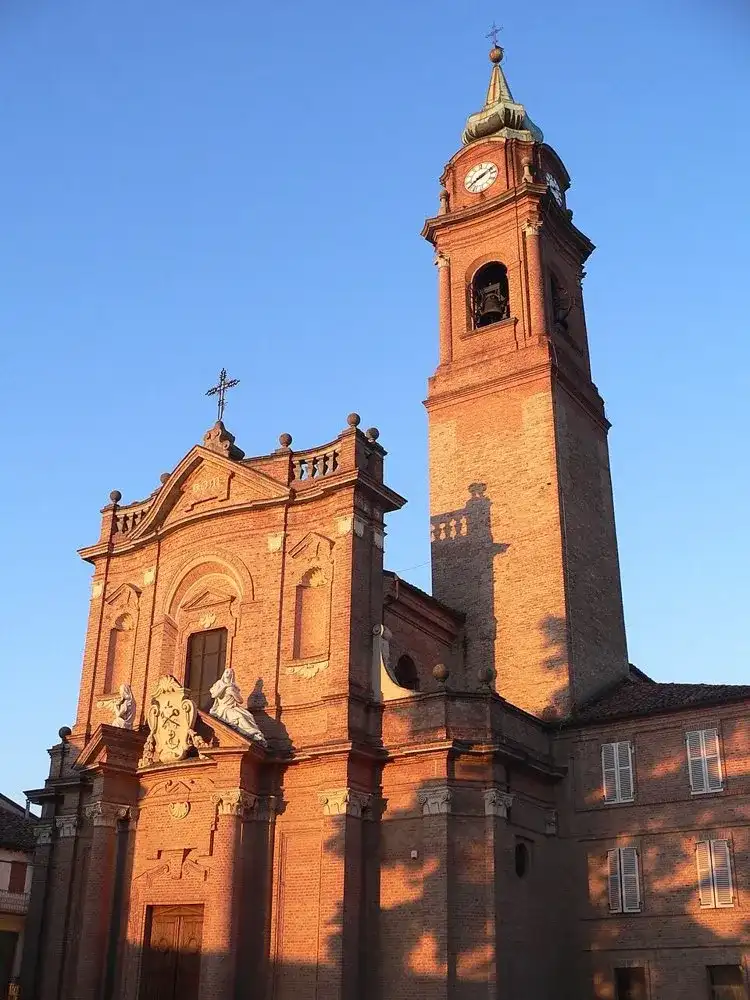
The Parish Church and the Black Madonna of Guadalupe
The parish church, dedicated to the Madonna del Carmine, is attested in documents from the end of the sixteenth century. It was the object of renovations and expansions in the 17th century and in the second half of the 18th century, when it assumed the current forms on design by the Turinese architect Giovanni Battista Pagano. The elegant late-baroque façade, plastered in white, is characterized by a large elliptical oculo, a horizontal half-height frame and a trabeation surmounted by the triangular tympane.
Inside, with a single nave with four side chapels, there are valuable 18th century furnishings, a baptismal font and coevi mural paintings. Two large canvases from the 18th century, but restored in the 19th century, depict the Madonna with Child and Saints. Behind the main altar there is a painting of the Black Madonna of the Shrine of Guadalupe, brought from New Mexico in 1752 by Giovanni Battista Codiga, who had made his fortune overseas.
Church of Santa Maria
On the edge of the municipal road that leads from the valley floor to Chiusano d'Asti, along a path leading to a wooded hill, there is the small church of Santa Maria. The building, dating back to the 14th century, was restored in the 17th and 19th centuries before being restored in 2003. The simple hut facade is framed by two corner parastes that hold a triangular timp, at whose base opens a small oculo oval. The apse has an arched frame. Inside, a fresco of the 17th century is preserved in the absidal catino.Announcement.
Society
Demographic evolution · Traditions and folklore · The peseraExplore this chapter
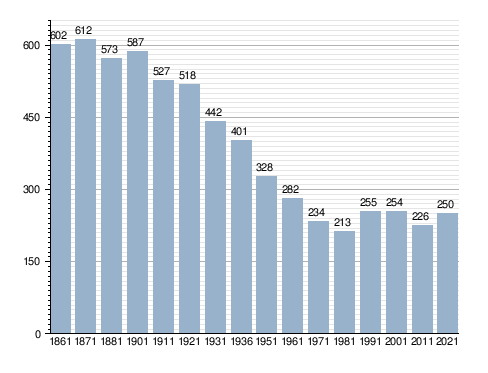
Demographic evolution
Traditions and folklore
The drum
Basketball is the sport par excellence of Chiusano d'Asti. The sports company was born in 1968 under the name "Union Sportiva Chiusano", arborando i colori giallo e blu sulla coat of arms of the municipality. The first tournament in which the team's participation is held is the Tournament of Monferrato in 1968, to which a "preview" team is added (which corresponds to the modern "Under 18").
The sports field, once located in the valley near the lake, was moved in 1989 closer to the historic center, and entitled to Renato Gerbo, a closed drummer. It can be reached by car through the provincial road, and on foot through the pedestrian path "The garden of poets".
Important Piedmontese sports nursery, the company U.S. Chiusano made his Serie A debut in 2019, after a six-year cycle in which the company won the maximum series of promotions starting from Serie D. During his only year in Serie A, the U.S. Chiusano conquered salvation, but decided to start again from Serie D with a new group of young people.[7]
In 2025, Chiusano again won the promotion in Serie B, but gave up. In 2026, Chiusano participated in the Piedmont D Series.
The pesera
Perhaps Chiusano d'Asti is the only country in the province to have kept alive the tradition of "Pessera". Oral testimony of this propitiatory rite is documented from the end of the nineteenth century to today.
The pessera is a particular variety of fir trees characterized by the trunk perfectly right to the point to be used for the ships' trees. At every birth of a male son the whole country celebrates the event carrying, at dusk, a long "heavy" in procession through the streets of the village, ending in the nursery of the newborn where it is planted after being decorated at the top with the flag of Italy and other objects that symbolize what hopes for the future man. All of course accompanied by music, dances, drinks and food offered by the family of the birthday party. To hold the "heavy" are only the co-written, that is the boys of the lever of that year plus the men who celebrated the lever ten, twenty, thirty years before and so below ten in ten.
The rite will be repeated at the end of the eighteenth year, at the feast of leverage, when always the conscripts will carry in procession, with songs and dances, the “heavy” and will return to replant it in the hay of the celebrated; this time however, the future man will have to defend it, all night, from its overthrow or theft by the co-writes of other neighboring countries.
The "heavy" is a typically male pay rite of welcoming a new member in the community. Since 1959 the rite has been emancipated adapting itself to the times, in fact it lost its male prerogative turning into a feast for all births: of males and females.[8]
Infrastructure and transport
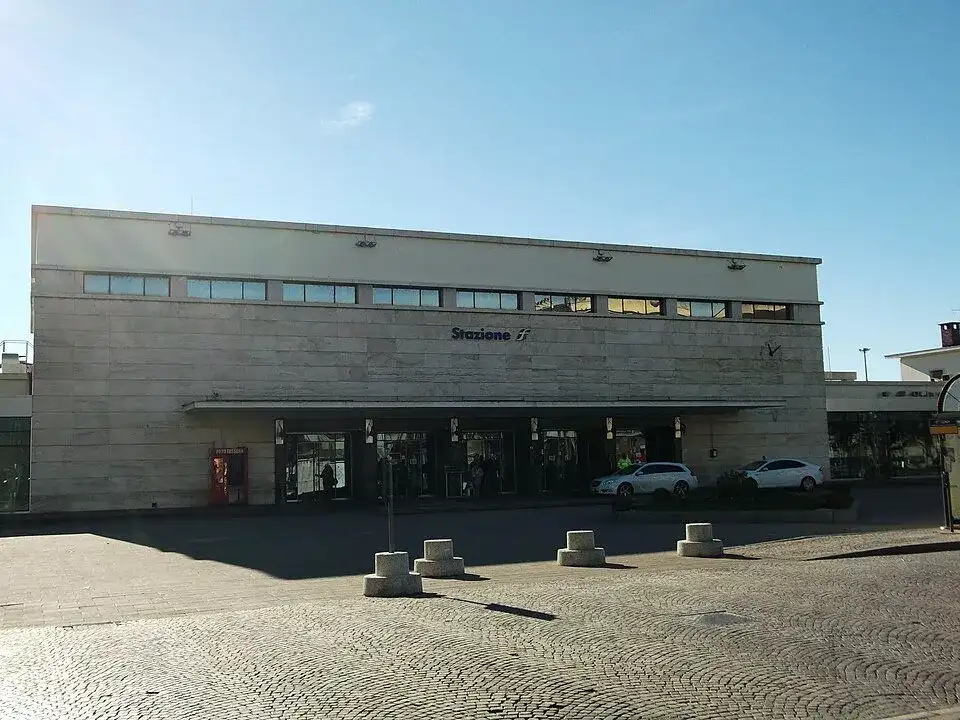
Chiusano-Cossombrato station was activated in 1912 along the ceased Chivasso-Asti railway, whose operation was permanently suspended in 2011.Explore this chapter
Chiusano-Cossombrato station was activated in 1912 along the ceased Chivasso-Asti railway, whose operation was permanently suspended in 2011.
Between 1882 and 1915 Chiusano d'Asti was served by the Asti-Cortanze tranvia.
Administration
Below is a table relating to the administrations that have succeeded one another in this municipality.Explore this chapter
Below is a table relating to the administrations that have succeeded one another in this municipality.
| Period | First citizen | Match | Load | Notes | |
|---|---|---|---|---|---|
| June 12, 1985 | March 12, 1988 | Giancarlo Bosco | civic list | Mayor | [9] |
| March 12, 1988 | May 22, 1990 | Albino Bosco | - | Mayor | [9] |
| May 22, 1990 | July 24, 1992 | Albino Bosco | - | Mayor | [9] |
| July 31, 1992 | April 24, 1995 | Sobrero | - | Mayor | [9] |
| April 24, 1995 | June 14, 1999 | Sobrero | centre-right | Mayor | [9] |
| June 14, 1999 | June 14, 2004 | Sobrero | civic list | Mayor | [9] |
| June 14, 2004 | June 8, 2009 | Marisa Varvello in Aquilini | civic list | Mayor | [9] |
| June 8, 2009 | May 26, 2014 | Marisa Varvello | civic list | Mayor | [9] |
| May 26, 2014 | May 26, 2019 | Marisa Varvello | list civic Grappolo d'uva | Mayor | [9] |
| May 26, 2019 | in office | Luigi Bosco | Mayor | [9] | |
Notes
Explore this chapter
- ^ to b Monthly demographic balance for the year 2026 (provisional data), up demo.istat.it, ISTAT.
- ^ Seismic classification (XLS), up risks.protezionecivile.gov.it.
- ^ Table of degrees/day of Italian Municipalities grouped by Region and Province (PDF), in Law 26 August 1993, n. 412, annex A, National Agency for New Technologies, Energy and Sustainable Economic Development, 1 March 2011, p. 151. URL consulted on 25 April 2012 (archived fromoriginal url on 1 January 2017).
- ^ Regional Council Piemonte (edited by), Piedmontese civic coat of arms, vol. I, A-L, 2016, p. 168, ISBN 978-88-96074-98-5.
- ^ Coat of arms, up Municipality of Chiusano d'Asti. Retrieved 12 November 2021.
- ^ Data taken from:
- Resident population of the municipalities. Censuses from 1861 to 1991 (PDF), up ebiblio.istat.it, ISTAT.
- Resident population - Time series, up exploredati.istat.it.
Please note: 2021 data refers to permanent census data as of December 31 of that year.
- ^ Massimo Elia, Tamburello, Chiusano da leggenda: back the A series in the Astigiano!, in The New Province, 18 September 2018.
- ^ Municipality of Chiusano d'Asti, The tradition of "Pessera", up common.chiusanodasti.at.it.
- ^ to b c d And f g h the j Register of local and regional administrators, up administrators. interno.it.
Where to stay · Chiusano d'Asti
Find stays on Booking.comThe area, step by step
Trails and routes in Chiusano d'Asti
 Mountain bikeAround the starting point
 Mountain bikeAround the starting point
 Mountain bikeAround the starting point
 Mountain bikeAround the starting point
 Mountain bikeAround the starting point


