A closer look
Cessole Castle: at a glance
The Cessole castle was a medieval castle located Cessole, in province of Asti.
History and description
Built on the remains of a settlement of stalls from which it would derive also the name of the country, originally Cessole was part of the goods of Bonifacio del Vasto and...Explore this chapter
Built on the remains of a settlement of Ligurians from which it would derive also the name of the country, originally Cessole was part of the goods of Bonifacio del Vasto and its descendants until in 1142 the fief passed to Bonifacio Minore, first Marquis of Cortemilia, then passed into the hands of Enrico del Carretto who in 1191 or 1209 ceded it to the municipality of Cortemilia Asti to be infeuded in return.[1][2]
After the decadence of the municipality of Asti Cessole had a phase of autonomy that lasted until the early fourteenth century, when he entered into possessions from the Marquis of Saluzzo; subsequently for the difficulties to manage a fief so distant the Marquis sold it to the Scarampi.[1][2]
With the Treaty of Cherasco before and the peace of Westphalia after Cessole was among the territories that entered into being part of the domains of Casa Savoia.[1][2]
The ancient castle was destroyed in 1644 due to the clashes that broke into the area because of the war of Spanish succession, until today only some remains of the original wall curtain and traces of the main tower are survived.[2]
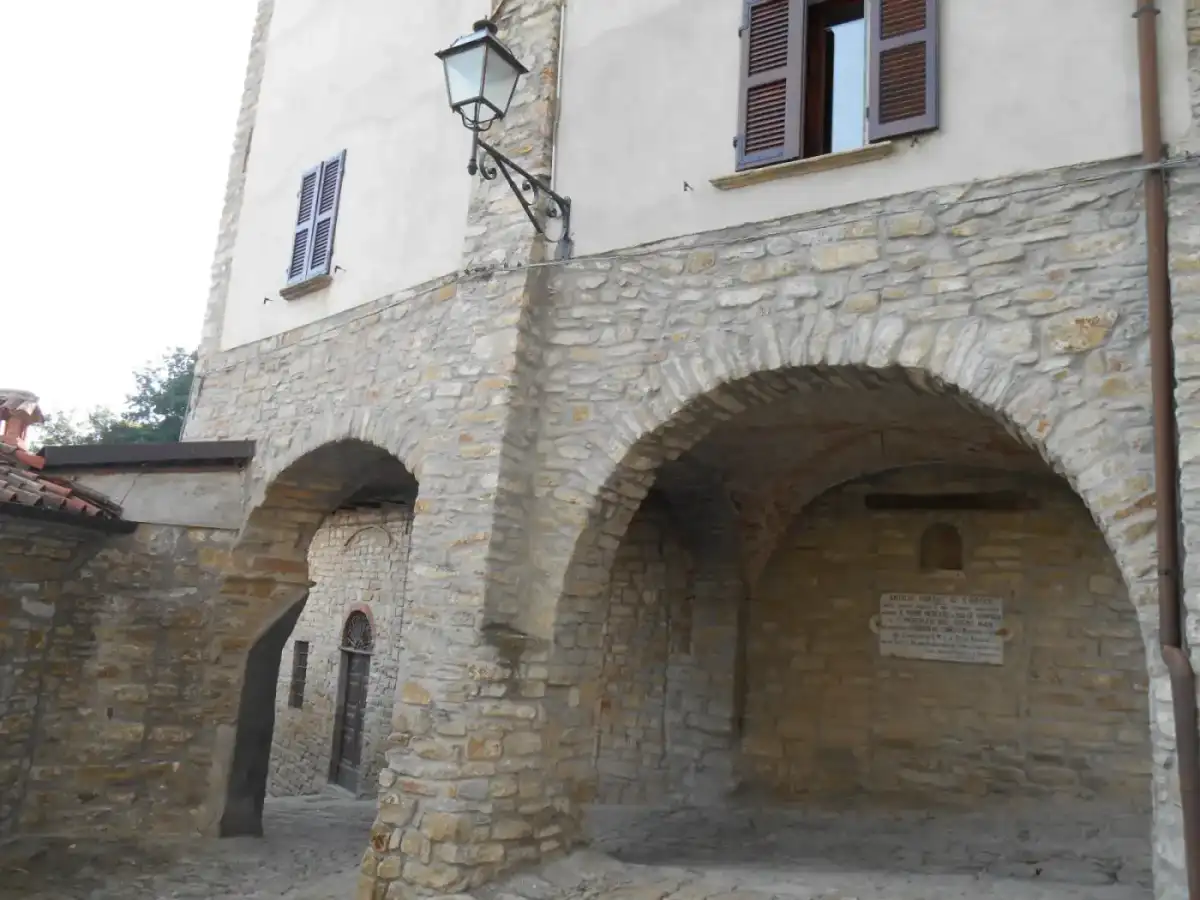
The complex was located on the top of the old town where today is the church of Sant'Antonio da Padova. In the area called "old cemetery" are still legible the foundations of the tower that together with the surviving walls indicate that at the time the manor should have considerable dimensions and be the centerpiece of the life of the medieval village.[3]
The original settlement was enclosed within the walls and had two doors as accesses called Porta Soprana and Porta Sottana, inside this building concentrated the main houses, the shops and public buildings of Cessole. The local tradition recalls the castle as it has tunnels and underground passages connected to the houses below.[3]
Notes
Explore this chapter
Bibliography
Explore this chapter
- Rosella Seren Rosso, The castles of Piemonte. The provinces of Asti and Alessandria, Cavallermaggiore, Gribaudo, 2000, ISBN 9788880581628.
 Architecture portal
 Middle Ages portal
 Portale Piemonte
Continue your journey