Atlas of Monferrato
Grazzano Badoglio: sights, history and trails
Asti
- Elevation
- 299 m above sea level
- Area
- 10.47 km²
- Demonym
- grazzanesi
- Patron saint
- Saints Victor and Crown
A closer look
Discovering Grazzano Badoglio
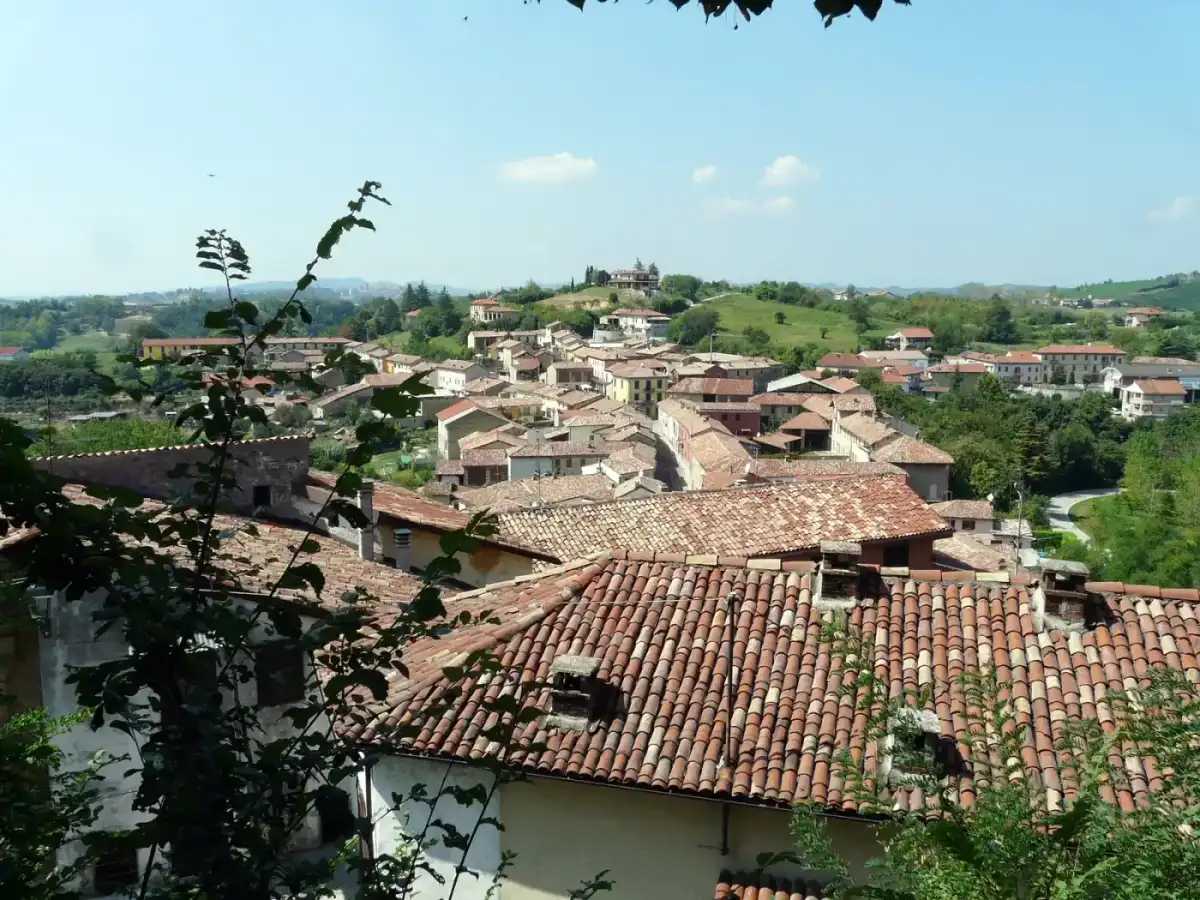
Grazzano Badoglio (Grassan in Piedmontese, Grazzano Monferrato until 1938) is an Italian municipality of 526 inhabitants[2] from the province of Asti in the Piemonte.
The original "Monferrato" appellation, on the proposal of podestà, was replaced by the present in 1939, in honor of the Italian Marshal Pietro Badoglio, who was born there in 1871.[5]
History of Grazzano Badoglio
SymbolsExplore this chapter
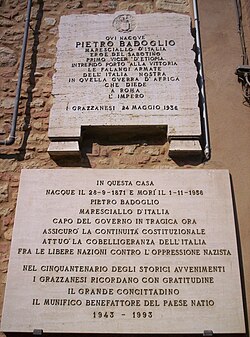
The name Grazzano comes from Free or from ♪. The parish church is dedicated to Saints Vittore and Corona.
Already Roman settlement, it is distinguished by its ancient abbey, founded in 961 by Aleramo, the first Marquis of Monferrato; entitled to the Saviour, to Our Lady and Saints Peter and Christina[What?], to remove it from the episcopal power of Vercelli, it was placed under the jurisdiction of the bishop of Turin.
The donations of goods and rights carried out by the Marquis prospered the monastery, which in 1408 adopted the reform of the Benedictine Order, "giving" an income to the papal curia of Rome of 150 florins[6] In 1708, with the annexation of Monferrato to the Savoy, they had the patronage of the abbey, triggering fierce controversies with Benedictine abbots.
Symbols
(D.P.C.M. 8 June 1942)
The shield in the center of the coat of arms is the emblem of Monferrato. The black and gold bandage reminds the domain of the dukes Gonzaga of Mantua.
What to see in Grazzano Badoglio
Aleramic Abbey · Parish church · Other churchesExplore this chapter
Aleramic Abbey
The Aleramic Abbey, today Parish of Grazzano Badoglio, is of significant architectural importance. In the year 961 Marquis Aleramo I of Monferrato founded, on the hill where today the church stands, an abbey that entrusted to the Benedictines who remained there for over four centuries.
The Romanesque bell tower, to which in 1910 a sopraelevation was added; the portico of the old parish house with balcony; the cloister, today renovated and reported to the ancient splendours; the octagonal apse visible from the outside (inside there were remodelling).
The greatest au pair of Aleramic Abbey was between the 12th and 15th centuries. By decree 16 August 1802 the secular aleramic abbey was suppressed by Napoleonic legislation, but the abbot continued to reside in the country under the title of "parroco citizen" (perpetual vine). The current church, dedicated to the Saints Vittore and Corona was built in the 16th century, but underwent various renovations and modifications as well as renovations.
Parish church
The parish church is adjacent to the abbey where you can see the balcony of the abbey house, the bell tower in Romanesque style, the portal dated 1766. In the chapel of the Rosary there is the tomb of Aleramo del Monferrato, which gave rise to Monferrato, remembered praying in the fresco attributed to Guglielmo Caccia, known as Il Moncalvo.
The tomb was transferred from the peristyle of the ancient abbey church to the side chapel of the parish, is decorated with an ancient mosaic in black and white[7] depicting two monstrous animals that face each other: on the left a sphinx ("woman winged" in the front, in the middle of "liberating and wild lion", and "drago winding" in the back, corresponding to the one described by Mesomede[8] poet lived at the time of Emperor Hadrian), on the right a lion dragon aptero in aggressive attitude with the crest on the head and the three characteristic emblematic lines on the neck.
The chapel of the Gonzaga is in baroque style with a painting representing "the death of St. Francis Xavier" by Andrea Pozzo, and a painting of the Madonna covered with a pink coat always of the Moncalvo. A great cross overcomes the altar. The wooden choir of '500 is adjacent to the sacristy in which the relic arm of San Vittore is guarded, which is carried in procession on 14 May.
In the chapels, some of which still retain the original stuccoes, you can still admire paintings of considerable interest. In this context, we are prepared to remember the Madonna immaculate by Guglielmo Caccia. It is attributed to the Hunt also the frescoed portrait over the tomb of Aleramo.
Other churches
Roman Funeral tombstone of the 2nd century AD.
In the outermost complex remained intact of the Aleramic Abbey, there is a Roman funerary tombstone of the 2nd century AD, probably one of the most important in Piemonte in his own kind. This monument was affixed by the living anchor T. Vettius Hermes (Tito Vezio Ermete), whose surname of Greek origin denotes its libertine condition, as the profession of trader of perfumes (Seplasarius).
The stone bears its will in which it has that its heirs, who will use its gardens and keep its ashes, carry in perpetual roses to his grave in the anniversary of his death and that the property is neither fractionated nor divided. The writing takes place in Latin language by abbreviations used at that time for this type of document.
In the upper part of the lapid is known the tympane framing a vase of grapes and two birds in the act of catching. There are two dolphins on the timpane's edges worked in bas-relief. Below runs a smooth band at whose ends are the letters V.F (Vivus Fecit) meaning "done while he was alive". Below you can see two pilasters with rods and a frieze with festoon motifs and almost completely abraded bas-relief heads that frame the inscription.
The Latin inscription reads:
V(ivus)f(ecit) T.Vettius T.l.Hermes seplasarius Mater genuit materq (ue) transepit. Hi horti ita uti o(ptimi) m(aximi) que sunt cineribus servite meis: nam curatores substituam, uti vescantur ex horum hortum nata meo et per [fortassesse] fer (ant) rosam forever. Hos hortos neque divide flight neq (ue) abalienari.
Stele Park
In Grazzano is the monument erected to the memory of Pietro Badoglio, consisting of a 24 meters high wire stem supported by a tripartite granite base and equipped with a lantern at the top. The work was carried out on the initiative of a committee promoted by the Pininfarina industrial to honor the memory of the Marshal friend and chaired by the then Minister of Defense Giulio Andreotti. The monument, designed by the Turinese architect Amedeo Albertini, is located in "Madonna dei Monti" and was inaugurated on 27 September 1964;[11] the three relief friezes that adorn the base are the work of Virgilio Audagna, sculptor from Turin. After a period of abandonment the monument and the small surrounding park have been recovered by some companies in the area, which since 2017 they care for its maintenance.[12]
Historical museum Badogliano
The Badogliano Historical Museum is housed in the birthplace of the Italian Marshal Pietro Badoglio, in via Badoglio 20, along the main street of the village. The Museum is organized on seven halls and two corridors and each one is dedicated to a theme or a significant period of the life of the marshal with a wide photographic, pictorial and objective documentation. The museum is home to the Children's Asylum "Antonietta Badoglio", active from 1937 to 1988 but still open to visitors.
Society
Demographic evolutionExplore this chapter
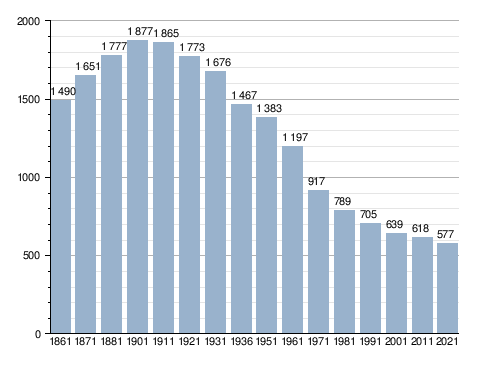
Demographic evolution
Administration
Below is a table relating to the administrations that have succeeded one another in this municipality.Explore this chapter
Below is a table relating to the administrations that have succeeded one another in this municipality.
| Period | First citizen | Match | Load | Notes | |
|---|---|---|---|---|---|
| June 11, 1985 | May 28, 1990 | Piero Monti | Italian Democratic Socialist Party | Mayor | [14] |
| May 28, 1990 | April 24, 1995 | Pier Domenico Penna | - | Mayor | [14] |
| April 24, 1995 | June 14, 1999 | Pier Domenico Penna | - | Mayor | [14] |
| June 14, 1999 | June 14, 2004 | Pier Domenico Penna | civic list | Mayor | [14] |
| June 14, 2004 | June 8, 2009 | Rosaria Lunghi | civic list | Mayor | [14] |
| June 8, 2009 | May 26, 2014 | Rosaria Lunghi | civic list | Mayor | [14] |
| May 26, 2014 | May 25, 2019 | Rosaria Lunghi | Civic list Independents | Mayor | [14] |
| May 26, 2019 | in progress | Mauro Rodini | civic list | Mayor | |
Image gallery
Explore this chapter
-
 Access to Grazzano coming from Moncalvo
-
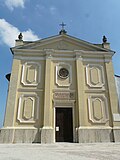 The Church of Saints Victor and Crown
-
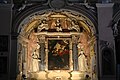 Altarpiece, canvas by Andrea Pozzo, a Jesuit native of Trento, representing the death of Francesco Saverio. The work dates from 1670 to 1675 and is preserved in the chapel of the Jesuits
-
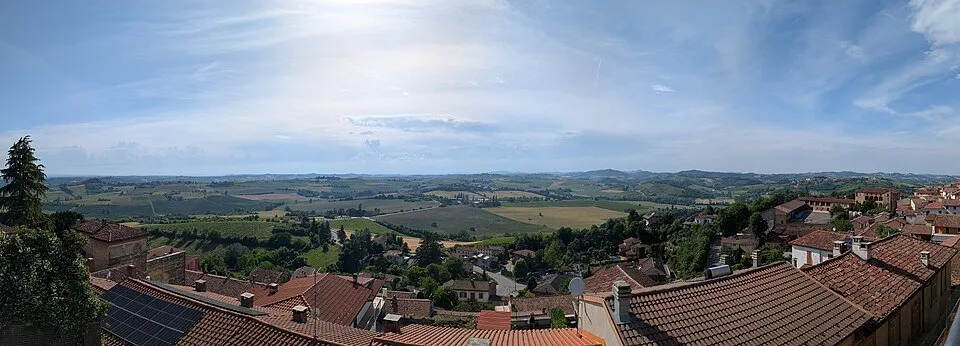
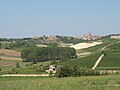 Panorama of Grazzano Badoglio view from the Monferrato plain
-
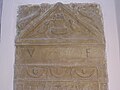 Funeral tombstone, tympane
-
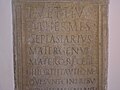 Funeral tombstone, central part, engraving
-
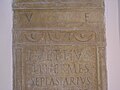 Funeral tombstone, high part, engraving
-
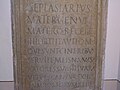 Funeral tombstone, low part, engraving
-
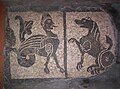 Particular of the mosaic dating back to the 10th century lying above the tomb of Aleramo del Monferrato in the church of the Abbey of Grazzano Badoglio, which indicates the place where the remains of the Marquis were translated in 1581.
-
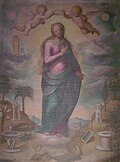 Painting of the Madonna - Guglielmo Caccia called "Il Moncalvo" - sec. XVII, church of the Abbey of Grazzano Badoglio
-
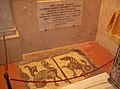 Tomb of Aleramo, founder of the Marquis dynasty of Monferrato, in the church of the Abbey of Grazzano Badoglio
-
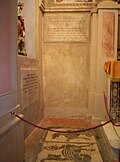 Details of the aleramic tomb
-
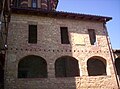 Cloister of the aleramic abbey, dating back to the 16th century
-
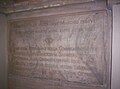 commemorative tombstone dating back to the year 1581, when the bones of Aleramo were translated
-
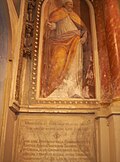 Overlook attributed to the Hunt over the tomb
-
 Aleramo, fresco attributed to Caccia, 17th century
Notes
Explore this chapter
- ^ Grazzano badoglio - Encyclopedia - Treccani, up www.treccani.it. Retrieved 8 August 2026.
- ^ to b Monthly demographic balance for the year 2026 (provisional data), up demo.istat.it, ISTAT.
- ^ Seismic classification (XLS), up risks.protezionecivile.gov.it.
- ^ Table of degrees/day of Italian Municipalities grouped by Region and Province (PDF), in Law 26 August 1993, n. 412, annex A, National Agency for New Technologies, Energy and Sustainable Economic Development, 1 March 2011, p. 151. URL consulted on 25 April 2012 (archived fromoriginal url on 1 January 2017).
- ^ REGIO DECRETO 27 February 1939, n. 537, on Normattiva.
- ^ "Code 32 of Burgo de Osma" (Soria), called 'Liber taxarum' wanted by the antipope Benedict XIII, who wanted to know the revenues of the Church: 1 florin corresponded to a pound; at the time the maintenance of a widow with two children was estimated at about seven pounds a year.
- ^ Dated to the 2nd century, the pagan mosaic must be saved thanks to the subject: the two monstrous animals, in fact, served to protect the tomb of the head of the aleramic dynasty
- ^ . From the essay by Olimpio Musso from Casale, The Sphinx of Mesomede in the light of a mosaic of Monferrato, published in 1998, tells of the possibility that it could be found in the Roman villa of the perfumer Tito Vezio Ermete, of which an epigraph remains walled up at the base of the bell tower with the poetic disposition of bringing roses to his tomb on his birthday
- ^ Card on the site of the municipality http://www.comune.grazzanobadoglio.at.it/web-comuni-new/dettaglio_menu.aspx?categoria=_pag_11072&comune=Grazzano_Badoglio&des=La%20chiesa%20di%20S.%20Spirito Archived on 15 December 2014 at the Wayback Machine.
- ^ Card on the site of the municipality Copy filed, up common.grazzanobadoglio.at.it. Retrieved 16 December 2014 (archived fromoriginal url on 15 December 2014).
- ^ Mar.ber. (Marziano Bernardi), The stele in memory of Pietro Badoglio will be inaugurated Sunday in Grazzano, in The Press, Turin, 24 September 1964.
- ^ Maurizio Sala, In Grazzano Badoglio “adopted” and arranged the park with the stele, on Sunday ceremony, in The Press, 28 June 2017. Retrieved 27 January 2025.
- ^ Data taken from:
- Resident population of the municipalities. Censuses from 1861 to 1991 (PDF), up ebiblio.istat.it, ISTAT.
- Resident population - Time series, up exploredati.istat.it.
Please note: 2021 data refers to permanent census data as of December 31 of that year.
- ^ to b c d And f g Member of the Local and Regional Administrations
Where to stay · Grazzano Badoglio
Find stays on Booking.comThe area, step by step
Trails and routes in Grazzano Badoglio

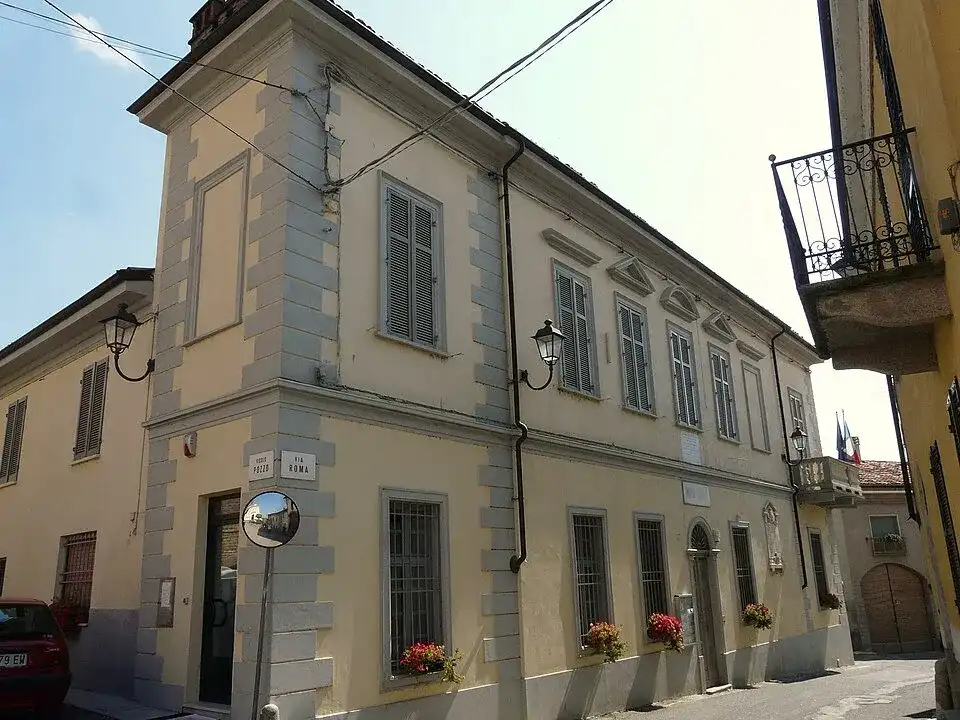 CyclingPlaces and landscapes along the route
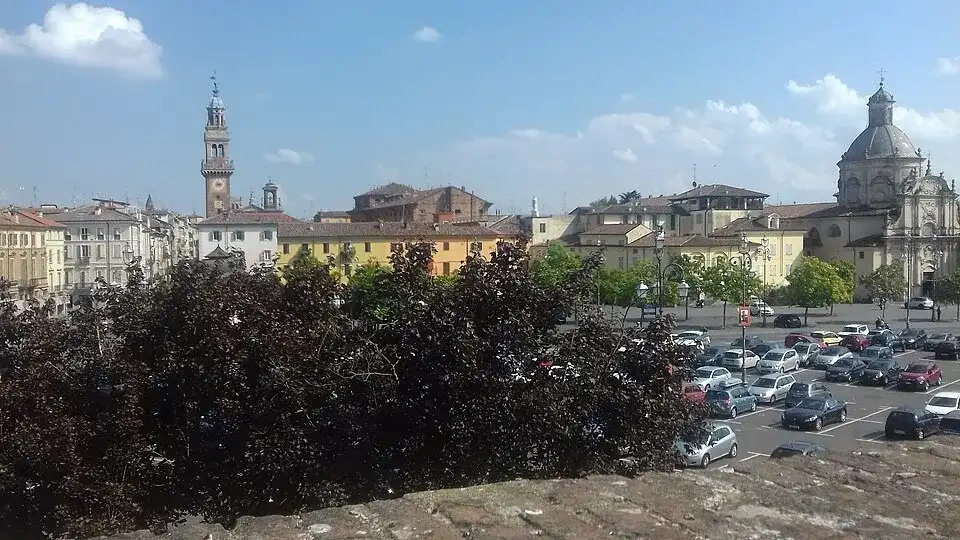 CyclingPlaces and landscapes along the routeCyclingPlaces and landscapes along the route
 CyclingPlaces and landscapes along the route
 CyclingAround the starting point
Asti, Alessandria and surroundings
Tour D.O.C. del vino Grignolino
Mountain bikeAround the starting pointAsti, Alessandria and surroundings
Tour Doc Del Ruchè e della Malvasia

Asti, Alessandria and surroundings
Granfondo del Monferrato Casalese

