- Elevation
- 292 m above sea level
- Area
- 6,86 km2
- Demonym
- Mongardinese
- Patron saint
- San Vincenzo di Saragossa
A closer look
Discovering Mongardino
"Three of Mongardino say that it is the hook that makes wine."
(Country proverb[1])
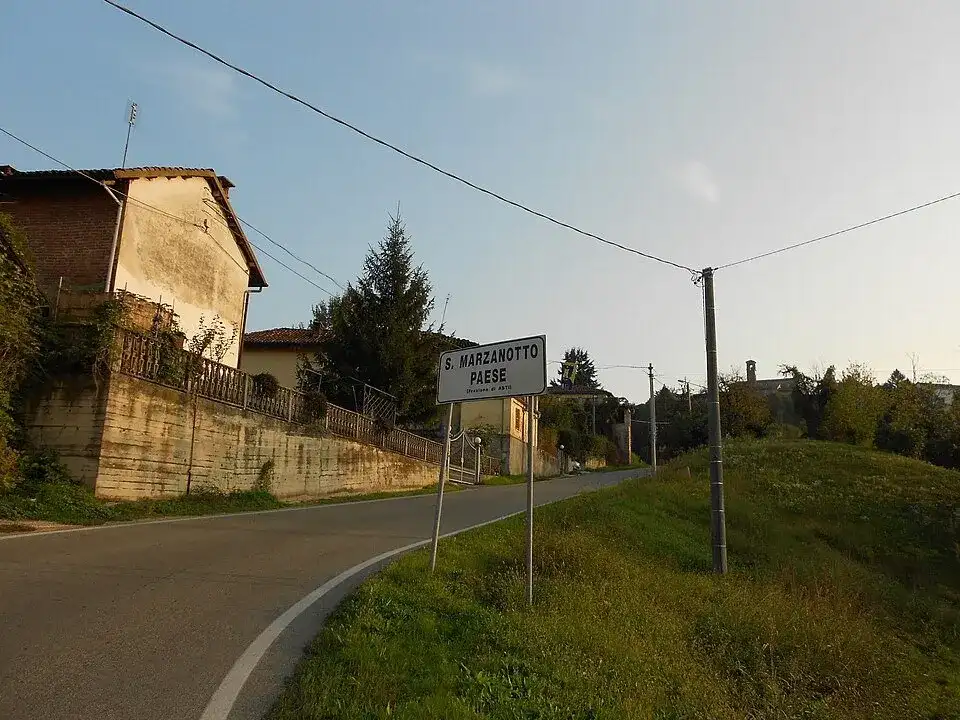
Mongardino (Mongard or Mongarden [mər,arˈdən, -ˈdɛة] in Piedmont) is an Italian municipality of 845 inhabitants[2] from the province of Asti, in the historical territory ofAstesana in the Piemonte.
Landscape and area
The territory of Mongardino is completely hilly, as the majority of the province of Asti that descends towards Monferrato . The slopes of the hills are cultivated...Explore this chapter
The territory of Mongardino is completely hilly, as the majority of province of Asti that descends towards Monferrato. The slopes of the hills are mainly cultivated with vines, although there is no shortage of hazelnut groves and some reforested areas. The urban centre, like that of the hamlets, develops above all on the tops of the hills.
History of Mongardino
SymbolsExplore this chapter
In ancient times the territory of Mongardino was populated by the Ligurians and later by the Romans. After suffering the barbaric invasions of Visigoti, the area passed under the control of the Lombards and then the Franks. The dominations that followed later reflect the fate of the county of Asti, of which the country was part: in 1387 the domain was ceded as personal dowry of Valentina Visconti to her husband Louis I of Valois-Orléans, belonging to the Orléans dynasty. He returned to the Viscounts after capturing Charles of Valois-Orléans in Azincourt and again to the French after Charles' liberation. He remained under the rule of Orléans until the Spanish conquest, and was later ceded by Emperor Charles V of Habsburg as a wedding dowry for his brother-in-law, Beatrice of Portugal, who married Duke Charles II of Savoy. From that moment Mongardino was part of the various incarnations of the Savoy state to the Unity of Italy.
Symbols
The coat of arms and gonfalone were granted by decree of the President of the Republic of 2 April 2001.[5]
The gonfalone is a white drape.
What to see in Mongardino
Religious architectureExplore this chapter
Religious architecture
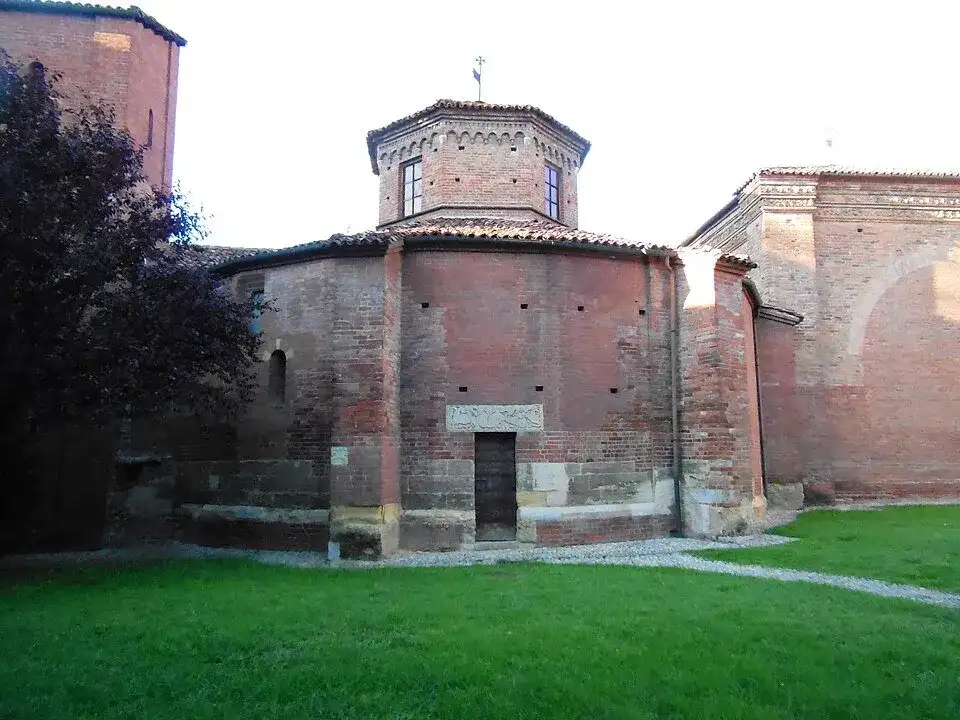
- Parish Church, dedicated to Saints Vincenzo and John the Baptist.
- Sacro Monte, located on the hill S. Antonio, was built in 1739 and consists of a small church and eighteen chapels of the Via Crucis.
- Sanctuary dedicated to the Madonna, located in the homonymous hamlet, built in 1706.
Society
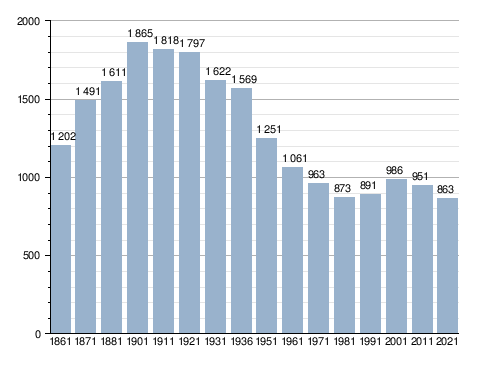
Demographic evolutionExplore this chapter
Demographic evolution
In a hundred years, since the beginning of the 20th century, the resident population has practically halved.
Inhabitants registered[6]
Culture
KitchenExplore this chapter
Kitchen
Typical of Mongardino is an ancient sweet called The world, which means "brick" in Piedmontese, from the shape of the container in which it is prepared. It is a preparation similar to tiramisu but more compact, in which layers of white and black creams alternate on a base of ladyfinger biscuits or similar, softened with Marsala (but also rum or coffee) with the addition of bitter chocolate, gianduia and chopped hazelnuts.
Economy
Mongardino is a predominantly agricultural municipality, where wine production is the main economic resource. Among the most important vines cultivated in the country are...Explore this chapter
Mongardino is a predominantly agricultural municipality, where wine production is the main economic resource. Among the most important vines cultivated in the country are Barbera and Grignolino, but also Nebbiolo.
Infrastructure and transport
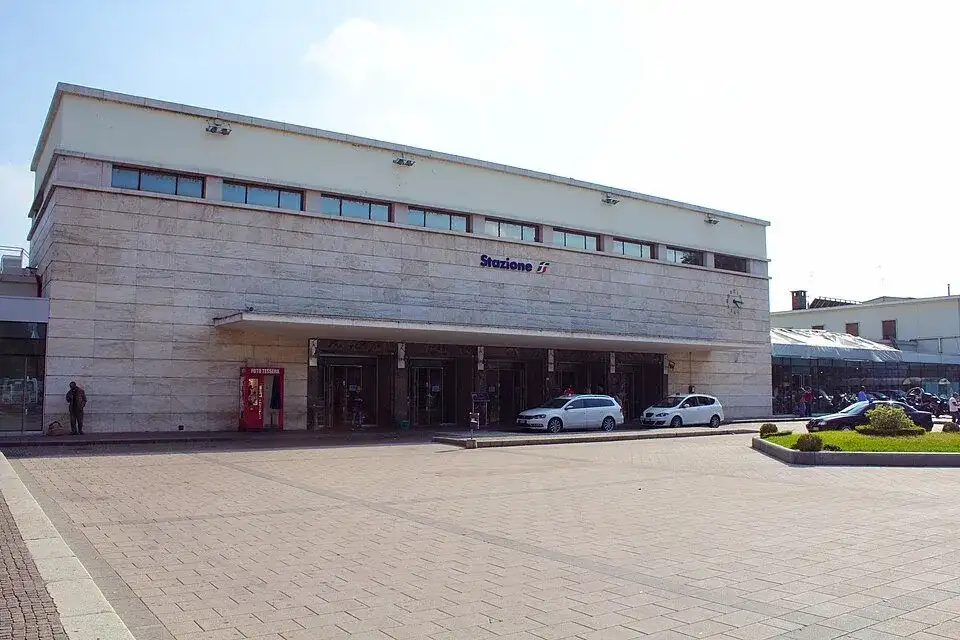
Mongardino is equipped with the homonymous station on the Asti-Genova Railway .Explore this chapter
Mongardino is equipped with the homonymous station on the Asti-Genova Railway.
Administration
Below is a table relating to the administrations that have succeeded one another in this municipality.Explore this chapter
Below is a table relating to the administrations that have succeeded one another in this municipality.
| Period | First citizen | Match | Load | Notes | |
|---|---|---|---|---|---|
| 7 June 1985 | June 19, 1990 | Perroncito Giuseppino | Christian Democracy | Mayor | [7] |
| June 19, 1990 | April 24, 1995 | Perroncito Giuseppino | Christian Democracy | Mayor | [7] |
| April 24, 1995 | June 14, 1999 | Perroncito Giuseppino | centre-right | Mayor | [7] |
| June 14, 1999 | June 14, 2004 | Giuseppe Perroncito | civic list | Mayor | [7] |
| June 14, 2004 | June 7, 2009 | Daniele Prasso | civic list | Mayor | [7] |
| June 8, 2009 | May 26, 2014 | Barbara Baino | list of people Vivi Mongardino | Mayor | [7] |
| May 26, 2014 | May 27, 2019 | Barbara Baino | list of people Vivi Mongardino | Mayor | [7] |
| May 27, 2019 | June 9, 2024 | Barbara Baino | list of people Vivi Mongardino | Mayor | [7] |
| June 10, 2024 | in office | Fausto Gulino | Civic list Vivi Mongardino Crescere Insieme | Mayor | [7] |
Image gallery
Explore this chapter
-
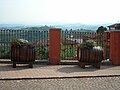 View from the town square.
-
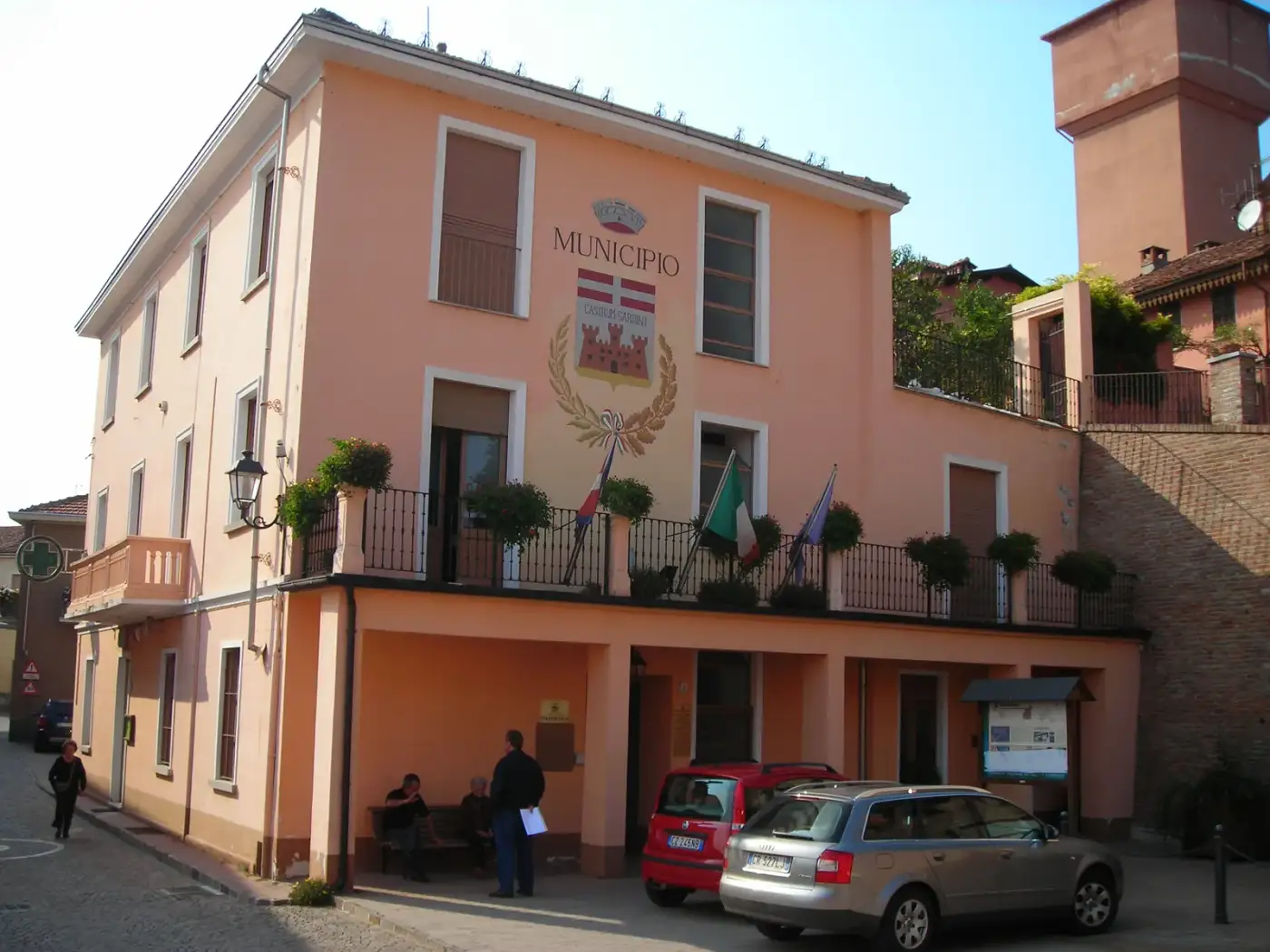
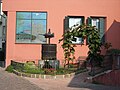 Fountain in front of the town hall.
-
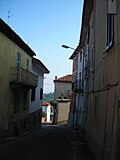 Via Gioberti, known as long distance.
-
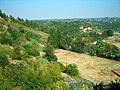 The sports field.
-
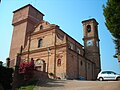 The church, with its backs the water tower now in disuse.
-
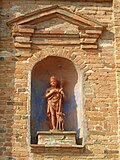 Statue depicting Giovanni Battista on the facade of the church.
-
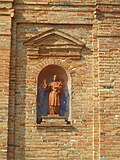 Statue depicting St. Vincenzo on the facade of the church.
-
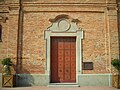 The church portal.
-
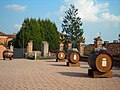 Church square with monument to the fallen.
-
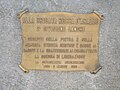 Targa in memory of the fallen during the liberation war.
Notes
Explore this chapter
- ^ Lorenzo Gentile, Mongardino and his chapels, preface by Angioletta Monticone, Reprint by PRO LOCO, 1999 [1906], p. 4.
- ^ to b Monthly demographic balance for the year 2026 (provisional data), up demo.istat.it, ISTAT.
- ^ Seismic classification (XLS), up risks.protezionecivile.gov.it.
- ^ Table of degrees/day of Italian Municipalities grouped by Region and Province (PDF), in Law 26 August 1993, n. 412, annex A, National Agency for New Technologies, Energy and Sustainable Economic Development, 1 March 2011, p. 151. URL consulted on 25 April 2012 (archived fromoriginal url on 1 January 2017).
- ^ Mongardino, up Central State Archive.
- ^ Data taken from:
- Resident population of the municipalities. Censuses from 1861 to 1991 (PDF), up ebiblio.istat.it, ISTAT.
- Resident population - Time series, up exploredati.istat.it.
Please note: 2021 data refers to permanent census data as of December 31 of that year.
- ^ to b c d And f g h the http://amministratori.interno.it/
Where to stay · Mongardino
Find stays on Booking.comThe area, step by step