A closer look
Benedicta Abbey: at a glance
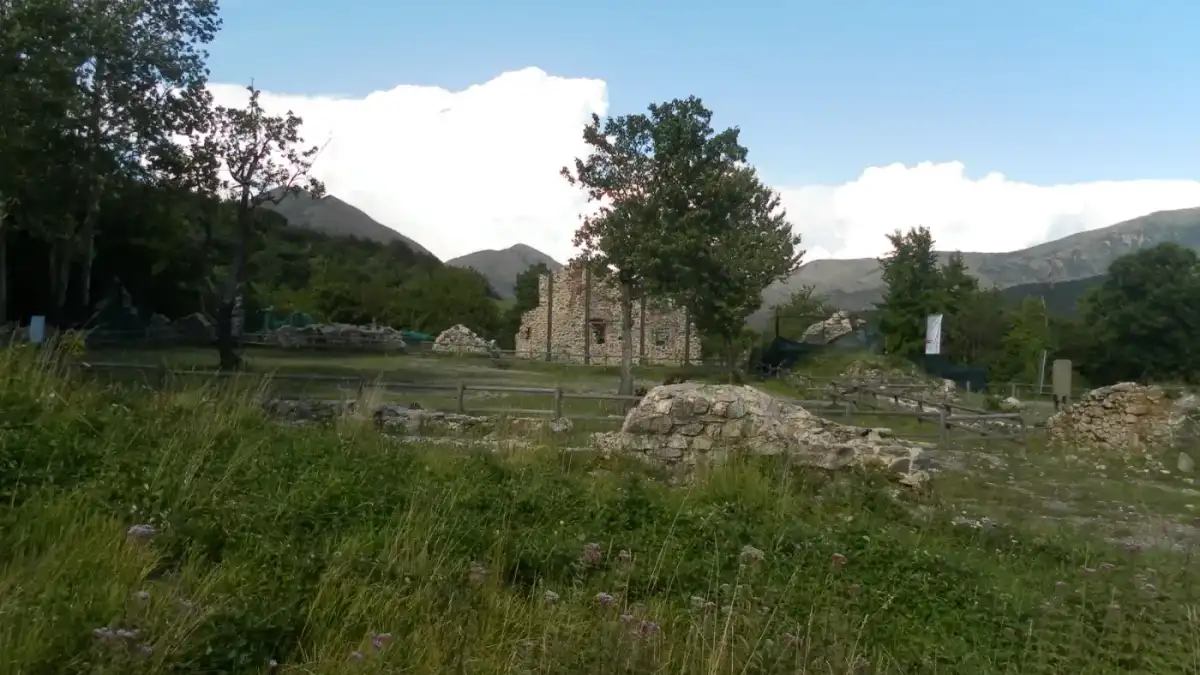
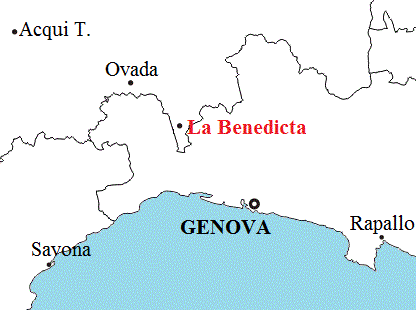
There.Abbey of Benedicta (in Ligurian in Beneditta, known in the Middle Ages as The Blessing and then known since the 19th century as Villa Benedetta) was an ancient abbey located near Capanne di Marcarolo in the municipality of Bosio (AL) near the slopes of the Mount Tobbio (1,092 m) in the Ligurian Apennines between the Polcevera and Stura valleys, not far from Genoa.
History
The first information about the abbey dates back to the 11th century and is one of the first monastic settlements in the area and also became a place for rest and refreshment for those facing...Explore this chapter
The first information about the abbey dates back to the 11th century and is one of the first monastic settlements in the area and also became a place for stop and refreshment for those who faced pilgrimages towards Rome, Santiago de Compostela and Genoa, where pilgrims boarded for the Holy Land.
Once abandoned by the Benedictine monks became property of the Spinola family and became the center of their landowners in the area.
After the abolition of the imperial fiefs with Napoleon in 1797 the property passed to the municipality of Parodi Ligure that used it as a barn, a well and some horses, although some rooms were used by the Marquis Spinola, the former abbey was then used in this way until 1944, as is from a description of two local inhabitants:
The last owner of the former abbey was Thea Cattaneo della Volta Spinola, of the Genoese branch of San Luca that were also the Marquises of Lerma.
After September 8, 1943 in the mountains around the Capanne di Marcarolo sheltered numerous retintees to the lever, soldiers who had abandoned the Army and anti-fascists, which increased after the band Graziani in the RSI of 18 February 1944.
Thus in the area was installed the III Brigata Garibaldi Liguria and the Autonomous Brigade Alessandria at the beginning of 1944 Capanne di Marcarolo became the headquarters of the III Brigata Garibaldi Liguria and the Benedicta seat of the intection.
On April 7, 1944 the Benedicta and its surroundings were the scene of a strong rastrelization of Nazi forces, which led to a tactical error of partisan forces, which flowed into the Benedicta area instead of dispersed. The forces thus grouped were an easy target for the Nazi massacre that took place between 7 and 11 April 1944, which cost the life to 147 partisans.
The Benedicta today
After years of abandoning the ruins of the former Benedictine monastery, site of the massacre, were the subject of a work of restoration and recovery from 2002 to 2009 that led to...Explore this chapter
After years of abandoning the ruins of the former Benedictine monastery, site of the massacre, were the subject of a work of restoration and recovery from 2002 to 2009 that led to the creation of the Shrine of the Martyrs of Benedicta. Today the Benedicta massacre is remembered every year with a manifestation (to which presidents Saragat, Pertini and, in 2004, Ciampi) and the Region Piemonte - after the recovery of the ruins of the ancient Benedictine grange, dating back to the 11th century, blown up by the Germans at the end of the rake - with the L.R. 1/2006 established a Documentation Centre within the Benedicta Peace Park. In 1999, at the initiative of various bodies and associations, including the Regional Council of Piemonte, the association "Memoria della Benedicta" was established in order to promote knowledge, recovery and enhancement of the site. The shrine of the Martyrs of Benedicta is today in the heart of the Natural Park of the Capannes of Marcarolo.
Bibliography
Claudia Alessandri, Le parole, instrumenta, la storia - Indagine etnoliguistica del Parco Naturale delle Capanne di Marcarolo, Edizioni dell'Orso, Alessandria , 2007Explore this chapter
Claudia Alessandri, Le parole, instrumenta, la storia - Indagine etnoliguistica del Parco Naturale delle Capanne di Marcarolo, Edizioni dell'Orso, Alessandria, 2007
Continue your journey