Atlas of Monferrato
Rocca d'Arazzo: sights, history and trails
Asti
- Elevation
- 195 m above sea level
- Area
- 12.56 km²
- Demonym
- rocchese
- Patron saint
- Saint Genesis
A closer look
Discovering Rocca d'Arazzo
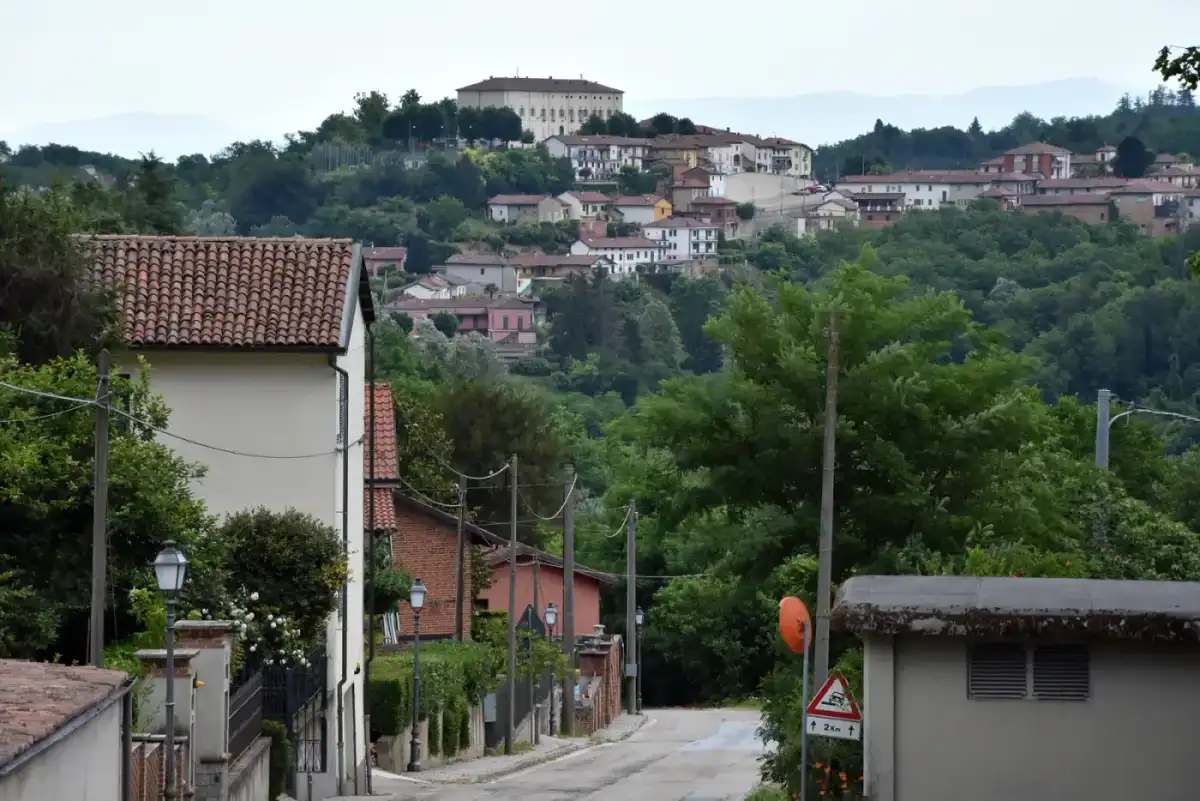
Rocca d'Arazzo (La Ròca d'Arass in Piedmont) is an Italian municipality of 923 inhabitants[1] from the province of Asti in the Piemonte.
History of Rocca d'Arazzo
SymbolsExplore this chapter
Set in ancient Rupes, then Rocca San Genesio and Rocca Ayraci[4], which had always been a fiefdom belonging to the bishop of Asti, in 1198, bishop Boniface I gave in to the continuous pressure of the Municipality of Asti to leave the fiefdom under their jurisdiction, putting forward the thesis that the bishop did not have sufficient means to defend and maintain such an important bastion on the road to the capital.
On 27 May 1198, the podestà of Asti took possession of the fief of Rocca became from that moment Rocca d'Astisio.
The cession, however, was not approved either by the archbishop of Milan (under whose jurisdiction it was the diocese of Asti), nor by the pope, who considering the act of the excessively arbitrary bishop, removed him from office and invalidated the agreement with the priests.
The rocchesi, too, did not see their passage under the aegis of the municipality of Asti, since they wanted to turn the country into a military stronghold.
For three years then, hostility and clashes broke out between the two factions and only on 29 April 1202 a truce was signed that forced the citizens of Rocca to submit to the Astigian government.[5]
The Rocchesi accepted the agreement badly, in more than one occasion they turned to the bishop of Asti Guidetto who finally in 1217 referred the matter to the Court of Rome.
Pope Innocent III delegated the pretext of Torino Ottone to address the question that was not accepted by the Astigians.
Then two wise men were appointed to represent one of the Municipality of Asti and the other of the diocese. The question came to no solution, so that a third arbitrator was appointed super partes.
He was appointed bishop Giacomo of Turin, an imperial vicar, assisted by the podestà of Asti Guido di Landriano. In 1221, the decision was nominated: the fief of Rocca would remain to the Church of Asti, but the municipality could have used it as a garrison in defending its territory.
The bishop, in the meantime become James, went a house in the castle "for the holiday". On 8 June 1221, at the Cathedral of Asti, there was a solemn restitution of the fief to the Church of Asti.
Following from 1237 with William I[6], the Cacherano family had seigneurial rights in the vicariate, although the possession of the fief always remained with the Church of Asti. In the 13th century, the Cacherano family allied themselves with the De Rocca and De Arazzo families and created both an economic (with the opening of pawnshops in Northern Europe) and a matrimonial Hospicium.
In 1305 the castle was besieged by the Prince of Acaja and after twenty days of siege was destroyed. In 1342, the County of Asti passed to Visconti, dukes of Milan.
In February 1379 the bishop of Asti Francesco Morozzo[7] the castle of Rocca d’Arazzo directly granted to the Duke of Milan Gian Galeazzo Visconti, opening him the way to the definitive insignorment (in Codex Astensis, probably written a few years later, the castle of Rocca d'Arazzo is depicted with the Visconti snake and no longer with the flag of Asti). Gian Galeazzo then enfeoffed the Dal Verme family together with bishop Francesco Morozzo starting from Bartolomeo Dal Verme[8] who was invested in half of the manor of the lordship of Rocca d'Arazzo, rights inherited by his son Taddeo Dal Verme and his son Eleuterio who left all feuds to the Imperial Count Luigi Dal Verme, count of Bobbio and Voghera.
16 April 1439 Brunone Cacherano[9] Philip Maria Visconti, the Duke of Milan, had the recognition of total possession on Rocca d'Arazzo and feudal investment, followed by the oath of loyalty of the men of Rocca, the investigation was renewed in 1446 and in 1454 in favor of the sons of Cacherano.
In 1499 the county of Asti passed to Louis XII and finally to Emperor Charles V.
John Cacherano obtained the right to beat money from Emperor Charles V in 1538. Of this privilege the Cacheranos never earned themselves.[10]
In 1705 the fief passed to Casa Savoia.
Symbols
The coat of arms of the municipality of Rocca d'Arazzo was granted by the royal decree of 6 July 1933.[11][12]
The banner is a blue cloth.
What to see in Rocca d'Arazzo
Explore this chapter
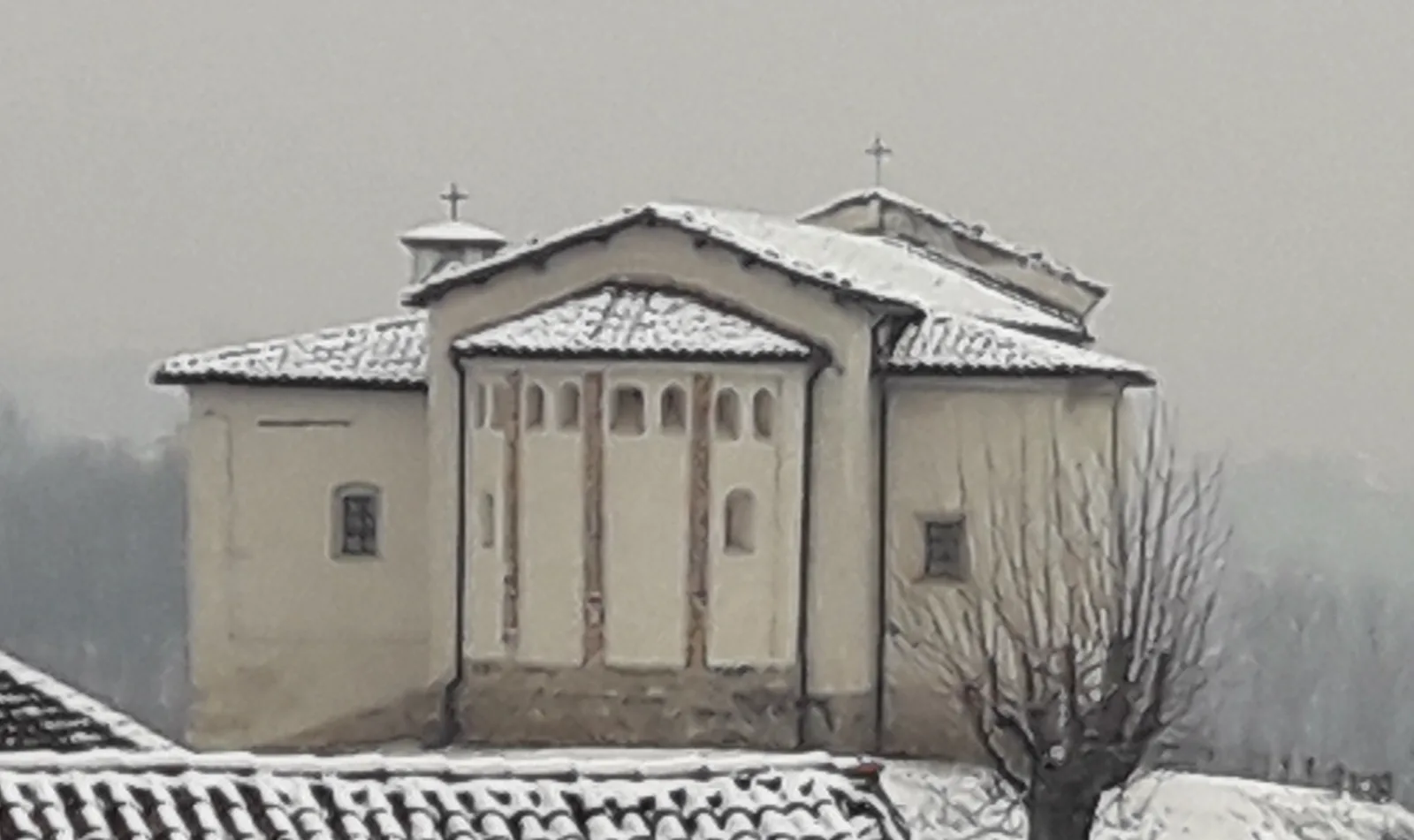
- Pieve di Santo Stefano e Santa Libera, is a sacred building in Romanesque style dating back to the 11th century which stands at the southern end of the town and is located on a hilltop which dominates the panorama of the valley below Tanaro to Asti; on clear days the view extends to the surrounding hills of Monferrato and to the Alps, from Monviso to Monte Rosa.
Society
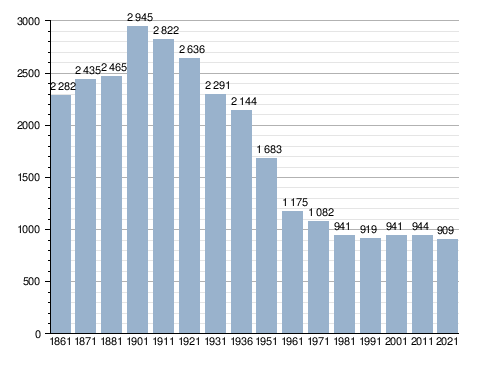
Demographic evolutionExplore this chapter
Demographic evolution
Inhabitants registered[13]
Culture
CinemaExplore this chapter
Cinema
Some scenes of the film were filmed in Rocca d'Arazzo The devil in the hills by Vittorio Cottafavi.[14]
Administration
Below is a table relating to the administrations that have succeeded one another in this municipality.Explore this chapter
Below is a table relating to the administrations that have succeeded one another in this municipality.
| Period | First citizen | Match | Load | Notes | |
|---|---|---|---|---|---|
| December 21, 1986 | May 26, 1990 | Vittore Raineri | - | Mayor | [15] |
| May 26, 1990 | April 24, 1995 | Luigia Fassio | Christian Democracy | Mayor | [15] |
| April 24, 1995 | June 14, 1999 | Leonardo Poggio | centre-right | Mayor | [15] |
| June 14, 1999 | June 14, 2004 | Leonardo Poggio | civic list | Mayor | [15] |
| June 14, 2004 | June 8, 2009 | Giovanni Avidano | civic list | Mayor | [15] |
| June 8, 2009 | May 25, 2014 | Giovanni Avidano | civic list | Mayor | [15] |
| May 26, 2014 | April 26, 2018 | Pierluigi Berta | Civic list Project Rocca | Mayor | [15] |
| May 27, 2019 | 5 July 2021 | Marco Maggiora | list of all for Rocca | Mayor | [15] |
| October 4, 2021 | in office | Laura Fontana | Civic list A country wants us | Mayor | [15] |
Notes
Explore this chapter
- ^ to b Monthly demographic balance for the year 2026 (provisional data), up demo.istat.it, ISTAT.
- ^ Seismic classification (XLS), up risks.protezionecivile.gov.it.
- ^ Table of degrees/day of Italian Municipalities grouped by Region and Province (PDF), in Law 26 August 1993, n. 412, annex A, National Agency for New Technologies, Energy and Sustainable Economic Development, 1 March 2011, p. 151. URL consulted on 25 April 2012 (archived fromoriginal url on 1 January 2017).
- ^ C.Bobba, L.Vergano, Ancient ticks of the province of Asti, Asti, 1971, p. 134.
- ^ Niccola Gabiani, Asti in his main historical memories, vol. 2, Typ. Vinassa, 1927-1934, p. 230.
- ^ History of the Cacherano family, in Biographic dictionary of Italians, Rome, Institute of the Italian Encyclopedia.
- ^ Francesco Morozzo, Bishop of Asti, in Biographic dictionary of Italians, Rome, Institute of the Italian Encyclopedia.
- ^ Family Dal Verme on Gallica - Famous families of Italy. From Verme di Verona / P. Litta Litta, Pompey (1781-1851).
- ^ History of Brunone Cacherano, in Biographic dictionary of Italians, Rome, Institute of the Italian Encyclopedia.
- ^ C. Bobba and L. Vergano, Ancient ticks of the province of Asti, Asti 1971, p. 135.
- ^ Rocca d'Arazzo, decree 1933-07-06 RD, concession of arms, up Central State Archive. Retrieved 16 November 2021.
- ^ Draft of the coat of arms of the Municipality of Rocca d'Arazzo, up ACS, Collection of drawings from the coat of arms of municipalities and cities. Retrieved 29 September 2024.
- ^ Data taken from:
- Resident population of the municipalities. Censuses from 1861 to 1991 (PDF), up ebiblio.istat.it, ISTAT.
- Resident population - Time series, up exploredati.istat.it.
Please note: 2021 data refers to permanent census data as of December 31 of that year.
- ^ Dictionary of Cinematographic Tourism: The Devil on the Hills, the locations, up Film TV. URL consulted on 10 November 2018.
- ^ to b c d And f g h the http://amministratori.interno.it/
Bibliography
Explore this chapter
- G. Bera, Asti buildings and palaces in the Middle Ages, Gribaudo Editore Se Di Co 2004 ISBN 88-8058-886-9
- A. White, Asti Medieval, Ed CRA 1960
- Bordone R., Araldica astigiana, Allemandi C.R.A. 2001
- From charity to credit, C.R.A. 2005
- Iron, Arleri, Campassi, Antique Cronists Auctionists, ed. dell'Orso 1990 ISBN 88-7649-061-2
- Gabiani Nicola, Asti in his main historical memories vol. 1, 2, 3, Typ. Vinassa 1927-1934
- The towers of the fort houses and medieval noble palaces in Asti, A.Forni ed. 1978
- Stefano Giuseppe Incisa, Asti in his churches and inscriptions, C.R.A., 1974
- V. Damn it. Asti ancient and noble houses, Il Portichetto, 1982
- A.M. Patron, The Astigian House in Savoy, Dep. Subalpina di storia patria, Turin, 1959
- A. Peyrot, Asti and Astigiano, typ. Torinese Ed., 1983
- Quintino Sella, Codex Astensis qui De Malabayla Comuniter nuncupatur, of the Codex De Malabayla, memory of Quintino Sella, Accademia dei Lincei, Rome 1887.
Where to stay · Rocca d'Arazzo
Find stays on Booking.comStories, places and people
More about Rocca d'Arazzo and the surrounding area
Follow a thread of history and see where it leads.
The area, step by step
Trails and routes in Rocca d'Arazzo
 Mountain bikeAround the starting point
Asti, Alessandria and surroundings