- Elevation
- 252 m above sea level
- Area
- 13.62 km²
- Demonym
- Viarizzi
- Patron saint
- Saint Agatha
A closer look
Discovering Viarigi
Viarigi (Viarìa or Viaris in Piedmont) is an Italian municipality of 808 inhabitants[1] from the province of Asti in the Piemonte.
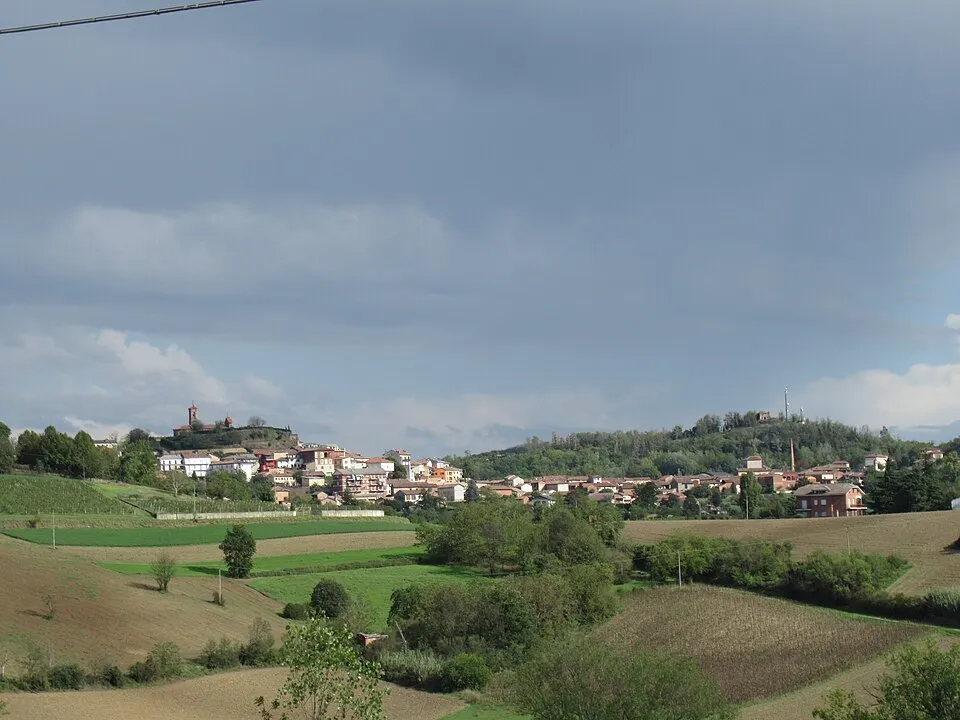
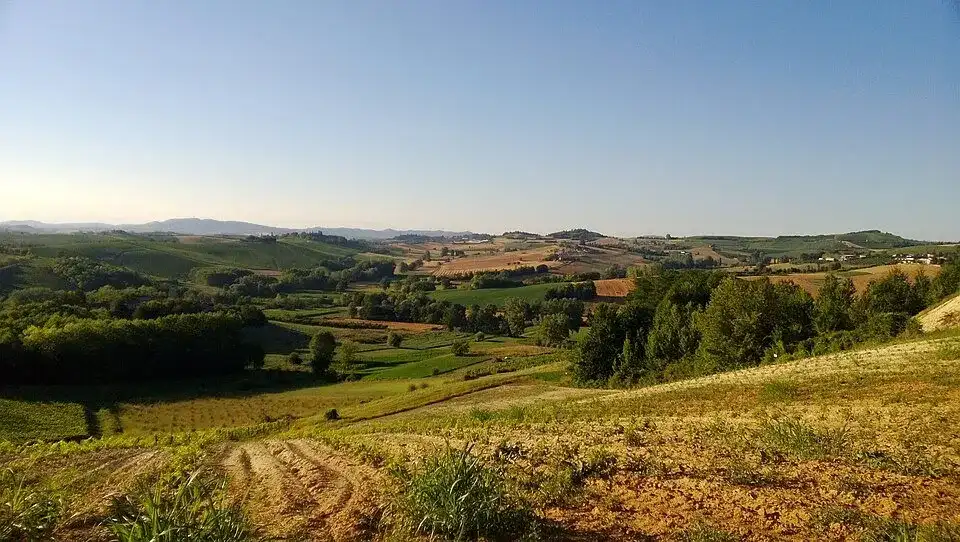
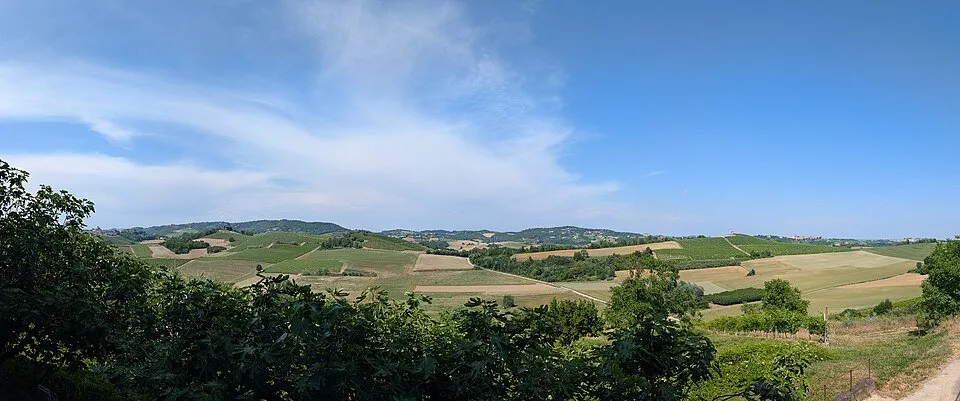
Located in the heart of the hills Monferrato in the Piemonte. The village is clinging to the hill, houses and streets adapt to this characteristic, with stairs, subports, steep hairpins, murals.
History of Viarigi
SymbolsExplore this chapter
Symbols
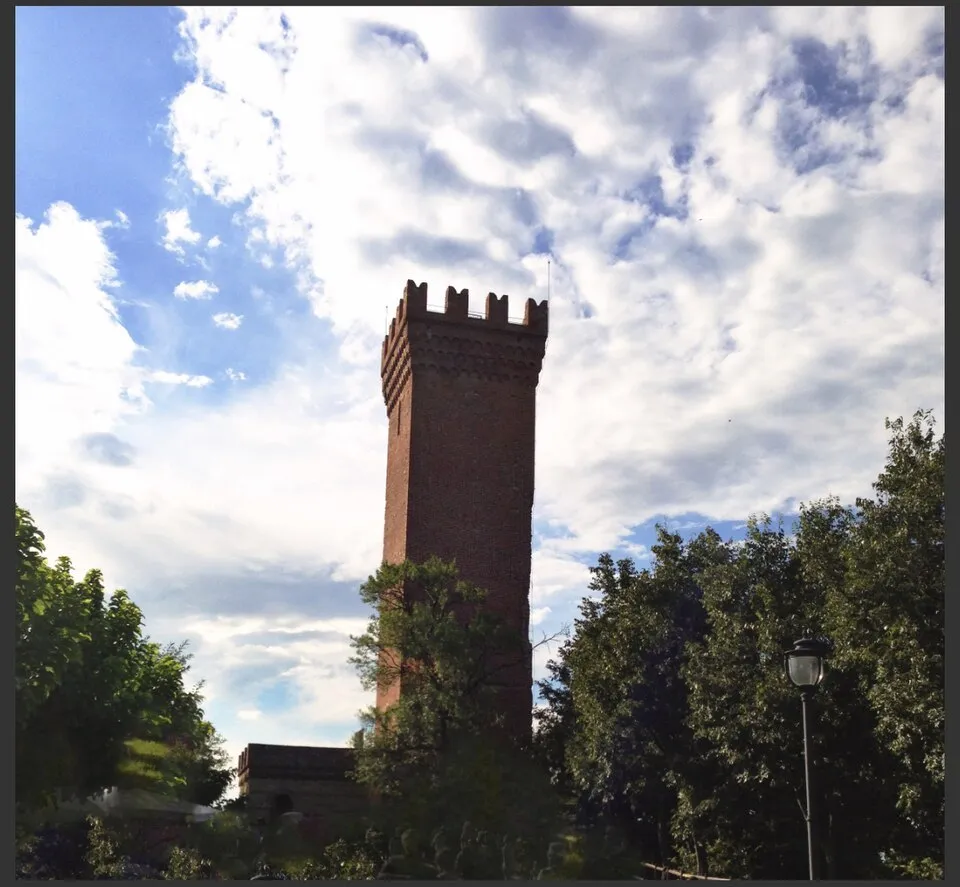
The symbol of the village is its sighting tower: of medieval origin, dominates from above the country and the surrounding territory.
The gonfalone is a drape party of green and red.
The coat of arms and gonfalone were granted with DPR on 17 January 2000.[4]
What to see in Viarigi
Explore this chapter
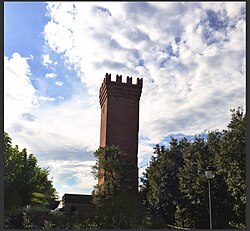
- Signal Tower. In the period around 1320 is the construction of the Tower of Signals Viarigi, on the ruins of the ancient castle, when the territory of Viarigi was returned to the Teodoro di Marquis Monferrato by Matteo Visconti and became, as a border area of the marquisate, an integral part of a network of defence and communication, based on a system of towers and points clearly visible from the surrounding hills (including also Montemagno, Grana, Casorzo, Grazzano, Moncalvo and Rinco, north, Vignale, Carnagna, Lu, San Salvatore south). The tower, linked to the property of the manor Viarigino, underwent several passages of ownership to nobles of the Marchesato del Monferrato, by Alberto di Solero (1431), to the accounts Biglione di Viarigi (1772), while, at the time of the last feudatario, Viarigi had already passed to Casa Savoia, with the Treaty of Vienna of 1703. The Counts Biglione were the aces of the poet Agostino della Sala Spada, born in Calliano in 1842, who sang in his verses the rolling hills of Monferrato and the "rower square, over the arduous hill" that was so dear to him. With the French revolution and subsequent Napoleonic occupation, the fiefs and the Biglione had to cede their entire property to the Jewish family of Sacerdote Vita, a merchant of Casale Monferrato. At about half of 1800, the Tower and the adjacent area passed to the Ferraris family Viarigi that it held until 1939 when, following public enchanted, it was detected by Cav. Aldo Todini. It remained to the Todini family until 1998, when a Milan benefactor, Pietro Bellettato, bought it to give it to the Municipality of Milan. Viarigi. The Tower of Signals was declared a monumental building in 1908 and, subsequently, placed under bond according to Law 1089/1939. He was later transcribed to the Ministry of Public Education on 11/04/1943. The construction is not in the original facies of the medieval low but it is the result of stratifications of interventions after the original construction. The most important of these, which took place around the middle of the nineteenth century, coincides with the construction of a brick covering on the four sides of the tower, in order to cover and restore the existing fifth walls.[5]
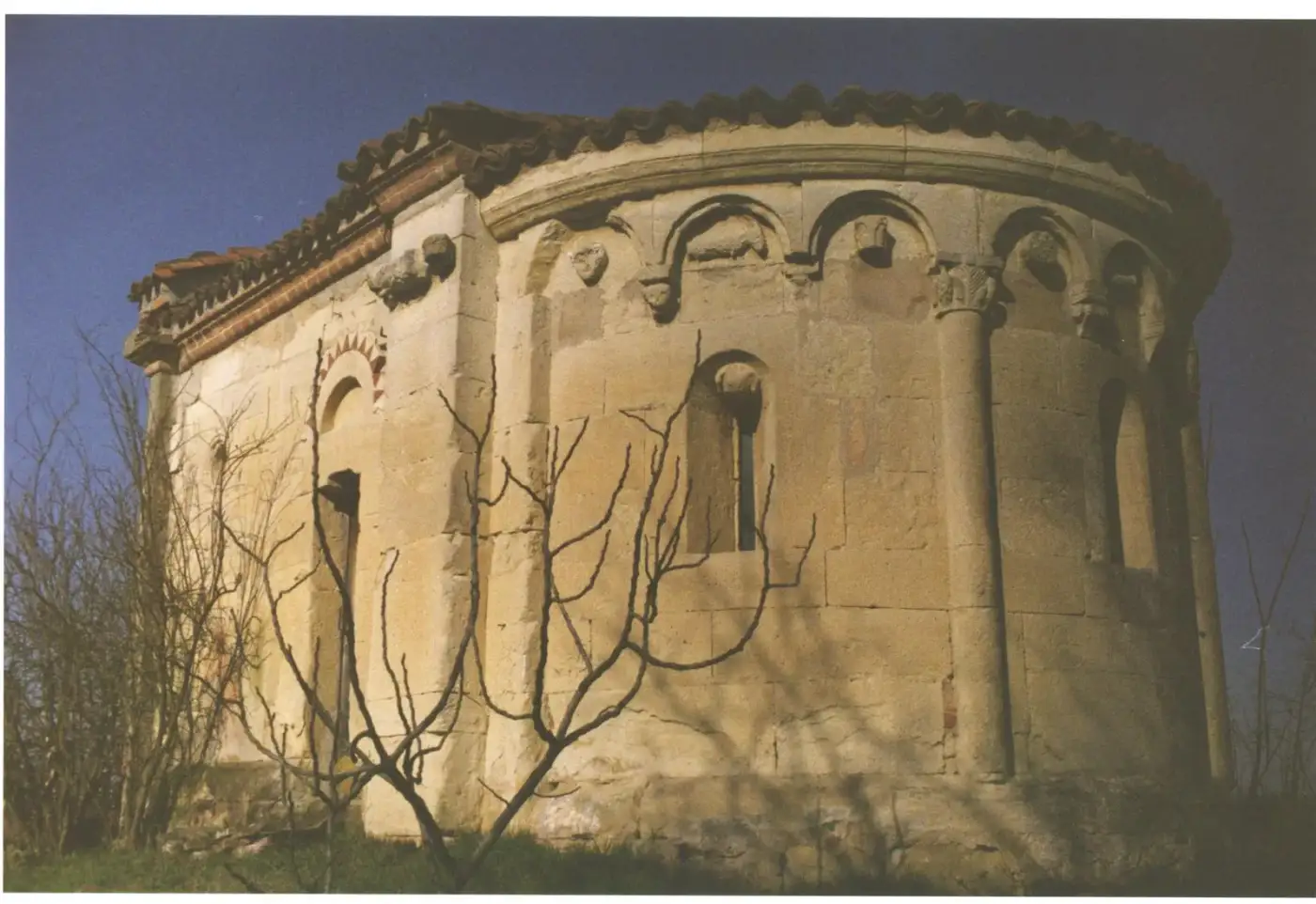
- Church of San Marziano. A news about the church of Viarigi dates back to the already mentioned document of 1041 when Emperor Henry lIl, in confirming to the Bishop of Asti the heritage of his church, includes in the list the court of Viarigi with the castle and the chapel. A later reference, always without precise indication of titration, is found in act of 1238 on the occasion of the gathering of the Lords of Viarigi, Vassalli of the Bishop of Asti under the porch of the Church and in the presence of a priest of the same. Only in 1345 was he able to know the number and dedications of the churches of Viarigi. In the diocesan register in fact San Marziano appears together with Saint Peter and another church that is in the woods of Viarigi {here east in boscis de Viarixio} not better specified, all independent from pievana jurisdiction. A fourth, finally, San Severio (now San Silverio), belongs to Azzano d'Asti. Of all of them, San Marziano appears the least endowed, having only 3 lire in its register, compared to 35, 46 and 16 in the other churches. The independence from each parish can perhaps be explained by the particular political situation of its castle, a bishop's fief on the borders of the Diocese dependent directly on the Bishop. The lack of importance it had subsequently, when the Parishes of San Silverio and San Pietro had established themselves, did not allow significant traces to be left in the documentation.
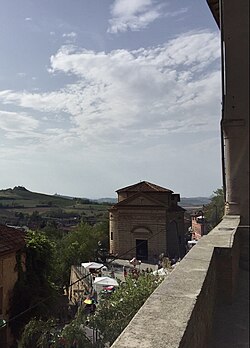
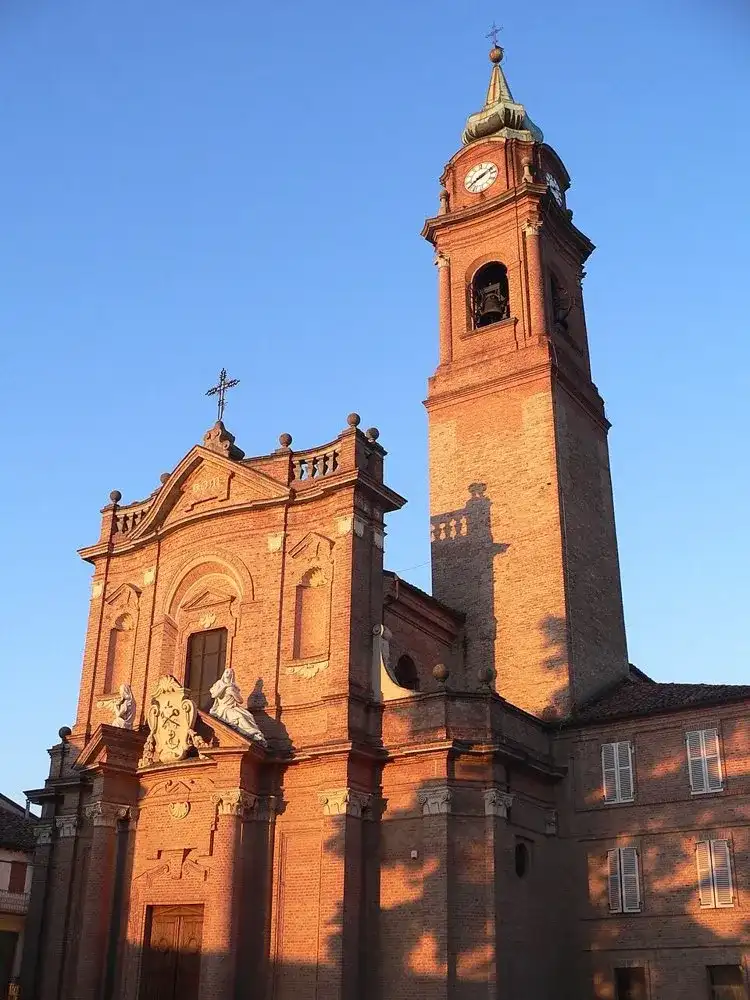
- Church of San Silverio. The church of San Silverio is located on the site previously occupied by a fourteenth century church dependent onAzzano d'Asti. The first news of this monument, built on a Greek cross, dates back to 1473. The building, in late Baroque style, took on its recent forms with the expansion carried out in 1870. Deconsecrated, it is municipal property. In 1998, the consolidation and restoration works on the façade and external walls began while the roof had already been renewed previously. The furnishings are totally missing as they have been lost over the years. The wooden portal, entirely sculpted, and part of the mosaic floors remain, currently covered awaiting restoration work. The patronymic Silverio derives from Latin Silvanus with the meaning of the one who loves the wild, also used in the female form Silveria. On June 20th, in memory of Saint Silverius the pope, martyred in the year 537 perhaps on the island of Ponza, patron of Frosinone.
- Ancient Voltone. The Voltone extends under the parish church. It represents a part of the walls that enclosed the ancient inhabited in medieval times.
Society
Demographic evolution · Foreign ethnic groups and minoritiesExplore this chapter
Demographic evolution
Inhabitants registered[6]
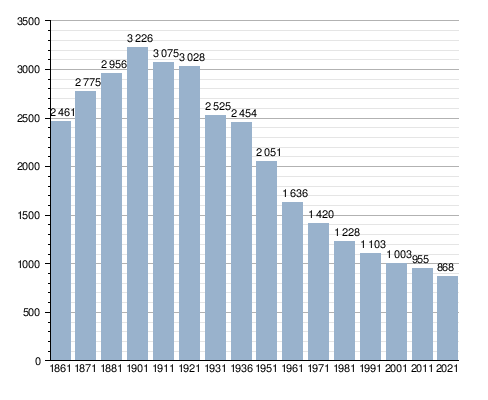
Foreign ethnic groups and minorities
According to ISTAT data on 1 January 2013 the resident foreign population was 37 people and represents 4% of the entire resident population. The nationalities most represented by their percentage of the total living foreign population were:
- Romania 10 27.03%
- Morocco 10 27.03%
- Albania 4 10.81%
- Moldova 4 10.81%
- Russia 3 8.11%
- Argentina 3 8.11%
- Germany 2 5.41%
- United Kingdom 1 2.70%
Culture
EventsExplore this chapter
Events
- Saltinpiazza (last Sunday of August)
- Patronal feast of Accorneri (first Sunday in September)
Anthropic geography
HamletsExplore this chapter
Hamlets
Accidents is a very large fraction, which includes 5 villages (Accorneri Valle, Accorneri Superiore, Accorneri Pergatti, Accorneri Pelosi e Accorneri Oggeri). There are mushrooms and the precious white truffle, as well as vegetables and typical fruits including hazelnuts. In the countryside of Accorneri, there is the church of San Marziano, a Romanesque parish.
Infrastructure and transport
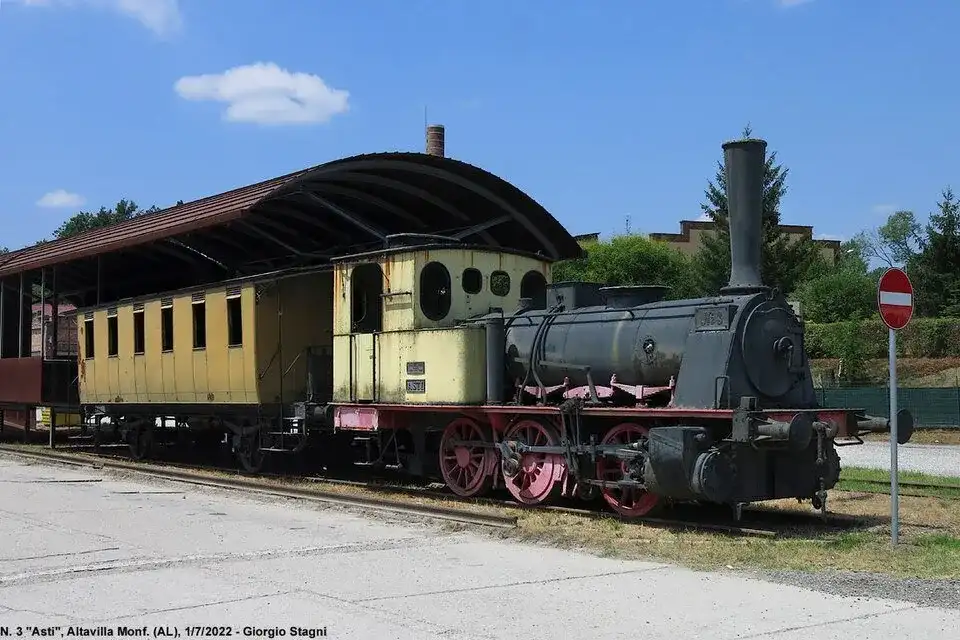
Between 1900 and 1935 Viarigi was served by the Asti-Montemagno-Altavilla tramway.Explore this chapter
Between 1900 and 1935 Viarigi was served by the Asti-Montemagno-Altavilla tramway.
The extra-urban transport of the Municipality of Viarigi is carried out by the company Bus Company (formerly ARFEA - acronym for Companies Gathered Filovie and Autolinee).
Administration
Below is a table relating to the administrations that have succeeded one another in this municipality.Explore this chapter
Below is a table relating to the administrations that have succeeded one another in this municipality.
| Period | First citizen | Match | Load | Notes | |
|---|---|---|---|---|---|
| June 19, 1985 | May 18, 1990 | Giovanni Battista Garrone | Liberal Party Italian | Mayor | [7] |
| May 18, 1990 | April 24, 1995 | Brunella Mascarino | Christian Democracy | Mayor | [7] |
| April 24, 1995 | June 14, 1999 | Brunella Mascarino | center | Mayor | [7] |
| June 14, 1999 | June 14, 2004 | Brunella Mascarino | civic list | Mayor | [7] |
| June 14, 2004 | June 8, 2009 | Virginio Fracchia | civic list | Mayor | [7] |
| June 8, 2009 | May 26, 2014 | Virginio Fracchia | civic list | Mayor | [7] |
| May 26, 2014 | May 26, 2019 | Francesca Ferraris | List of Towns in common | Mayor | [7] |
| May 26, 2019 | in office | Francesca Ferraris | List of Towns in common | Mayor | [7] |
Notes
Explore this chapter
- ^ to b Monthly demographic balance for the year 2026 (provisional data), up demo.istat.it, ISTAT.
- ^ Seismic classification (XLS), up risks.protezionecivile.gov.it.
- ^ Table of degrees/day of Italian Municipalities grouped by Region and Province (PDF), in Law 26 August 1993, n. 412, annex A, National Agency for New Technologies, Energy and Sustainable Economic Development, 1 March 2011, p. 151. URL consulted on 25 April 2012 (archived fromoriginal url on 1 January 2017).
- ^ Viarigi, decree 2000-01-17 DPR, concession of coat of arms and gonfalone, up Central State Archive. Retrieved 17 November 2021.
- ^ Municipality of Viarigi, up common.viarigi.at.it. Retrieved 6 June 2014 (archived fromoriginal url on 15 July 2014).
- ^ Data taken from:
- Resident population of the municipalities. Censuses from 1861 to 1991 (PDF), up ebiblio.istat.it, ISTAT.
- Resident population - Time series, up exploredati.istat.it.
Please note: 2021 data refers to permanent census data as of December 31 of that year.
- ^ to b c d And f g h https://amministratori.interno.it/
Where to stay · Viarigi
Find stays on Booking.comThe wine landscape
This village in wine country
Follow the link between the country, the vineyards and the neighboring territories.
The area, step by step
Trails and routes in Viarigi

 WalkingAround the starting point

 Mountain bikeAround the starting point
 Mountain bikeAround the starting point
 Mountain bikeAround the starting point
 Mountain bikeAround the starting point
 Mountain bikeAround the starting point

