- Elevation
- 211 m above sea level
- Area
- 8.43 km2
- Demonym
- corticosis
- Patron saint
- Madonna of the Rosary
A closer look
Discovering Cortiglione
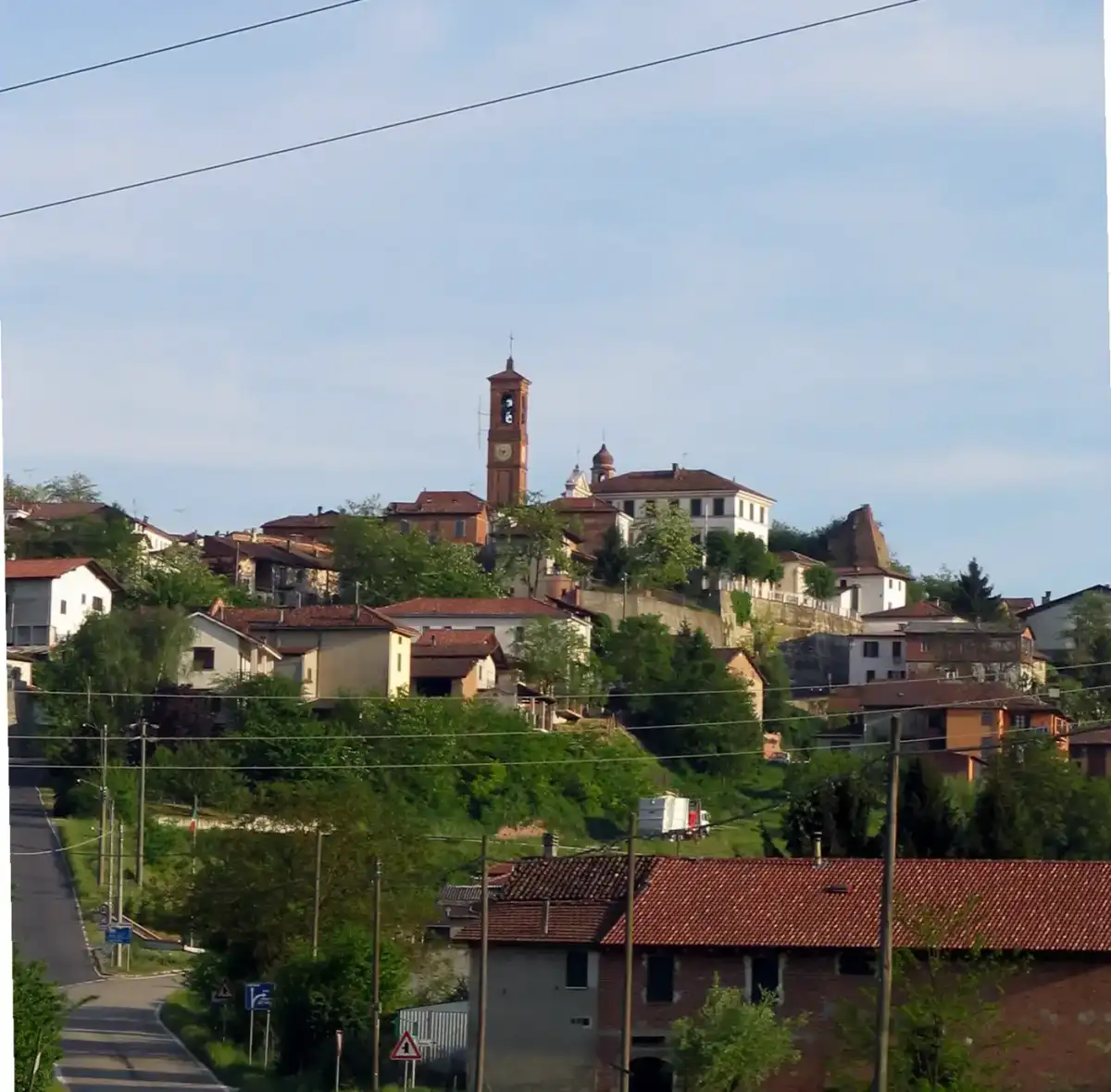
Cortiglione (Corgèli or Courtjon in Piedmont) is an Italian municipality of 506 inhabitants[1] from the province of Asti in the Piemonte.
Landscape and area
ClimateExplore this chapter
Cortiglione is located in the south of province of Asti, approximately 22 km from the capital and about 25 km from the Alessandria. It is crossed by the stream Tiglione. The municipality is part of the Vineyards and Wines.
Climate
The sea has a continental climate, characterized by cold winters, in contrast to the windy and dry summers. Autumn is foggy and rainy, and ends at the beginning of December, leaving space in winter, with rigid temperatures and, very often, even strong snowfall (the frostless winters are rare), which ends in mid-March (but snows also in the end of that month are not unfrequent), when a short and rainy spring begins, in the first part under the sign of the thermal hike, with night temperatures -5 degrees, at the front of day temperatures that exceed the 15 degrees, bringing then cleared decided. Summer begins at the end of May, with high temperatures (often exceeds even the 30 degrees) and very rarely appear summer time. The heat already ends at the end of September, when autumn begins.
History of Cortiglione
Origins · The Middle Ages · The modern eraExplore this chapter
Origins
Its first name Courtesy was replaced with the current one only in February 1863, after the unity of Italy. It has been suggested that its origins are not Roman, but medieval; this conjecture was in fact excluded from the German epigraphist Theodor Momsen. The Etym curtis, present both in the ancient name and in the current one, refers to the early Middle Ages, in fact this term indicated a large plot of land owned by a lord and entrusted to farmers.
The Middle Ages
In the X-XI century it is under the control of the Pope. In the 12th century, with the assertion of the Commune and with the weakening of the bishop's power, Corticelle is of the powerful Marquis Bonifacio del Vasto after Federico I Barbarossa ceded it in 1164.
The modern era
In 1431 the conductor Francesco Sforza, under the command of the militias of the Duke of Milan Filippo Maria Visconti, after having invaded the Monferrato, occupied many places in Valtiglione including Corticelle, then pushing into the Langhe. After the Peace of Lodi in 1454, Corticelle came under the control of the families of the Panizzoni counts of Alessandria, and of the Soavi counts (de Suavis)[4], consignori of said fief.. In the '700 underwent the hegemony of Gonzaga on Monferrato.
The contemporary period
In this period Cortiglione is much more populated in summer, and still records presences of non-native cortiglionesi, but of origin, and also of Macedonians, Greeks and other components of the territory, although it is completely absent the Arbercan population.
Symbols
The coat of arms and gonfalone were granted with DPR on 6 August 1988.[5]
The gonfalone is a red and blue drape party.
What to see in Cortiglione
Streets and main squaresExplore this chapter
- Special natural reserve of Val Sarmassa on the border between Cortiglione and Vinchio. In fact, technically, the Val Sarmassa Nature Reserve does not fall within the territory of Cortiglione, which actually acts as its border. It develops in the territories of Vinchio, of Incisa Scapaccino and of Vaglio Serra;
- Rocks of the medieval castle;
- Municipal Palace of the 19th century;
- Sanctuary Madonna di Fátima, formerly church of the Baptists or the Trinity. In this sanctuary every May 13 the apparition of Our Lady in Fatima, with the Eucharistic celebration and procession through the streets of the country;
- Church of San Siro (XV century) and bell tower (XVIII century).
- Chapel of San Rocco.
Streets and main squares
- Via Roma
- Via Incisa Scappaccino
- Via Vinchio
- Piazza Padre Pio
- Piazza Vittorio Emanuele II
Society
Demographic evolutionExplore this chapter
Demographic evolution
Inhabitants registered[7]
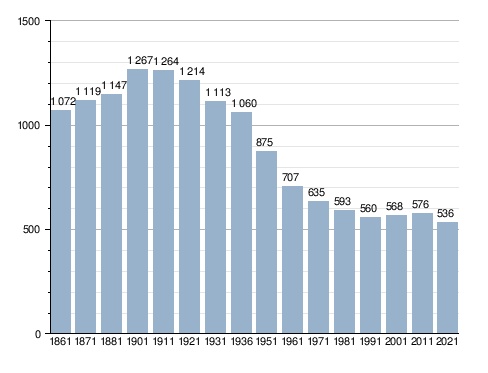
After the strong exodus that has characterized almost all 900 (exodus that practically halved the population) towards the big industrial cities or to the American continent, from 1991 onwards there is a small but gradual increase in demographic. This is also thanks to foreigners who have settled in this country. At 31 January 2009, the country has 614 inhabitants (represented in 217 families), 72 of which are foreign nationals. They represent 11.7% of the population. There are 11 nations represented: Albania, Argentina, Belgium, Brazil, China, Germany, Macedonia, Morocco, Moldova, Romania, Ukraine.
Culture
EventsExplore this chapter
Events
- Summer festival: traditional event that takes place the last weekend of July. Dinner and live music, barrel race (vaslot) uphill, rally of the Fiat 500 and photo exhibition period.
- La Bricula: cultural association that deals with collecting and spreading ancient traditions and transmitting them to young people.
- Patronal Feast of Our Lady of the Rosary & Feast of Harvest and Pijatura: patronal feast that takes place on the first Sunday of October. The feast is the occasion to recall the harvest of grapes and the ancient crushing with the feet. The participants start in the morning with the harvest at local wineries and continue in the afternoon on the village square with the crushing of grapes in the traditional tino.
Anthropic geography
Borgate and fractionsExplore this chapter
Borgate and fractions
- Borgate: San Michele (San Michel), Passerino (Pass.), Belgarino (Bergaren), Plagà (Plague), Bottazzo (Botoss), San Rocco/Pesa (San Ròch/Pèisa), Fracchia (Fròcia), Square (Piòssa), Citadel (Sitadèla).
- Hamlets: ValmezzanaVermasan), Greenhouse (Sèra), Crocetta (Crosëtta), On the Piano (♪), Blankets (Covered), Prelle (Prèli), Serralunga (Sèra Lònga), Saint Sebastian (San Sebastian), Cruise (Cruise), Glue (Còla), Brondoli (I'll be fine.), Rats (Ròt), Fiorotti (Fiorò), Bricco (B.C.), Rio Anitra (Rè'd l'Ania), San Martino (San Marten), Madonna (Madonèin-a), Pozzo (Poss).
Economy
Agriculture and industryExplore this chapter
Agriculture and industry
The country's agriculture is mainly based on viticultural crops. In fact, in spite of a population that has little more than 600 units, at least eight wineries can be counted, all family-run. There are also four restaurants. The industry is quite flourishing (always in relation to the number of inhabitants), as there are several mechanical and plastic processing companies. The gardens considered cortiglionesi (also outside the country) are countless, which grow classical plants (oil, tomatoes, potatoes etc.).
Near the paleontological site, discovered in 2004 during excavations for the works of the Asti-Cuneo highway, has been established the cultivation of saffron.[8]
Administration
Below is a table relating to the administrations that have succeeded one another in this municipality.Explore this chapter
Below is a table relating to the administrations that have succeeded one another in this municipality.
| Period | First citizen | Match | Load | Notes | |
|---|---|---|---|---|---|
| June 11, 1985 | May 28, 1990 | Filippo Domenico Solive | Italian Communist Party | Mayor | [9] |
| May 28, 1990 | April 24, 1995 | Andreino Dragon | Democratic Party of the Left, Italian Communist Party | Mayor | [9] |
| April 24, 1995 | June 14, 1999 | Andreino Dragon | centre-left | Mayor | [9] |
| June 14, 1999 | June 14, 2004 | Andreino Dragon | civic list | Mayor | [9] |
| June 14, 2004 | June 8, 2009 | Luigi Roseo | civic list | Mayor | [9] |
| June 8, 2009 | May 26, 2014 | Andreino Dragon | Lista civica Insieme per Cortiglione | Mayor | [9] |
| May 26, 2014 | May 27, 2019 | Gilio Mario Brondolo | list New ideas in common | Mayor | [9] |
| May 27, 2019 | June 10, 2024 | Gilio Mario Brondolo | civic list Together for the future | Mayor | [9] |
| June 10, 2024 | in office | Gilio Mario Brondolo | Civic list Renewal and continuity | Mayor | [9] |
Notes
Explore this chapter
- ^ to b Monthly demographic balance for the year 2026 (provisional data), up demo.istat.it, ISTAT.
- ^ Seismic classification (XLS), up risks.protezionecivile.gov.it.
- ^ Table of degrees/day of Italian Municipalities grouped by Region and Province (PDF), in Law 26 August 1993, n. 412, annex A, National Agency for New Technologies, Energy and Sustainable Economic Development, 1 March 2011, p. 151. URL consulted on 25 April 2012 (archived fromoriginal url on 1 January 2017).
- ^ inventories, up State Archives of Turin. Retrieved 27 February 2025.
- ^ Cortiglione, up Heraldic office - Municipal files, Central State Archives. Retrieved 23 August 2026.
- ^ Piedmontese civic coat of arms, vol. I, Regional Council of Piemonte, 2016, p. 186, ISBN 978-88-96074-98-5.
- ^ Data taken from:
- Resident population of the municipalities. Censuses from 1861 to 1991 (PDF), up ebiblio.istat.it, ISTAT.
- Resident population - Time series, up exploredati.istat.it.
Please note: 2021 data refers to permanent census data as of December 31 of that year.
- ^ Between fossils and saffron, up piemonteparchi.it.
- ^ to b c d And f g h the https://amministratori.interno.it/
Where to stay · Cortiglione
Find stays on Booking.comStories, places and people
More about Cortiglione and the surrounding area
Follow a thread of history and see where it leads.
 Faberh di Wikipedia in italiano · Public domain
Asti
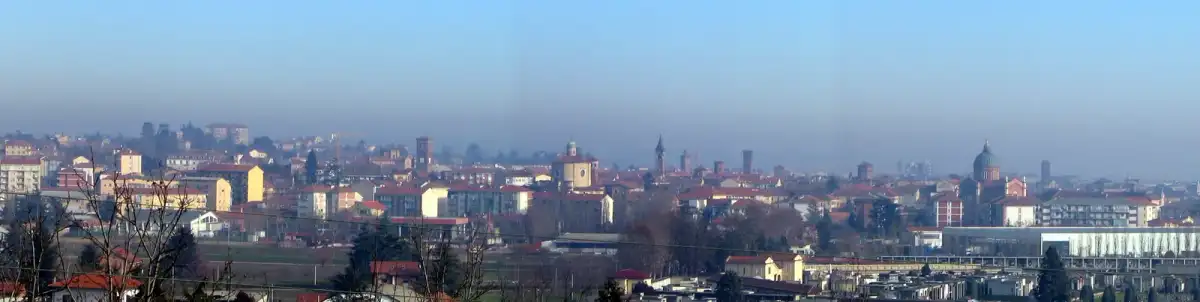
Asti ( Listen , Ast in Piedmont and in the Astigiano dialect) is an Italian town of 73 681 inhabitants, capital of the homonymous province of Piedmont today commonly called Astigiano and main center of the historical region of Astesana . Roman Municipium, known as Hasta, was the seat of the duchy of Asti, Longobard Duchy of Neustria. Free common in the Middle Ages, with the right to "battle money", was one of the most important shopping centers between the 12th and 13th century, when its merchants developed commerce and credit throughout Europe.
Read the story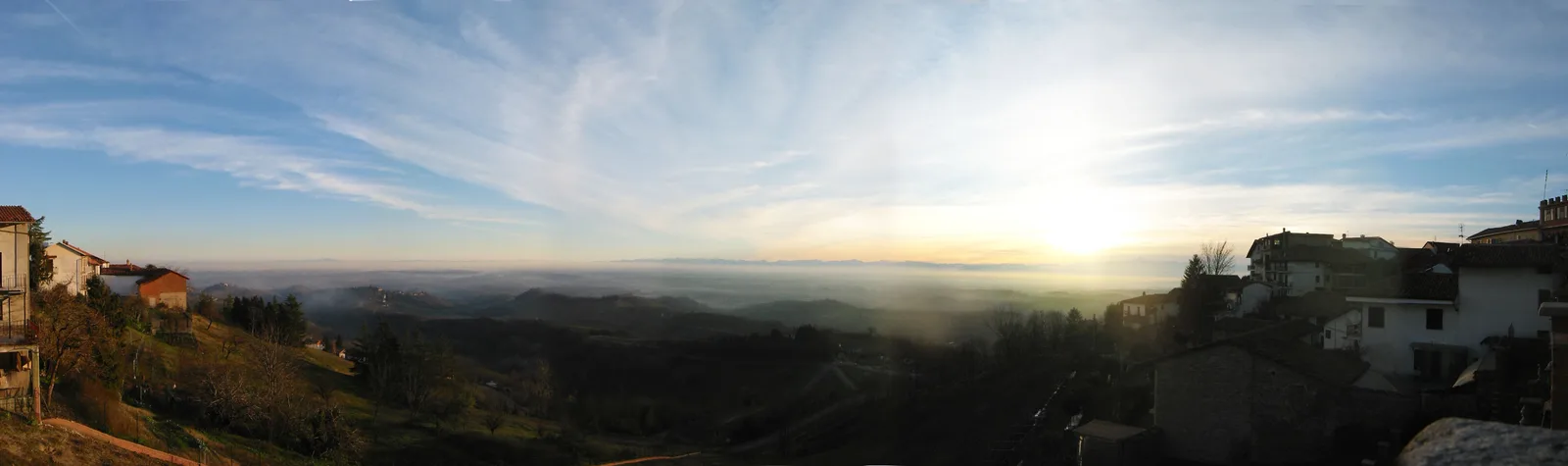 user:Luca.grieco · Public domain
Province of Asti
The province of Asti ( Province of Ast in Piedmont) is an Italian province of Piemonte of 207 128 inhabitants, with capital Asti .
Read the story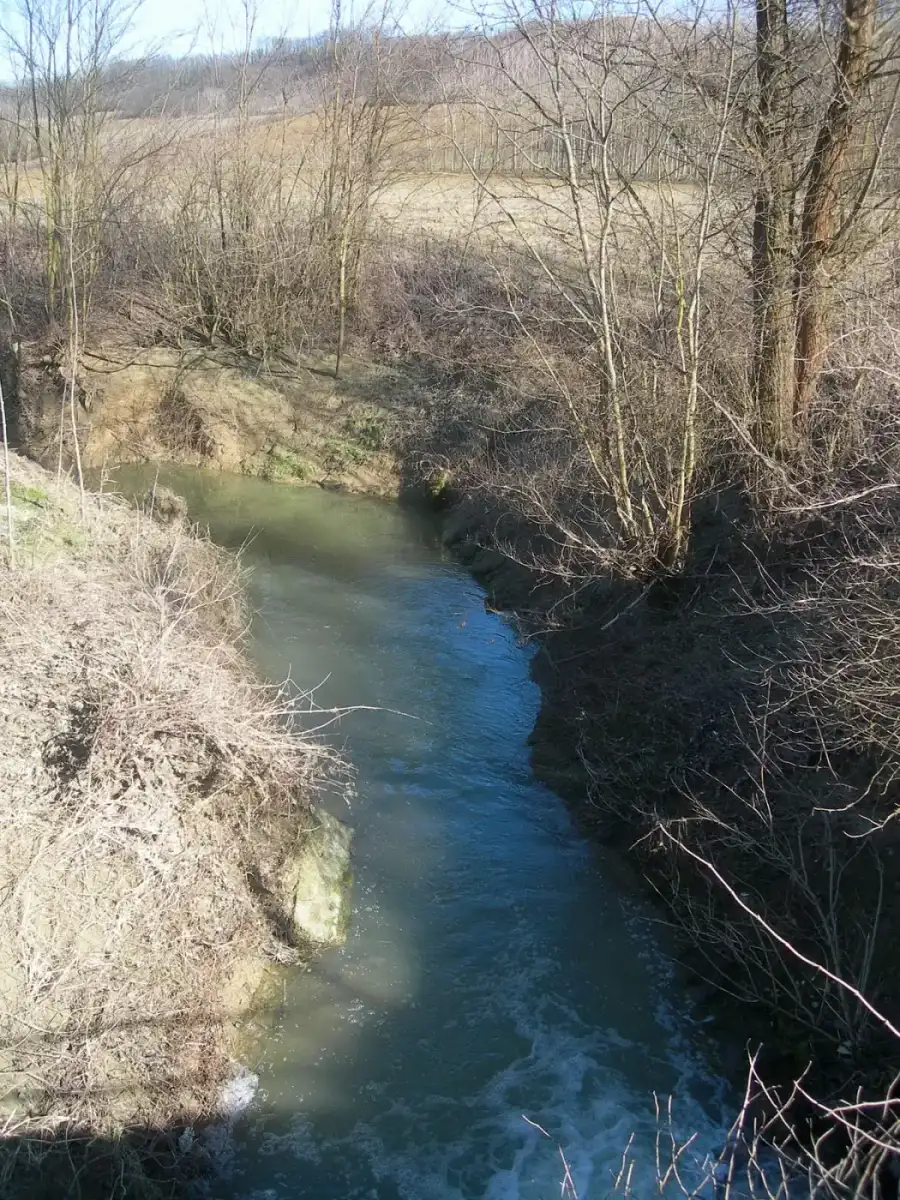 Dany Vallebuona · CC BY-SA 3.0
Tiglione
The Tiglione (Tijon in Piedmont) is a Piedmontese stream of the province of Asti affluent right of Tanaro . It gives its name to the hilly community Val Tiglione and its surroundings.
Read the story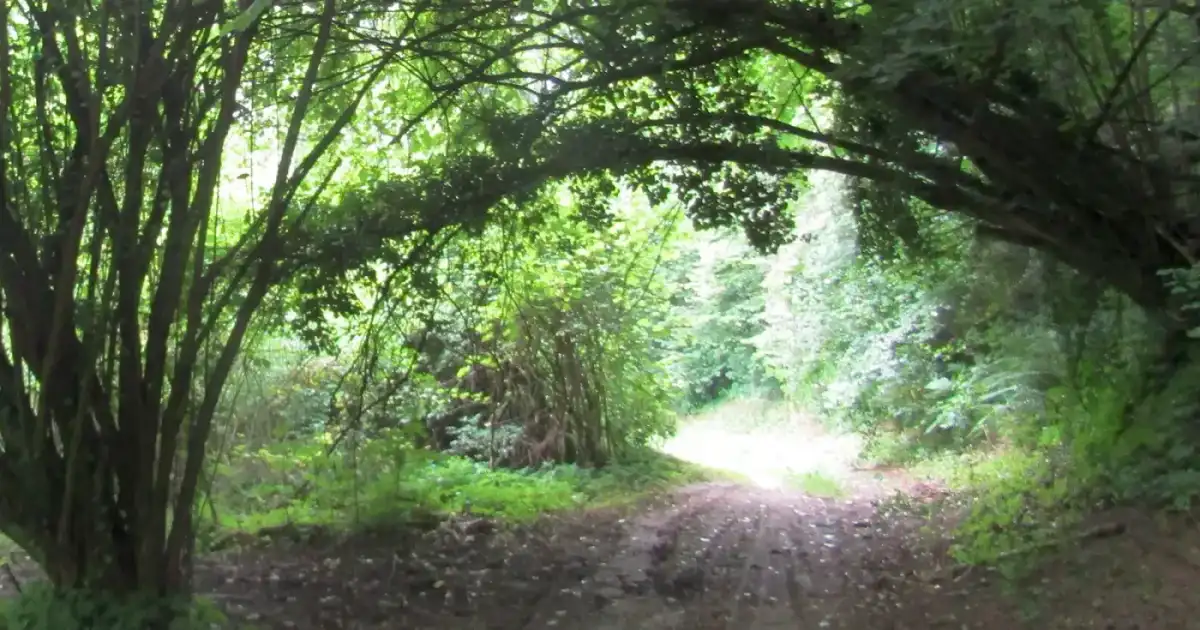 Pampuco · CC BY-SA 4.0
Special natural reserve of Val Sarmassa
The Special Nature Reserve of Val Sarmassa, established in 1993, is a regional reserve located in the province of Asti , in the municipalities of Vinchio , Vaglio Serra and Incisa Scapaccino . It covers an area of over 200 hectares, and is between 153 and 276 meters above sea level.
Read the story Mikenorton · CC BY-SA 3.0
Earthquake Piemonte Southern 2000
The earthquake of 21 August 2000 was a seismic event of strong intensity that struck the Piemonte southern, especially the provinces of Asti and Alessandria . The shock, of magnitude 4,8 Richter (VII° Mercalli) occurred at 19:14, sowing terror among the population. The epicenter occurred in the area between Nizza Monferrato , Canelli and Acqui Terme , precisely in the municipalities of Bergamasco (OHIM) Cortiglione , Incisa Scapaccino and Castelnuovo Belbo (AT ). It was clearly perceived throughout the North-West, Lombardy and partly even to the Apennines Tosco-Emilian; slightly felt in south-eastern France.
Read the storyThe area, step by step
