Atlas of Monferrato
Celle Enomondo: sights, history and trails
Asti
- Elevation
- 234 m above sea level
- Area
- 5.59 km2
- Demonym
- Cells
- Patron saint
- San Rocco
A closer look
Discovering Celle Enomondo
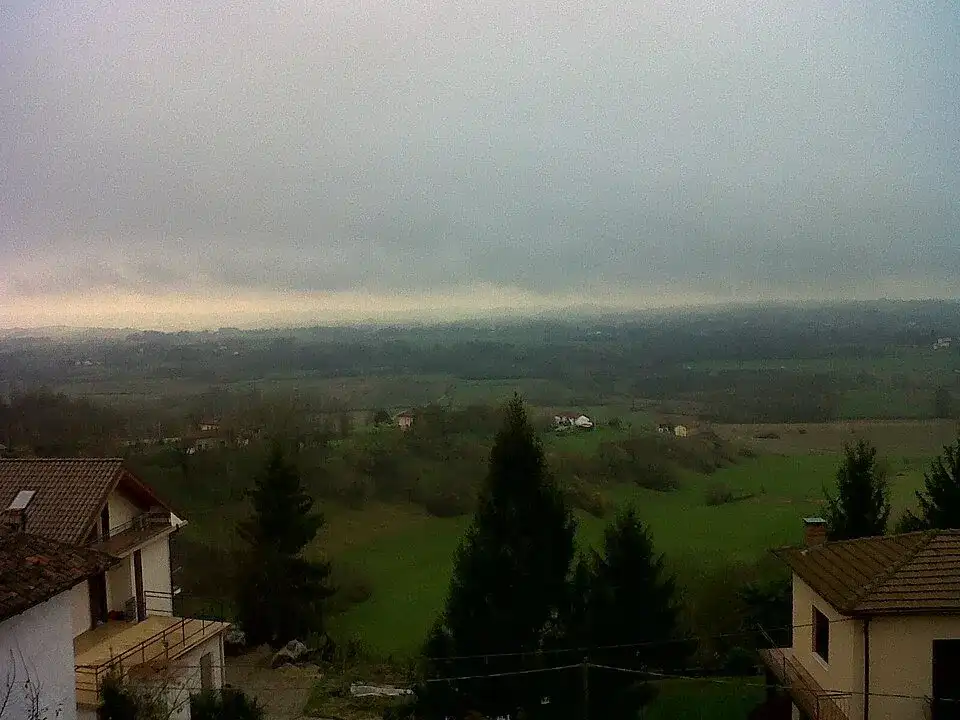
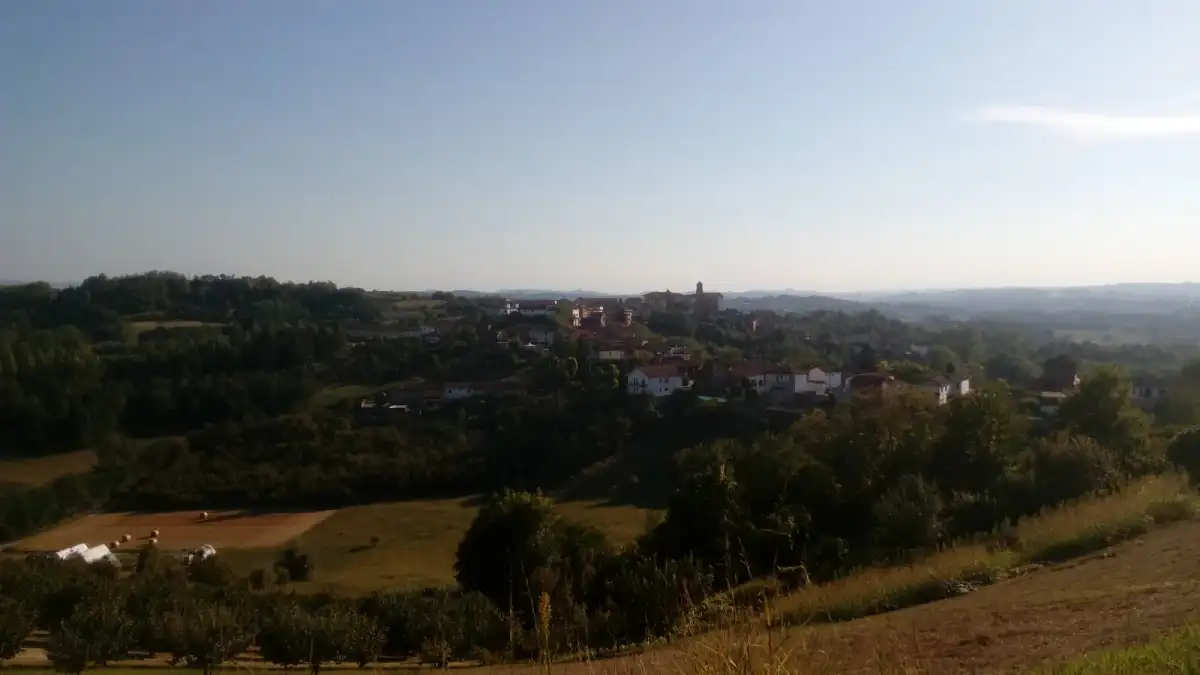
Celle Enomondo (Sele in Piedmont) is an Italian municipality of 432 inhabitants[1] from the province of Asti, in Piemonte.
History of Celle Enomondo
SymbolsExplore this chapter
Celle's first documentary evidence dates back to the end of the 9th century. In an act of 898 the bishop of Asti, as part of the reorganization of the cathedral chapter, assigned to the canons various assets and rights located in the Asti area, which also included the locality of Celle.[4] A document of 933 also bears witness to the existence of a rural settlement, while in 1041 it is attested the presence of a castrum, mentioned in a diploma with which Emperor Henry III confirmed previous royal and imperial concessions to the Church of Asti.[5]
During the Middle Ages, Celle remained closely linked to the political events of nearby Asti. The progressive passage of territorial powers from the bishop to the locality led to the inclusion of the locality in the town hall. Celle appears in fact among the communities included in the territory subject to Asti in the diploma granted in 1159 by Emperor Federico Barbarossa. In 1169, a pontifical confirmation of the possessions of the canons of the cathedral also mentioned the church and territory of Celle, attesting the persistence of important ecclesiastical interests in the locality.[5]
Between the 13th and 14th centuries, the community gradually developed its own administrative structures, while remaining subject to the political influence of Asti. In 1356, Celle's men granted a prosecution to give loyalty to the Marquis of Monferrato, as imperial vicar, and to the municipality of Asti. Following the political events of the Asti area, in 1387 the community swore an oath of loyalty to Louis of Orléans and his wife Valentina Visconti; on May 29 of the same year Gian Galeazzo Visconti assigned them the place and jurisdiction of Celle.[5]
The organization of the community in the late Middle Ages is documented by the municipal statutes of 1444. The administration was articulated in the arengo, consisting of household leaders, community council and podestà, appointed by the city of Asti. The council was renewed annually by means of an indirect elective procedure and provided, among other functions, the approval of the statutes, subsequently submitted to the confirmation of the ducal governor of Asti. The same statutes bear witness to the existence of a defensive system consisting of moat, swords and other fortifications, whose maintenance was required to run the population.[5]
Celle then followed the political events of the Astigiano territory. After the dominations that affected Asti in the late Middle Ages, the county entered the orbit of Savoy in the 16th century. During the modern age, the jurisdiction over Celle was shared between several feudal families. Among the feudatories are the Berliners, the Melicas of Vaglierano, the Mestitis, Counts of Graglia, and the Ramelli di Solbrito. A report by the head of the province of Asti in 1753 indicated as holders of jurisdiction the accounts Gaspare and Ignazio Ramelli, Giuseppe Merliati and Giuseppe Melica.[5]
The same report of 1753 described the municipal territory as divided into three main towns: the capital, Merlazza and Boschetto. The economy was mainly agricultural and the conditions of land were judged not particularly favorable; the administration therefore suggested an improvement of crops and plantation of willows and other arboreal species in the most humid areas and along the watercourses. The municipal administration was then entrusted to an ordinary council composed of three members.[5]
With the reform of local administrations promoted by Vittorio Amedeo III in 1775, the order of the community was reorganized: the city council was composed by three ordinary advisors and as many alternates and the office of mayor was exercised in rotation by the senior Ordinary Council. At the end of the 18th century, following French occupation Piemonte, Celle was interested in the administrative changes introduced during the Napoleonic period.[5]
After the Restoration, the municipality returned to be part of the Saudi domains and, with the subsequent formation of the Kingdom of Italy, was included in the province of Alessandria, within the district of Asti. To distinguish it from other Italian municipalities called Celle, in 1862 the municipal council decided to add the term "Enomondo" to the historical name, with reference to the traditional wine-growing vocation of the area. The new name of Celle Enomondo was officially recognized by royal decree of 1 February 1863.[5]
Between 1882 and 1935 the municipality was served by the Asti-Canale tramway, which connected the centers of Astigiano with the capital. In 1935, with the establishment of province of Asti, Celle Enomondo was separated from the province of Alessandria and aggregated to the new provincial district.
Symbols
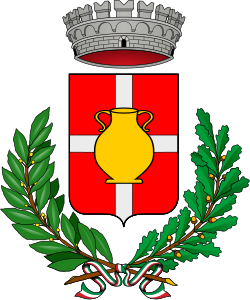
The municipality does not have a coat of arms and an officially adopted gonfalone.[6] However, it is used in some contexts and on the website of the institution a coat of arms without official recognition, made independently by third parties and not adopted by the municipal administration. It can be blasphemed:
What to see in Celle Enomondo
Religious architecture · Church of Sant'Antonio Abate · Church of the Brotherhood of San RoccoExplore this chapter
Religious architecture
Church of Sant'Antonio Abate
The church of Sant'Antonio Abate is the parish church of Celle Enomondo. The building, several times restored over the centuries and largely rebuilt around 1960, retains elements belonging to the previous construction.[7]
Of particular interest is the bell tower, built in exposed bricks and of Romanesque origin. In the apse there is also a trace of a fresco dating back to the 16th century depicting Saint John Evangelist and St. James Major.[8]
Church of the Brotherhood of San Rocco
The church of the Confraternity of San Rocco is located in the town centre. The building is one of the places linked to the local religious tradition, which finds its main expression in the patronal feast celebrated annually in August.[9]
Other religious buildings
The municipal territory preserves several votive chapels and piloni, testimony of local rural religiosity. Among the smaller buildings are the small church of the Immaculate Conception and the so-called church of the Convent, the latter built in 1853 by Fr. Stefano Torchio and connected to the Casa Stefanine.[10]
The widespread presence of votive chapels and pylons is one of the characteristic elements of the rural landscape of Celle Enomondo; these artefacts are included in the historical-cultural and landscape itineraries promoted by the municipal administration.[11]
Civil architecture
Castle
In the municipal territory there is a castle, counted by the communal administration among the places of interest of Celle Enomondo.[12]
Society
Demographic evolution · Foreign ethnic groups and minorities · ReligionExplore this chapter
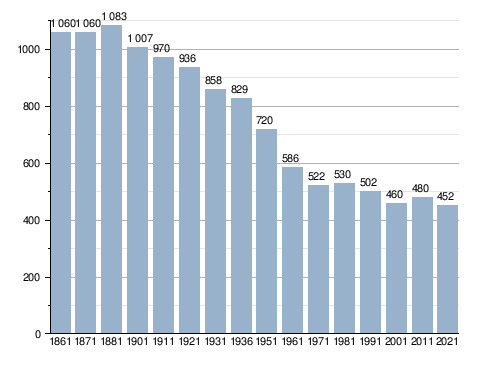
Demographic evolution
Inhabitants registered[13]
Foreign ethnic groups and minorities
On 1 January 2025 foreign citizens living in Celle Enomondo were 28, that is about 6.7% of the resident population.[14]
Religion
The local religious tradition is mainly linked to Catholicism. The municipal territory is the seat of the parish of Sant'Antonio Abate, belonging to the diocese of Asti.[15]
The religious life of the community is also witnessed by the presence on the territory of chapels and votive pylons, also included in the historical-cultural itineraries promoted locally.[16]
Traditions and folklore
The main religious celebration of the country is the patronal feast of San Rocco, celebrated in August. Celebrations include religious celebrations and civil demonstrations and are one of the main events of the local community.[17]
The exhibition "Celle Tutto hemp" is also held as part of the celebrations, dedicated to the valorization of hemp and local productions, together with cultural, food and wine events. Among these are the traditional gathering of cars, motorcycles and vintage Vespe, musical and folklore performances and itineraries dedicated to chapels, votive piloni and the rural landscape of the municipal territory.[18]
Infrastructure and transport
Roads · TranvieExplore this chapter
Roads
Celle Enomondo is connected to the neighboring centers through the provincial road network ofAstigiano, which allows connections with Asti, San Damiano d'Asti and the other surrounding municipalities.[19]
Tranvie
Between 1882 and 1935 Celle Enomondo was served by the Asti-Canale tranviary, an interurban steam line connecting Asti in Canale, crossing the hilly territory between the Astigiano and Roero. The line, long 24,032 km, was single track and had a gauge of 1100 mm..
Inaugurated on 31 December 1882, the tram remained in operation for over fifty years. The service ceased on 30 December 1935, at the same time as other lines operated by Riunite Electric Railways, and was replaced by self-services.[20][21]
Administration
MayorsExplore this chapter
Mayors
| Period | First citizen | Match | Load | Notes | |
|---|---|---|---|---|---|
| June 12, 1985 | March 11, 1988 | Eugenio Torchio | Christian Democracy | Mayor | [22] |
| March 11, 1988 | 6 June 1990 | Vincenzo Perosino | civic list | Mayor | [22] |
| 6 June 1990 | April 24, 1995 | Piero Montrucchio | Christian Democracy | Mayor | [22] |
| April 24, 1995 | June 14, 1999 | Piero Montrucchio | center | Mayor | [22] |
| June 14, 1999 | June 14, 2004 | Piero Montrucchio | civic list | Mayor | [22] |
| June 14, 2004 | June 8, 2009 | Walter Vercelli | civic list | Mayor | [22] |
| June 8, 2009 | May 26, 2014 | Walter Vercelli | civic list Campanile, spiga and cluster | Mayor | [22] |
| May 26, 2014 | May 26, 2019 | Andrea Bovero | civic list Cells together | Mayor | [22] |
| May 26, 2019 | June 9, 2024 | Andrea Bovero | civic list Cells together | Mayor | [22] |
| June 9, 2024 | in office | Andrea Bovero | civic list Cells together | Mayor | [23] |
Sport
Soccer · EquitationExplore this chapter
Soccer
The local football tradition originated in 1975 with the founding of ISA Celle, a company based in Celle Enomondo that later assumed the names of U.S. Cellese, A.S. Vaglierano and A.C. cells. Celle General Cab. In 2010, following the collaboration with A.S.D. Don Bosco Asti, the company assumed the name of A.S.D. Colline Alfieri Don Bosco.[24]
The company played the Piedmont amateur championships, also reaching Excellence. The municipal field of Celle Enomondo continued to be used for agonistic activity even during the period of Colline Alfieri Don Bosco.[25]
Equitation
The territory of the present municipality of Celle Enomondo is linked to a historical victory to Palio di Asti. On 22 May 1826 the jockey from Celle Vittorio Montrucchio, son of Giovanni, won the race riding a Sardinian horse.[26] The victory is remembered by a former vote dated the same day, preserved in the chapel of San Vincenzo Ferreri of the Merlazza hamlet, in which Montrucchio is depicted during the race under the protection of St. Vincent Ferreri and of San Second.[26][27]
Notes
Explore this chapter
- ^ to b Monthly demographic balance for the year 2026 (provisional data), up demo.istat.it, ISTAT.
- ^ Seismic classification (XLS), up risks.protezionecivile.gov.it.
- ^ Table of degrees/day of Italian Municipalities grouped by Region and Province (PDF), in Law 26 August 1993, n. 412, annex A, National Agency for New Technologies, Energy and Sustainable Economic Development, 1 March 2011, p. 151. URL consulted on 25 April 2012 (archived fromoriginal url on 1 January 2017).
- ^ Celle Enomondo, up Centro Casalis. Retrieved 16 August 2026.
- ^ to b c d And f g h Celle Enomondo, up Centro Casalis. Retrieved 16 August 2026.
- ^ Municipality of Celle Enomondo, Statutes (PDF), art. 5, c. 1, Coat of arms and banner."The Commune in the acts and in the seal identifies itself with the name "CELLE ENOMONDO" and with a coat of arms that will be adopted according to current legislation.»
- ^ Parish church of Sant'Antonio Abate - Celle Enomondo (AT), up Romanesque, Gothic and Renaissance churches Piemonte and Valle D'Aosta. Retrieved 16 August 2026.
- ^ Parish church of Sant'Antonio Abate - Celle Enomondo (AT), up Romanesque, Gothic and Renaissance churches Piemonte and Valle D'Aosta. Retrieved 16 August 2026.
- ^ Celle Enomondo | Festa di San Rocco 2023, up Municipality of Celle Enomondo. Retrieved 16 August 2026.
- ^ In Celle Enomondo 18 kilometers of ancient stories among votive piloni, chapels and small churches, up Giornarunner. Retrieved 16 August 2026.
- ^ Programming lines (PDF), up Municipality of Celle Enomondo. Retrieved 16 August 2026.
- ^ Places, up Municipality of Celle Enomondo. Retrieved 16 August 2026.
- ^ Data taken from:
- Resident population of the municipalities. Censuses from 1861 to 1991 (PDF), up ebiblio.istat.it, ISTAT.
- Resident population - Time series, up exploredati.istat.it.
Please note: 2021 data refers to permanent census data as of December 31 of that year.
- ^ Foreign citizens 2025 - province of Asti, up Alltalia.it. Retrieved 16 August 2026.
- ^ S. Antonio Abate, up Diocese of Asti. Retrieved 16 August 2026.
- ^ Programming lines (PDF), up Municipality of Celle Enomondo. Retrieved 16 August 2026.
- ^ Celle Enomondo | Festa di San Rocco 2023, up Municipality of Celle Enomondo. Retrieved 16 August 2026.
- ^ Celle Enomondo | Festa di San Rocco (edition 2024), up Municipality of Celle Enomondo. Retrieved 16 August 2026.
- ^ Viability of the province of Asti (PDF), up province.asti.it, Province of Asti. Retrieved 16 August 2026.
- ^ Francesco Ogliari and Franco Sapi, Sparks in the mountains. History of Italian transport, vol. 8, Milan, 1968, pp. 115-122.
- ^ Francesco Ogliari and Franco Sapi, Sparks in the mountains. History of Italian transport, vol. 9, Milan, 1968, pp. 567-569.
- ^ to b c d And f g h the Register of local and regional administrators, up Ministry of the Interior. Retrieved 16 August 2026.
- ^ Electoral body of the Province of Asti (PDF), up province-di-asti-api.municipiumapp.it, Province of Asti. Retrieved 16 August 2026.
- ^ The Colline Alfieri don Bosco di San Damiano for the first time in Excellence (PDF), in The anchor, 25 August 2013. Retrieved 16 August 2026.
- ^ Official communication (PDF), up figc.it, Italian Football Federation. Retrieved 16 August 2026.
- ^ to b Renato Grimaldi; Sandro Brignone; Maria Adelaide Gallina, The morphology of the ex-voto paintings. From the rite of "double death" to the representation of victory (PDF), in Media and Cultural Icons, 2024, pp. 77-78, DOI:10.53136/97912218114456. Retrieved 26 September 2026.
- ^ Church of San Vincenzo Ferreri, up Municipality of Celle Enomondo. Retrieved 26 September 2026.
Where to stay · Celle Enomondo
Find stays on Booking.comThe area, step by step