November · San Sebastiano Curone
San Sebastiano Curone Truffle Fair: guide between white and black truffles and Val Curone
Discover the National Truffle Fair of San Sebastiano Curone: period, black and white truffle, Timorasso, Montebore, village and itineraries in Val Curone.
Third and fourth Sunday of November. Discover all the appointments on official website of the event.
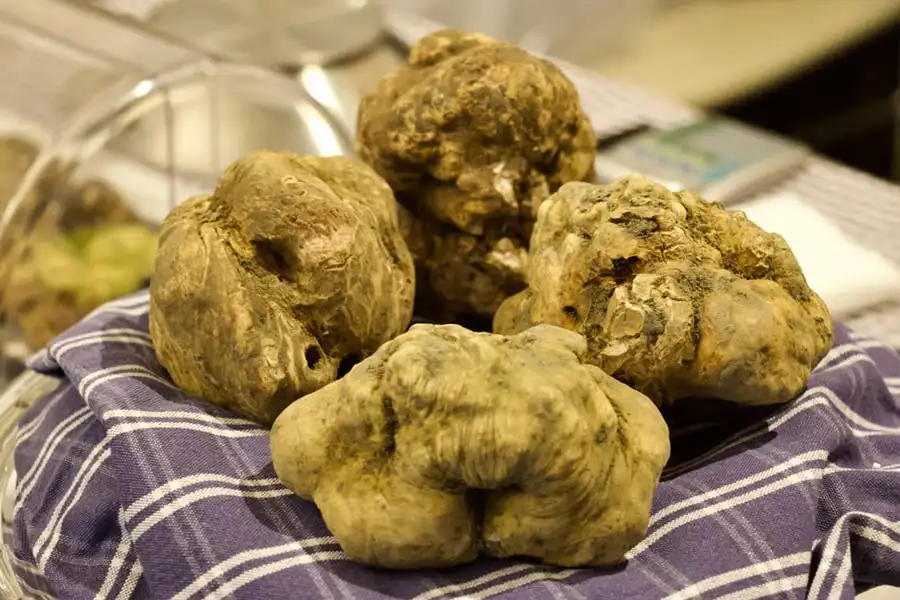
In the second half of November San Sebastiano Curone becomes one of the Piedmontese truffle capitals. For two Sundays the small village in Val Curone welcomes truffle hunters, producers, chefs, enthusiasts and visitors arriving for the National Black and White Truffle Fair, an event which has obtained national recognition since 2008 and which tells in a very concrete way the truffle vocation of the Terre del Giarolo.
Here the truffle is not isolated from the rest of the territory. Alongside it you will find Derthona Timorasso, Barbera dei Colli Tortonesi, Salame Nobile del Giarolo, Montébore cheese and an Apennine cuisine built on simple ingredients and clear flavours. The fair develops between the Palatartufo, the streets of the historic center, Piazza Roma and the spaces of the village, allowing you to alternate market, tastings, auction, catering, culture and walks.
When the San Sebastiano Curone National Truffle Fair takes place
The event takes place every year on the third and fourth Sunday of November. This frequency is indicated directly by the organizers and is now an integral part of the country's calendar. The two Sundays allow us to distribute different activities and offer visitors two opportunities to discover the fair.
The third and fourth Sunday of November invite you to a weekend of truffles, wines and discoveries in Val Curone.
A fair in the Lands of Giarolo
The market fair celebrates truffles, agriculture and livestock farming, with its two main days hosted at the Palatartufo and in the town centre.
The objective declared by the organizers is to enhance the production of white and black truffles from the Terre del Giarolo, an Apennine area between Piedmont, Lombardy, Liguria and Emilia which retains a strong rural identity. The fair thus becomes a showcase for an area less known than other truffle areas, but very rich in products and landscapes.
White truffle and black truffle
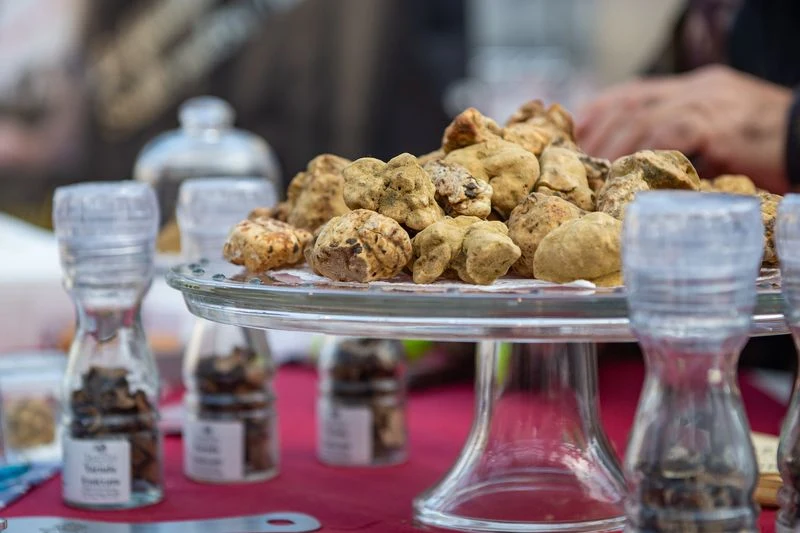
A distinctive feature of the event is the presence of both white and black truffles. The market exhibition allows you to observe different types and better understand their aroma, consistency, seasonality and use in the kitchen.
The prized white truffle is the one that most immediately attracts attention, but the presence of black broadens the experience and allows you to approach a more complex world. The two products require different techniques and combinations and describe different environmental conditions.
Accompanying the purchase
Since 2015, the National Truffle Studies Center has collaborated with the event through a purchasing assistance service. The objective is to provide visitors with useful information to recognize the quality, freshness and characteristics of the product before purchasing.
It is a particularly useful service for those who buy truffles only occasionally. Take the opportunity to ask how to recognize a fresh specimen, how to preserve it and when to consume it. Learning to choose is much more important than simply looking for the biggest piece.
The Palatartufo
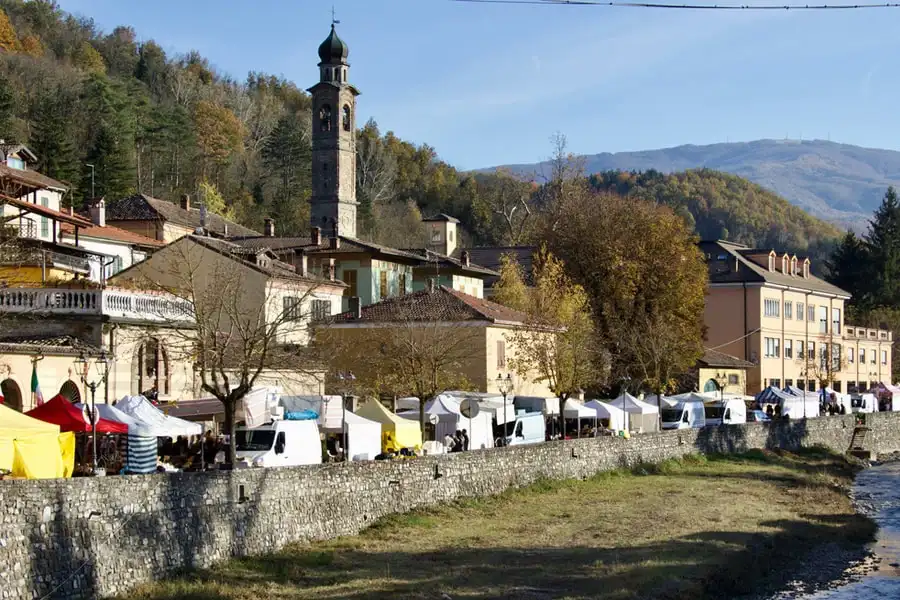
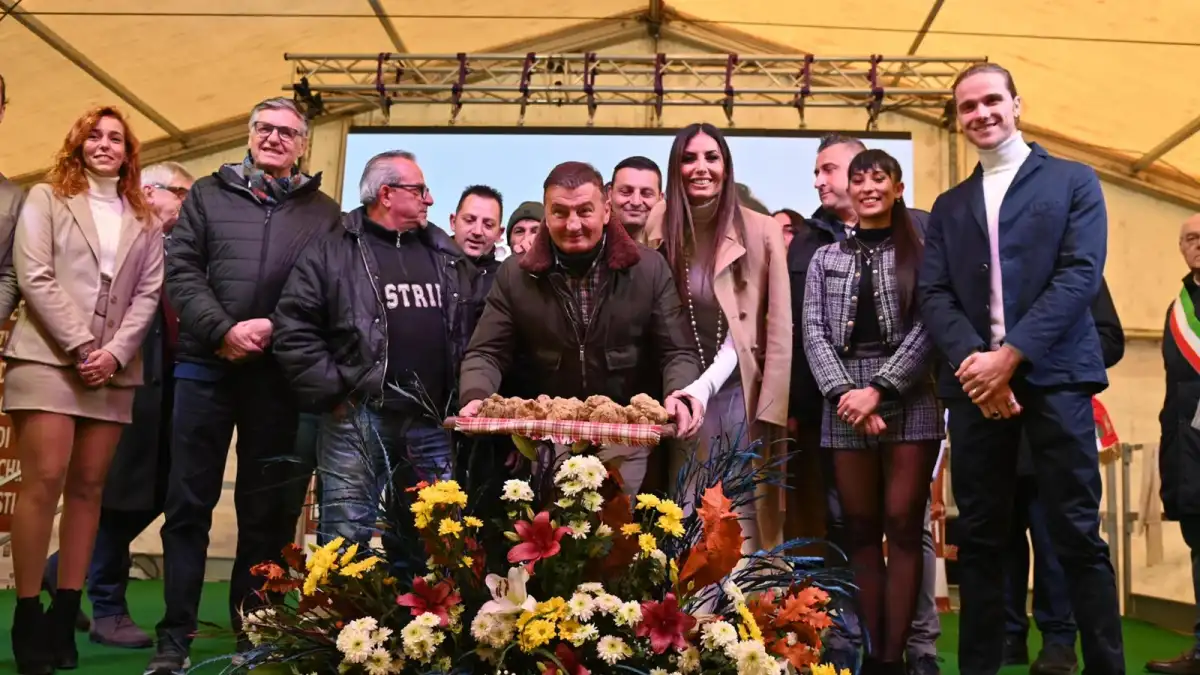
The S.M.S. Room, known during the event as Palatartufo, is the heart of the exhibition market. Here the truffle hunters, mainly coming from the Giarolo Valleys, directly display and market the season's harvest.
Entering Palatartufo in the early hours of the morning allows you to calmly observe the stalls and talk to those who have collected the product. During the day the environment becomes much more lively, especially during the auctions, awards ceremonies and gastronomic events.
The National Truffle Auction
One of the most recognizable traditions of the first Sunday is the National Black and White Truffle Auction. Different lots combine truffles and local products and are auctioned in front of the public, transforming the product into a moment of spectacle and participation.
The auction should not be seen only as a commercial opportunity. It is also a way to enhance the most interesting specimens, tell the story of the season and draw attention to the work of the truffle hunters. If you want to attend, check the specific time of the edition and arrive early.
The search dog competition
The second Sunday traditionally hosts the truffle hunting dog competition. The dogs, accompanied by their handlers, face timed heats and must identify the hidden bait, demonstrating concentration, nose and harmony with the truffle hunter.
The organizers underline the particularity of the race, which also uses white truffle bait. It is a very interesting event for those who want to see the true silent protagonist of the quest in action: the dog.
Truffle for Kids
In recent editions the program has also introduced activities dedicated to children, such as Truffle for Kids. Through play and the relationship with the dog, dog educators and truffle hunters explain to the little ones how research work is carried out and how important respect, attention and collaboration are.
If you are traveling as a family, check to see if the activity is offered again. It is one of the best ways to prevent truffles from remaining a topic exclusively for adults and transform the fair into an educational experience.
The National Food and Wine Market
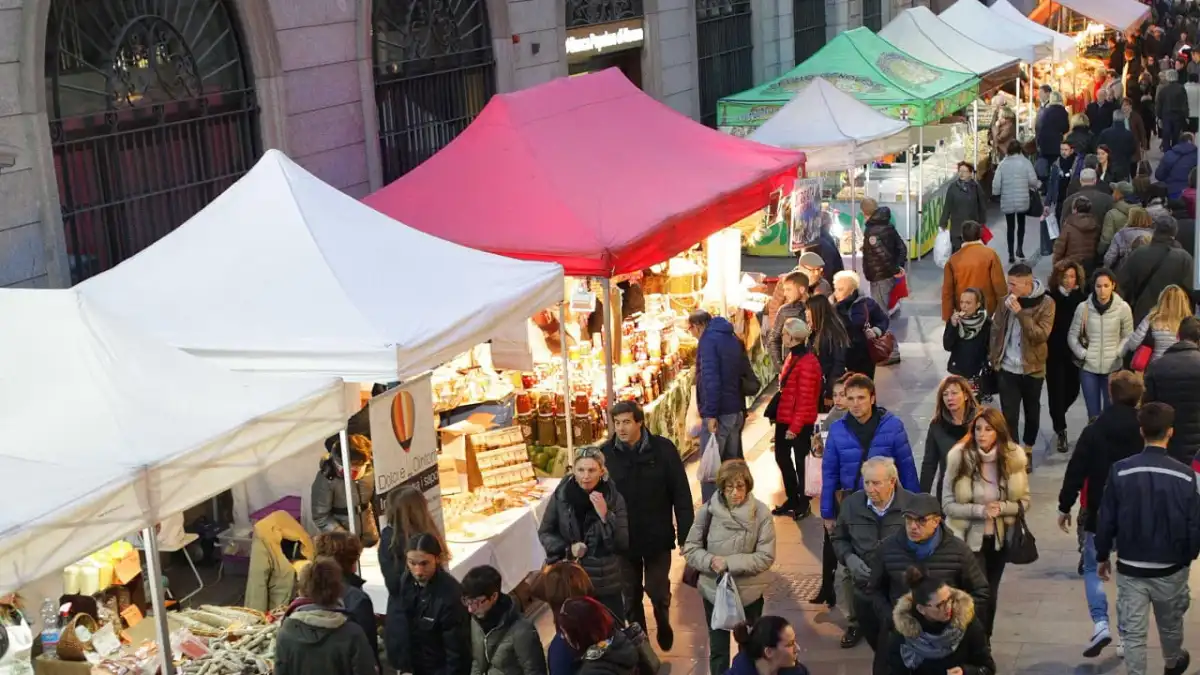
On two Sundays the historic center hosts a national market of food and wine products with exhibitors from different Italian regions. Truffles and derivatives, mushrooms, cheeses, cured meats, wines, craft beers, honey, jams, oils, flours, fresh pasta and baked goods create a very broad itinerary.
For those arriving with the aim of purchasing local products, the advice is to distinguish what directly belongs to the Terre del Giarolo from specialties coming from other areas. Both can be interesting, but knowing the provenance helps to use the fair as a tool to really explore the area.
Derthona Timorasso: the symbolic wine of the Tortonesi Hills
Among the wines most linked to San Sebastiano Curone is Derthona Timorasso. It is a white produced from an indigenous vine of the Tortonesi Hills which has experienced a strong rebirth in recent decades and today represents one of the most distinctive productions of the area.
During the fair, the Enoteca dei Territori normally offers the opportunity to meet producers and taste wines from the Tortonesi Hills and other nearby areas. If you taste a Timorasso that strikes you, note the name of the winery: a visit the next day is the best way to connect the glass to the hills from which it comes.
Barbera dei Colli Tortonesi
Alongside the Timorasso you will also find the Barbera dei Colli Tortonesi, which tells another side of the territory. Acidity, fruit and structure make it particularly suitable for autumn cuisine and the meat and cured meat dishes that accompany the fair.
Montebore: the cheese that looks like a wedding cake
Montébore is one of the most curious and recognizable products of the Terre del Giarolo. Its shape is composed of small overlapping cylinders of decreasing diameter and resembles a small wedding cake. It is produced with cow's and sheep's milk in proportions that can vary according to the manufacturer's specifications and tradition.
Tasting it during the weekend of the fair allows you to discover a product that deeply belongs to Val Curone and the nearby valleys. Fresh or more mature it changes character and can accompany local wines very well.
Salame Nobile del Giarolo
Another excellence cited by the organizers themselves is the Salame Nobile del Giarolo. It is linked to the pork butchery of the Apennine valleys and perfectly represents that conservation cuisine which for centuries has transformed meat into products capable of lasting over time.
During the fair, look for it among the local exhibitors and taste it without too many accompaniments. A slice of salami, a piece of bread and a glass of wine allow you to understand a lot about the gastronomic character of the area.
At the table with truffles
The event does not end in the stands. The A Tavola con il Tartufo initiative involves restaurants and farmhouses in San Sebastiano Curone and the area, which offer menus dedicated to white and black truffles for the period of the fair.
The menus are normally published in the days before the event because they depend on the availability of the product. If you want a complete truffle dinner or lunch, consult the updated list and book directly at the chosen establishment.
A cuisine that starts from local raw materials
The organizers emphasize the use of local raw materials as the basis of the menus. It is the most coherent way to experience truffles: not as an isolated and luxurious element, but as an ingredient that completes a local cuisine made of fresh pasta, eggs, meats, cheeses and seasonal vegetables.
The Truffle Inn
In recent editions the program has included a temporary Truffle Inn, with convivial tables and freshly prepared dishes, with or without black and white truffles. The formula may change from year to year, but it well represents the informal and social character of the event.
If it is proposed again, it is a convenient solution for eating inside the fair without giving up express cuisine. However, check opening hours, menus and access methods before your visit.
Truffles on the Via del Sale
The history of San Sebastiano Curone is linked to the ancient trade routes that connected the plain with Genoa. For centuries the village was a place of passage and rest for caravans loaded with salt and grain, and this function contributed to the growth of traders, artisans and wealthy families.
The guided tours offered during the fair, such as Truffles on the Via del Sale, tell this very past through the castle, churches, oratories, alleys and palaces. It's a great way to understand why the historic center has a more urban character than you would expect from a valley town.
Piazza Roma
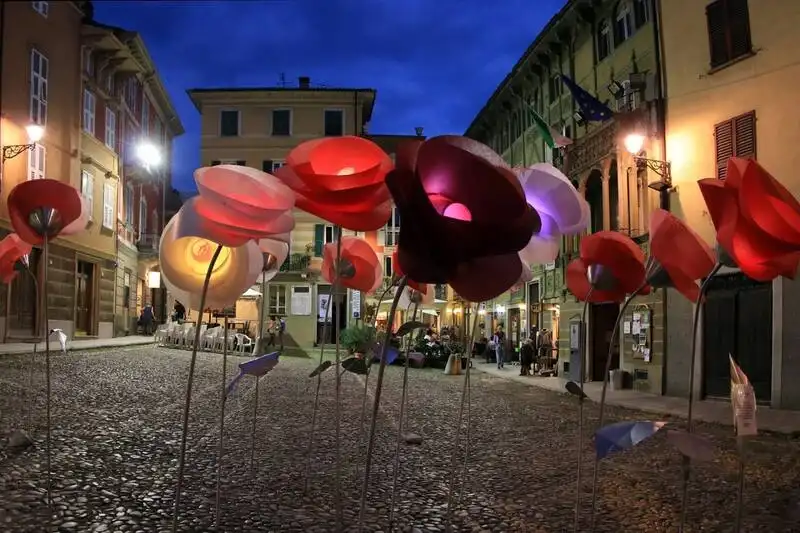
Piazza Roma is the living room of the village. Elegant buildings overlook this space and the streets leading to the historic districts start from here. During events it naturally becomes one of the liveliest points and a place of passage between market, culture and catering.
Also observe the architectural details. Local sources recall the buildings and Liberty elements which testify to the prosperity achieved by the town thanks to trade and its position on the Via del Sale.
Alleys and stone portals
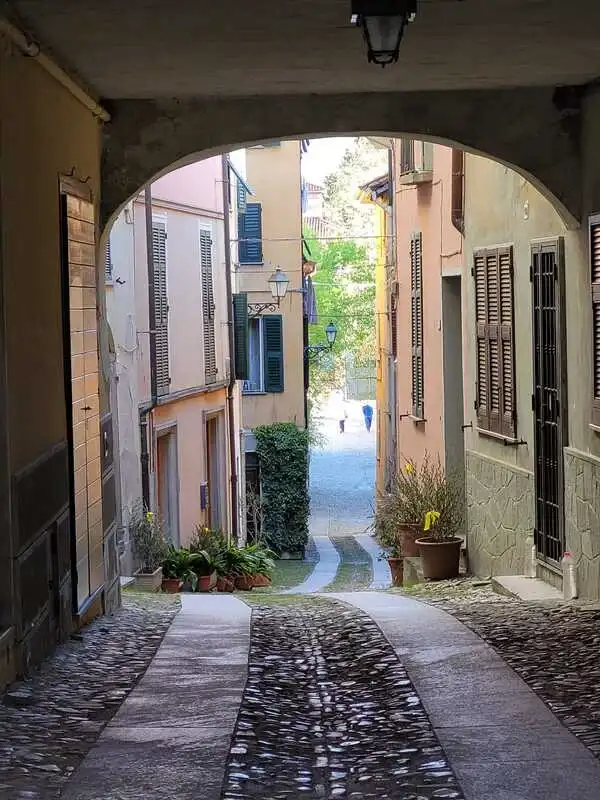
One of the most beautiful features of San Sebastiano Curone is the network of narrow streets paved with stream pebbles. Tall multi-storey houses accompany the route and some buildings retain carved stone portals with names and dates linked mainly to the seventeenth century.
Walk away from the stands for a few minutes and walk along these alleys without a specific destination. It is the simplest way to discover the character of the village and understand how its commercial history has produced a town different from the traditional rural centers of the surrounding valleys.
The Parish Church of San Sebastiano
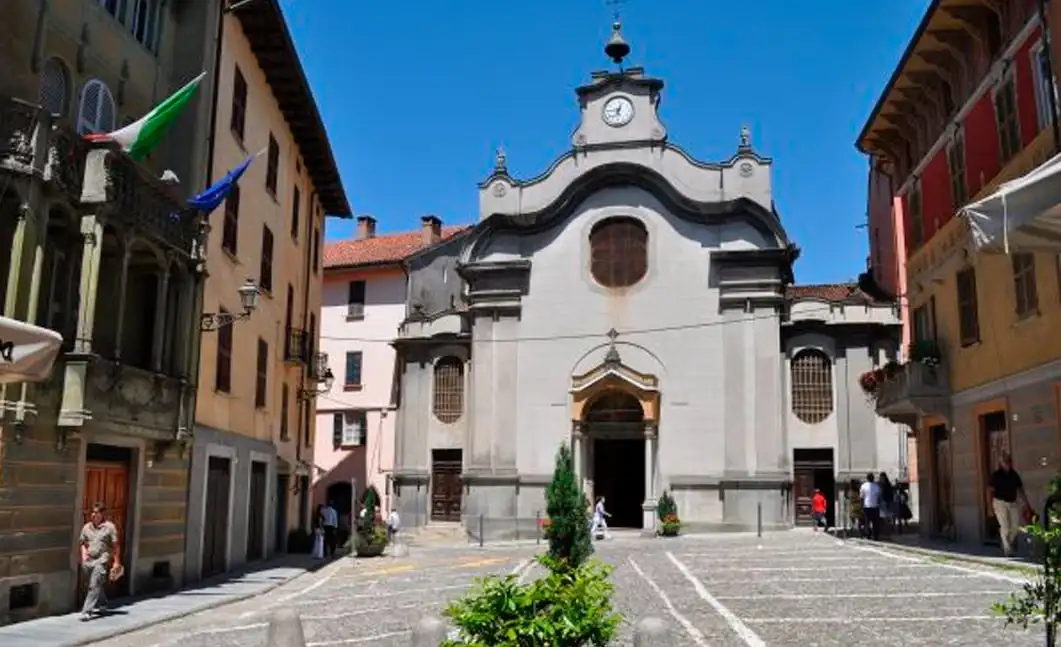
The Parish Church, dedicated to San Sebastiano, is one of the main buildings in the town. The baroque façade overlooks a cozy space and the interior preserves decorations and works that are worth a short visit.
During the fair the church can be included in guided tours. Even an independent visit, when open, allows you to add a quieter break to the day than the market.
The oratories and the religious heritage
The village also preserves the Oratory of the Holy Trinity, known as the Oratory of the Rossi, and the Oratory of the Madonna Assunta, or of the Bianchi. They are evidence of the ancient brotherhoods and contribute to the historical heritage of the town.
The presence of multiple religious buildings in such a small center speaks well of the importance that San Sebastiano achieved in past centuries. If you participate in a guided tour, take the opportunity to enter spaces that are not always freely accessible.
The Castle
In the upper part of the village there is a fortified building traditionally referred to as a castle. Local historical sources describe it as a garrison built to monitor traffic along the roads that connected Genoa and the plain, rather than as a classic feudal castle.
The structure has been transformed over the centuries and the interior no longer retains its original appearance, but the sturdy external walls, the loopholes and some stone elements still recall the defensive function. It is an interesting stop for those who want to understand the country through its strategic position.
Piero Leddi archive
San Sebastiano Curone is also linked to contemporary art thanks to Piero Leddi, an artist born in the country and an important figure of twentieth-century Italian culture. The Piero Leddi Archive preserves works, documents and materials that allow us to understand his work.
Including the archive in the visit offers a surprising change of perspective: from truffles and cuisine you move on to contemporary art without leaving the village. Openings and visits must be checked on the program or on local tourist channels.
Painter Giani Archive
The town also dedicates a space to the memory of Felice Giani, considered one of the greatest exponents of Italian neoclassicism and originally from San Sebastiano Curone. Periodic exhibitions and initiatives keep the relationship between the artist and the territory alive.
Also in this case the visit depends on specific openings and events. If you find an exhibition during the weekend of the fair, it is worth including it: it helps to discover how complex the cultural identity of this small center is.
How to organize the first Sunday
Morning: market exhibition and accompanying purchase
Arrive early and start from Palatartufo. The first hours are the best to compare specimens, talk to the truffle hunters and, if available, use the purchase assistance service.
Late morning: market and wines
Continue into the historic center between the food and wine market and the Enoteca dei Territori. Taste Timorasso and Barbera in moderation and take note of the producers you would like to visit.
Lunch: Inn or restaurant
Choose between the temporary catering at the fair and one of the venues participating in A Tavola con il Tartufo. For restaurants and farmhouses it is advisable to book, especially if you want a complete truffle-based menu.
Afternoon: auction and village
The first Sunday is traditionally that of the National Auction. After the auction, dedicate at least an hour to the alleys, Piazza Roma and the historic buildings, perhaps taking part in a guided tour.
How to organize the second Sunday
Morning: historic center and culture
If you have already visited the market on the first day, start with the village, the archives or a guided tour. Alternatively, enter Palatartufo early to see the new harvest available.
Midday: dog race
The second Sunday normally hosts the truffle hunting competition. Check the exact time and reach the area early, because it is one of the most curious and photographed events.
Afternoon: local products and last purchases
Dedicate the last part of the day to shopping. After tasting and comparing the products during the morning it will be easier to choose truffles, cheeses, cured meats or wine to take home.
A weekend in Val Curone
San Sebastiano Curone is the door to a valley that rises towards the Apennines. With a night in the area you can dedicate the next day to Dernice, Fabbrica Curone, Gremiasco, Garbagna or the high valleys, gradually moving from the vineyard hills to a more mountainous landscape.
Val Curone is particularly interesting for those who love slow tourism. Small villages, secondary roads, woods, local products and Apennine panoramas allow you to build a day without the need for major attractions or crowded itineraries.
Walk around
The Municipality reports a network of paths and numerous outdoor activities in the surrounding woods and valleys. The area lends itself to simple walks, longer treks and mountain bike routes, with very different possibilities depending on the altitude and the season.
In November it is essential to consider short days, mud and slippery ground. For an excursion on the weekend of the fair, choose shoes suitable for autumn and an itinerary in tune with the hours of light.
Between Val Curone and Colli Tortonesi
San Sebastiano Curone allows you to unite two neighboring worlds: the Apennine valleys and the Tortona hills. Following the roads towards Tortona the landscape becomes progressively more planted with vines and companies linked to Timorasso appear.
It's a perfect itinerary for the day after the fair. Start with a walk or a visit to the valley, stop for lunch and dedicate the afternoon to a winery, building a route that directly connects the flavors encountered in San Sebastiano to the places of production.
The fair with children
The two Sundays can also be spent with the family. The activities dedicated to dogs, the market, the dog competition and the Truffle for Kids initiatives allow you to alternate gastronomic moments with more dynamic experiences.
The village is compact, but some streets are paved and can be uncomfortable with very heavy strollers. In central hours the Palatartufo area can be crowded: arriving early makes the visit easier.
Photographing the Truffle Fair
The San Sebastiano Curone Fair is very photogenic because the market is located in a small and recognizable village. You can alternate close-ups of truffles, hunters' hands and search dogs with the colorful facades, stone portals and alleys.
Piazza Roma and the Parish Church offer good points of context, while moving away from the center you can insert the landscape of the valleys into the images. For photographs of recognizable people up close, especially children and truffle hunters during activities, always ask permission.
Practical information
Where it takes place
The heart of the exhibition market is the S.M.S. Room. in Viale Francischelli, used as a truffle palate. The food and wine market and collateral activities extend into the historic centre, between Piazza Roma and the main streets of the village.
How to get there
San Sebastiano Curone is located in the province of Alessandria, in the upper part of Val Curone. The car is the most practical means of transport, especially if you want to continue towards other towns and routes in the valley.
Parking and roads
During the fair, the center may be affected by closures, temporary one-way streets and dedicated parking areas. Check the indications published by the Municipality in the days before the event and arrive a little early.
Where to eat
You can use the event's catering or book in one of the restaurants and farmhouses participating in A Tavola con il Tartufo. Menus are normally published shortly before the fair because they depend on the availability of fresh produce.
What to wear
Late November can be cold and wet. Comfortable shoes are enough for the village, but the cobbled streets can be slippery in the rain. If you add a walk in the surrounding area, use footwear with good grip and waterproof clothing.
The visit, in practice
Frequently asked questions about the National Truffle Fair by San Sebastiano Curone
When does it take place?
The fair takes place every year on the third and fourth Sunday of November.
Can you find both white and black truffles?
Yes. The event is dedicated to the production of white and black truffles from the Terre del Giarolo and the market exhibition presents both types.
Is there a service to help choose truffles?
Yes. Since 2015, the National Truffle Studies Center has collaborated with the fair with a purchasing support service, designed to help visitors recognize the quality and characteristics of the product.
When do the auction and dog competition take place?
Traditionally the National Auction takes place on the first Sunday, while the search dog competition is scheduled on the second. Times must be checked on the program of the individual edition.
What typical products to look for besides truffles?
Derthona Timorasso, Barbera dei Colli Tortonesi, Salame Nobile del Giarolo and Montébore cheese are among the most representative excellences cited by the organizers.
What to see in the village?
Piazza Roma, the alleys and stone portals, the Parish Church, the oratories, the castle, the Piero Leddi Archive and the Pittor Giani Archive are the main cultural stops.
How long does it take?
A full day allows you to experience the market, lunch and the village well. A weekend is the best choice if you want to add a winery in the Tortonesi Hills or an excursion in Val Curone.
From Palatartufo to the valleys
San Sebastiano Curone tells a good story about a border Monferrato, more Apennine and less known, where the truffle coexists with Timorasso, cured meats, cheeses and a long history of trade along the Via del Sale.
Come to taste the black and white truffles, but leave time for the village. Walk through the alleys, enter the oratories when they are open, look for the stone portals and the next day continue towards the valleys or the Colli Tortonesi. It is precisely when the fair becomes the beginning of the journey, and not its conclusion, that San Sebastiano Curone shows its best.
One more night, one more discovery
Where to stay in San Sebastiano Curone during Fiera Nazionale del Tartufo Bianco e Nero
Looking for accommodation in San Sebastiano Curone for Fiera Nazionale del Tartufo Bianco e Nero? Choose a hotel, B&B or agriturismo and turn your visit into a stay in Monferrato.
In the center or in the hills?
A stay at San Sebastiano Curone allows you to combine the event with a visit to the village. If you choose a structure in Val Curone, consider the journeys to the center and the time to dedicate to walks in the surrounding area.
The stay that's right for you
- Dedicate a weekend to National Black and White Truffle Fair and leave space to discover the area.
- Choose a base close to the events you love, with convenient connections to enjoy even in the evening.
- Find the right formula for your trip: a night in the city, a B&B in the village or a farmhouse in the hills.
Explore the region at the table
Where to eat in San Sebastiano Curone
Looking for restaurants in San Sebastiano Curone to complement your visit? Plan lunch or dinner around Fiera Nazionale del Tartufo Bianco e Nero, choosing a restaurant near the places on your itinerary.
Restaurants in town or in the surrounding hills
Choose your stop around the event location, your route and the other villages you want to explore. Compare the restaurant location with your plans for the day.
Osterias, trattorias and Piedmontese cuisine
Browse the menu and choose the kind of meal you prefer. The dishes available, including any seasonal truffle dishes, depend on the restaurant and the time of your visit.
Booking a table for lunch or dinner
Allow time for your meal and agree the time, group size and dietary requirements with the restaurant. If you arrive by bike, ask where you can leave it during your stop.
A selection of restaurants for your visit will be available here soon.
Source: official reference of the event.
Return to the calendar of festivals and fairsFrom the visit to the journey
Routes in the area
From villages to hills: choose an itinerary and continue discovering the area.

 WalkingAround the starting point

 WalkingAround the starting point
Asti, Alessandria and surroundings
Berzano - Cinzano - Vezzolano - Albugnano - Pino D'Asti - Albugnano - Berzano
 WalkingPlaces and landscapes along the route
Asti, Alessandria and surroundings
San Michele - Villanova d'Asti
The calendar of November
The Monferrato in this period
Combine villages, walks and flavors with local events. Here are the events to discover in the calendar of the next seasons.
 November
Montechiaro d'Asti
Monferrato National White Truffle Fair
The white truffle of Monferrato is the protagonist of this event in Montechiaro d'Asti.
 November
Alessandria
San Baudolino Fair – Truffle Exhibition
Truffle, gastronomy and craftsmanship: the San Baudolino fair brings together local flavors and knowledge at Alessandria.
 November
Asti
National Truffle Fair
White truffles and gastronomy accompany an autumn event to combine with the discovery of Asti.
After the journey, another discovery
Experiences to do in Monferrato
Tours, activities and moments to remember. Explore the proposals and complete your day in Monferrato.
Rosignano Monferrato
Big Bench, historical archive and tasting at Vicara
At Rosignano Monferrato, a visit to the vineyards, panoramic point and cellar archive, with tasting of four local wines.
Discover the experiencePonzano Monferrato
Visit to the cellar and the infernot with Alemat tasting
At Ponzano Monferrato, visit to the cellar and the historic infernot, followed by a tasting of four wines.
Discover the experienceCastelletto Molina
Guided excursion among the hills and boats in the vineyards
A walking ring of approximately 11 km at Castelletto Molina, accompanied by a guide, among vineyards and colorful installations.
Discover the experienceTastings, meetings and activities to experience Monferrato together with those who know it.
Affiliate links: if you book through these links, MonferratoTrails may receive a commission at no extra cost to you. GetYourGuide handles booking, payment and support.
Where to stay in San Sebastiano Curone
Hotels, B&Bs and agriturismos
Where to stay · San Sebastiano Curone →Where to eat in San Sebastiano Curone
Restaurants, osterias and trattorias
A selection of restaurants for your visit will be available here soon.