Atlas of Monferrato
Monastero Bormida: sights, history and trails
Asti
- Elevation
- 191 m above sea level
- Area
- 14.21 km²
- Demonym
- monasteresis
- Patron saint
- Saint Julian
A closer look
Discovering Monastero Bormida
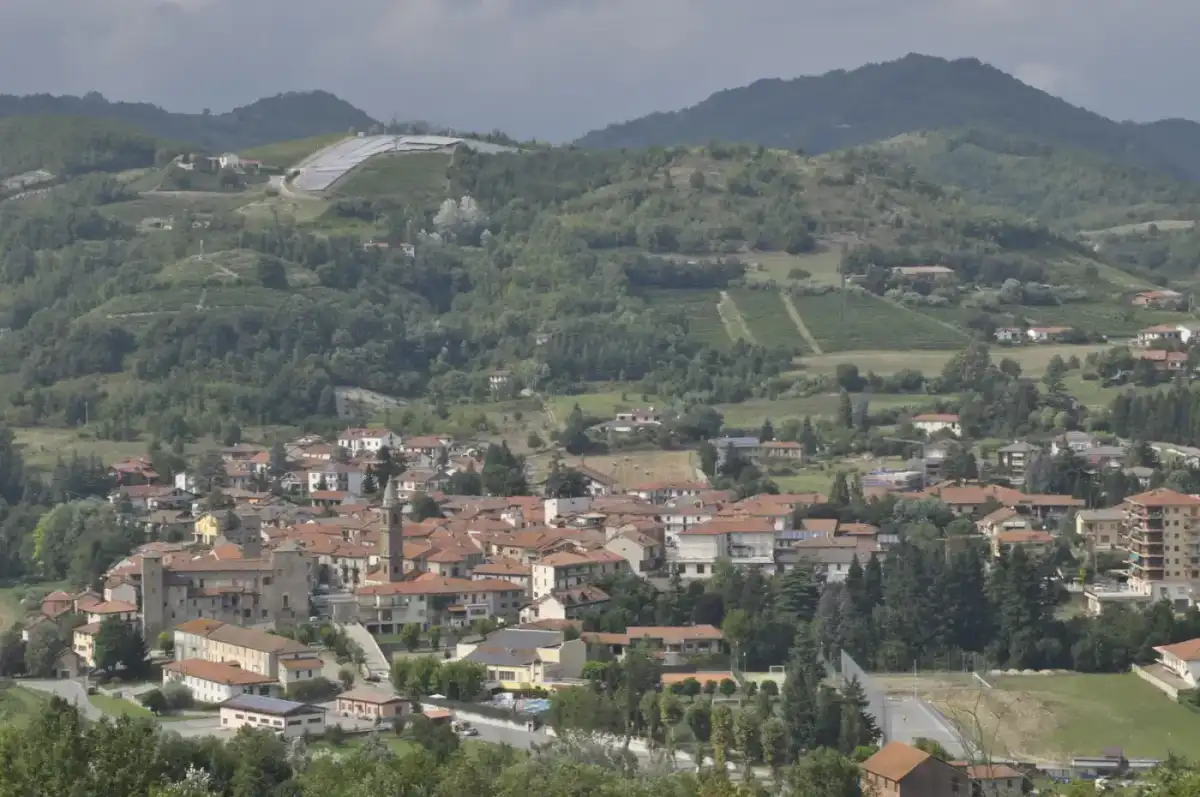
Monastero Bormida (El Munesté or even Monasté an Bormia in Piedmont) is an Italian municipality of 826 inhabitants[1] from the province of Asti in the Piemonte.
History of Monastero Bormida
SymbolsExplore this chapter
The Monastery was founded by a group of Benedictine monks who, around about 1050, came from San Benigno Canavese (Fruttuaria Abbey) called by Aleramo Marquis of Monferrato to dissociate and sow the lands devastated by invasions of the Saracens. The current castle corresponds to the site of the original monastery, of which only the bell tower and a few sections of walls remain, in particular those facing the tower square. In all likelihood there was a previous Lombard monastic foundation, evidenced by the cult of Santa Giulia (whose devotion was spread throughout northern Italy by the Lombards) who is still the patron saint of the town today and to whom the eighteenth-century parish church is dedicated, and by some Lombard toponyms such as Braia, which means region located near a river.
The Saracens, coming from their Provençal base of Frassineto — near Saint-Tropez — came into being Piemonte through the Alps and after destroying the monastery of San Dalmazzo di Pedona — today's Borgo San Dalmazzo — and that of San Pietro di Ferrania, they put to iron and fire the farm of Bubbio and they came down under the walls of Acqui, where they were defeated in the 9th century. Thus the division of Basso was born Piemonte in three brands (aleramica, arduinica, obertenga), headed by a marquis. Monastery was included in the March of Aleramo, whose successors found themselves governing a large and completely plundered territory: the entire Bormida valley is defined by documents of the time as "deserta loca" (deserted, desolate lands) or Marquisate of Vasto, that is, of the devastated land.
It was then that the idea of calling the monks was born, so that they could take over the old people's place. job description Romans, species of large latifundes with a villa, that is a farmhouse, and a chapel became then pious because the plebs, the people gathered there. The monks built the bell tower, the church (which stood where there is now a conjuncting arch at the castle), the monastery, the bridge. Then, in 1393, after the abbot Alberto dei Guttuari granted great privileges and immunities to the whole population, the Benedictines abandoned the country and settled in the monastery of San Bartolomeo di Azzano d'Asti. From this moment on, the feudal history of the Monastery of Santa Giulia - as the town was called until the 18th century - also began, with the investiture made by Pope Boniface IX to Antonio and Galeotto Del Carretto, then confirmed and made perpetual in 1405 by Pope Innocent VII. The Del Carretto family, as well as the Della Rovere family who succeeded starting from 1484 at the behest of Sixtus IV and then also recognized by the house of Monferrato in 1589, were always concerned with maintaining for the population the immunities and rights they had acquired in ancient times, as also confirmed by the Statutes granted by Duke Carlo II Gonzaga of Mantua and Monferrato in 1664, which reproduce the laws and prohibitions of a more ancient medieval draft, already confirmed once in 1596 by the Senate of Casale Monferrato.
In 1620 Duke Ferdinand granted the market twice a week, a custom that will be reiterated in 1696, even during a period of peat and wars, confirming the country's commercial vocation. Also in the 17th century a community of Agostiniani was established, then replaced by the Capuchins, who built the convent of San Pietro extra muras, still visible in its main structures (keys, plant) even if the church was replaced by a house.
In the early 17th century, Carlo Emanuele I of Savoy, with 8000 infantry and 10,000 knights, going to Cortemilia, besieged by the Spanish, devaded the territory of Monastery; even more risky was the passage, a few years later, of Duke Vittorio Amedeo, always fighting with Spain. Here is the account of the nineteenth-century historian Goffredo Casalis: "In the fifth century the Duke Vittorio Amedeo started for the Spigno valley to the city of Savona: as soon as he took part in the castle of Cairo, he received the announcement that the Duke of Feria, governor of Milan, came out of Alessandria with 25,000 infantry and 4000 horsepower Acqui Terme: the Duke not to commit himself to that valley, and to go back with Marshal of Crequì until Spigno Monferrato, where the contestable Diguières was with Duke Carlo Emanuele, his parent: there, having made it certain that Acqui had surrendered to the Spaniards, and that the enemy, by surprising Nice della Paglia, was planning to cut off his road to Asti, he gave orders to his troops to move quickly to Canelli, and led the vanguard himself. But seeing himself forced to make a slower move in order to force the enemy who was pursuing him, he set up camp as night approached, in the small valley where Monastero is located, not far from a musket shot from the site where the army of the Duke of Feria was stationed; but considering the situation in which he found himself, also seeing the difficulty of saving his cannons in such difficult passages, and knowing that the enemy was becoming increasingly larger, he decided to hold him back with frequent skirmishes; and thanks to other stratagems he gave his brother Prince Thomas time to find himself personally securing the road; and it was then that the enemies united with the inhabitants of Bistagno, and other nearby places, not aware of Prince Thomas' move, at midnight attacked the Duke of Savoy's camp from all sides; but they found it so well armed and defended with such valor that their assault was almost in vain; and in the meantime the Duke, at dawn, was able to clear passage and set off with his troops to Canelli.» In the mid-19th century the fiefdom was granted by the House of Savoy to the Della Rovere family, while at the end of the century the castle was purchased by the Polieri family of Genoa, who then sold it to the Municipality.
Symbols
In the first partition is represented the Blason of Della Rovere.
The gonfalone is a drape party of yellow and green.
What to see in Monastero Bormida
Civil architecture · The Castle · The Romanesque BridgeExplore this chapter
Civil architecture
The Castle
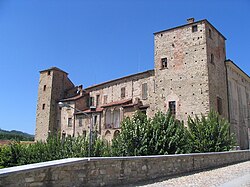
The river creeps up to a few meters from the southern tower of the castle, demonstrating that the building is not born for defensive purposes, but as a abbey. Originally monastery was composed of the bell tower, the church (two columns with Romanesque capitals are still seen as a fountain in one of the courtyards) and by a factory body corresponding more or less to the current inner perimeter of the courtyard, where you can see small medieval windows all sixth, probable light points of the monastic cells. The first important intervention of which is known dates back to the years 1394-1405, when the Marquis Antonio and Galeotto Del Carretto claim substantial expenses to strengthen the country. It is presumed that on that occasion the most profound transformation of the building has been carried out, substantially changing its shape.
The current result is reached only after Baroque and Renaissance remodelling, not so much to be overwhelmed in the fundamental characters the late-thirteenth century line conferred by Del Carretto. The building is currently located in the lower square of the village, to which you can access climbing for a characteristic lifted bridge (the Puntet), through one of the entrance doors of the ancient wall; the square still retains in part the ancient river stone pavement. The eastern façade consists of a series of coordinate structures built in different periods, among which stands a Renaissance loggia with two arches with central stone columns.
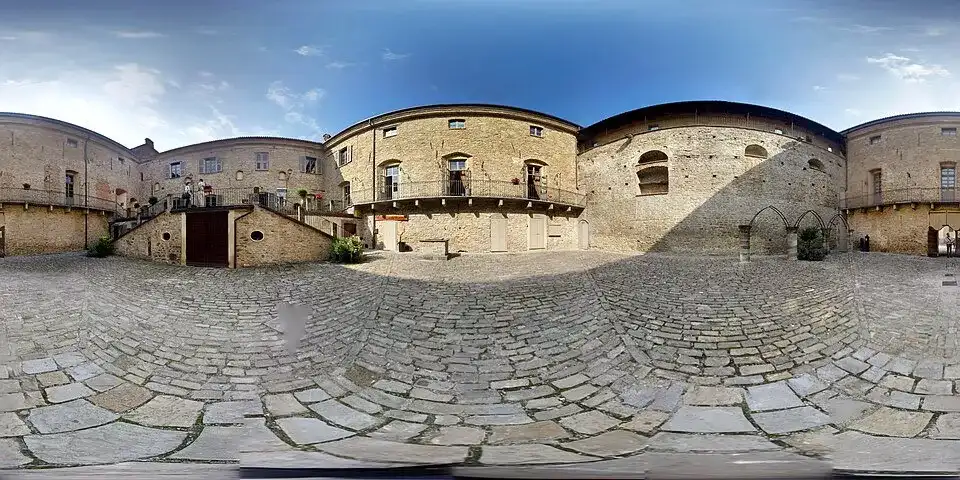
The west side, on the tower square, presents a thin brick wall full with geometric frieze embossed down. The main façade reveals a complete 17th-century reworking, embellished by imposing baroque lysenes. From here, through a large portico with vault to cruise (on the right you can still see the Gothic arch that constituted the original entrance), it penetrates into the inner courtyard of the building, dominated by the double staircase that, on the left for those who enter, leads to the complex of terraces of the first floor, where several entrance doors open, including one, walled, surely fourteenth century.
The interior — which can be visited in summer on the occasion of the Castelli Aperti festival — is a succession of large rooms with mosaic floors and ceilings with sail and cruising, of which some frescoed with floral and geometric motifs or with female figures, sometimes mythological. The second floor is accessible through two different stairs: a main double ramp, which leads to the apartment, today private house in the southern part; the other, secondary one, that starting from an angle of the terrace on the first floor leads to the towers and to the attic of the north block. The underground, accessible by various entrances directly open on the inner courtyard, are characterized by the fusion of different architectural elements, among which however resurface the pavements and cruising ceilings of the late fourteenth century. Of particular importance in the architectural complex is the tower. Up to us in good condition, however, risked at the end of the eighteenth century demolition because it needs deep restoration work. 27 meters high, it presents on all sides four orders with friezes and hanging arches, in brick the two lower ones and in stone the upper ones. Up there are two orders of windows with a round arch, of which the lower ones in bicolored cones.
The Romanesque Bridge
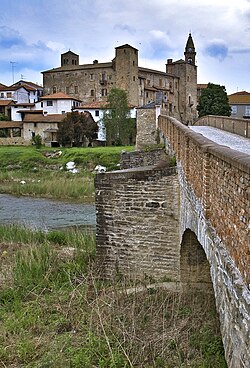
Through the characteristic alley called Droc - where there was once one of the urbial doors and where you still see access to an ancient furnace - you will reach in a moment the Romanesque bridge over Bormida, which represents one of the most interesting works of medieval civil engineering of the valley and find its correspondent, in that of Spigno, in the analogous bridge of the Abbey of San Quintino. Both were built by the Benedictine monks: These are powerful structures in the back of donkey, surmounted by chapels that were ancient places of guard thanks to which the religious ensured complete commercial control of the land extended between Langa and the sea.
The one of Monastery, in particular, was the only bridge that could be transited all year round from the lower valley: Acqui was without sight and Vesime had the ruins of an ancient Roman bridge, never rebuilt stablely after it had been destroyed by a full. At Monastery two very important routes converged: the one that from Acqui led to the sea and the military one that climbed to Roccaverano and, from the ridge, allowed control of the two valleys Bormida, with the system of towers of Venre, Roccaverano, San Giorgio, Olmo Gentile, Serole, Torre Uzzone, Santa Giulia and Carretto. So either the cheeks or the Monastery bridge were used, at whose top it was necessary to pay a fee to the guard in order to be able to pass there (still today is widespread the saying "I don't even have a penny to pass Bormida").
The old monument, after eight hundred years, still resists, with the four large stone arches perfectly squared and triangular blocks in correspondence of the pillars, studied specifically to "cut" water and avoid unnecessary bars in case of full. Augustus Monti, originally from the country and buried there, recalls the great floods of the nineteenth century, which wiped out the parapets, but did not affect the structure "< any other bridge upstream and valley Bormida big them as were palancole, but this is always there, intact over the centuries, because the friars turned off the lime with the clear egg;
The disastrous flood of 1994 seriously threatened the staticness of the construction: the water and the wood massed by the current destroyed the parapets and the historical chapel, discarded the asphalt, reduced the bridge to the small figure of the arches. But the worst has not happened and that of Monastery, although needy of important restorations, is one of the few bridges that have been made transitable to traffic after a few days of closure.
The historical centre
The old town of Monastero has preserved in part an ancient imprint, with some stone houses and some late medieval portal; going down below via Piave, along the gardens that line the bank of Bormida, you can see some remains of the walls of the city and also what remains of the channel that fed the mill (home of Monti) and the hydroelectric power plant then transformed into a spinning mill.
Religious architecture
The Parish Church
The parish church dedicated to Santa Giulia is instead eighteenth-century construction — the two side aisles and the facade are however of the early twentieth century — already neoclassical structure and still baroque decoration. The four Evangelists, the Mystery of the Eucharist and the Ovals with Saints work of the Alexandrian workshop of Rodolfo Gambini; more interesting some paintings, including a Madonna of the Rosary with Saint Jerome and St Charles, probably by Orsola Maddalena Caccia (counterfaçade on the right), the Martyrdom of Saint Sebastian, the Transit of Saint Joseph, le Purgatory Souls and a sixteenth century statue of Madonna of the Rosary, in painted wood. The large eighteenth-century painting behind the altar depicts theAssumption with Saint Julia and St Peter. Curious, at the end of the left nave, is the plastered canvas reproduction of the Lourdes grotto. The six large windows contain depictions of the country churches of the town, with images of the titular saints, a gift from the parish priest Don Pietro Oliveri.
Rural chapels
Of the six churches, apart from the Annunciation, former oratory of the Battuti in Piazza Roma now destroyed, all other buildings are still visible and some preserve some architectural elements of value. It is the case, for example, of the pieve of San Desiderio, a jewel of Baroque architecture of the first eighteenth century, built on the site of a thousand-year old building destroyed over the centuries, where according to tradition St. Guido d'Acqui was baptized; or of the simple, eight-seventh century church of Our Lady Assunta, once called "of Perticale", which served as a point of arrival of a series of monumental chapels of the Via Crusstra The other buildings of worship, corresponding to the same regions of the municipal territory, bear the titles of San Rocco built in the seventeenth century for the scamped epidemic of plague), the Madonna delle Grazie or Sessania (built by the veterans of the Great War) and Santa Libera, of a remote fifteenth century origin then remade in recent times, to dominate an historical road connecting with Denice.
Society
Demographic evolution · Foreign ethnic groups and minorities · Traditions and folkloreExplore this chapter
Demographic evolution
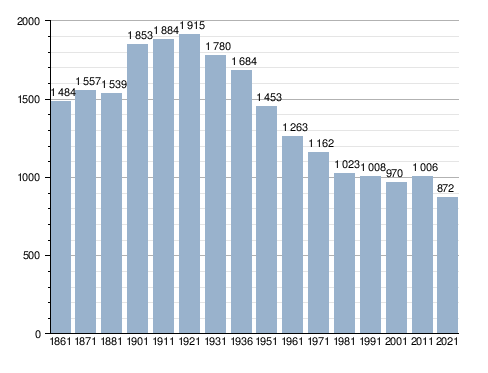
Inhabitants registered[5]
Foreign ethnic groups and minorities
According to ISTAT data on 1 January 2017, the resident foreign population was 75 people. The detail of the countries of origin ordered by number of residents[6].
- Romania 24
- Republic of Macedonia 21
- Morocco 11
- Bulgaria 4
- Sri Lanka 4
- Netherlands 3
- Belgium 2
- Belarus 1
- Brazil 1
- Latvia 1
- Senegal 1
- Slovakia 1
- Tunisia 1
Traditions and folklore
The Festival of Polentone
The medieval square in front of the castle is the scene of the Sagra del Polentone which takes place every year, whose origins date back to 500 years ago, more precisely to 1573. In those times the local population, mostly peasants, lived among continuous deprivations and, while working very hard, often had nothing to do with it. Annually they passed from Monastero Bormida, towards the end of Carnival and the beginning of Lent, quite numerous groups of copper workers called "magnin", coming from high Savoy. They earned what to live by building or repairing the so-called "caudrins", a couple of copper very used in our campaigns until a few years ago. The year 1573 was tremendous for the cold in winter and the great abundance of snow falling (about 1.35 m). The Chaldeans, found without work blocked by snow spent hard days subject to deprivation, until the Lord of Monastero Bormida, the Carretto Marquis, news of this came.
Immediately put at their disposal some sacks of Turkish wheat flour with cod, eggs and onions. As these caldera had a big copper boiler, they began to remix, right on the main square, a large polenta that, cooked with masterful skill, managed to feed all the components of their numerous families, for more than a month. passed the winter, the snow was dissolved and the Chaldeans, grateful, when it came on the day of departure, gave to the Marquis della Rovere, their benefactor, the great copper boiler that they used. Today the times have changed but the feast, although with some small variation, has remained always equal and is repeated every year on the second Sunday of March. The large polenta is served, no longer accompanied by cod, but by quintals of pork sausage and onions frittata, all watered by rivers of Barbera, a typical product of the hills. On this occasion in the alleys of the old town, the ancient crafts are recreated with philological care, executed by the elderly of Monastery and neighboring countries, with vintage tools. The next Monday, classic Polentino based on polenta and wild boar.
Administration
Below is a table relating to the administrations that have succeeded one another in this municipality.Explore this chapter
Below is a table relating to the administrations that have succeeded one another in this municipality.
| Period | First citizen | Match | Load | Notes | |
|---|---|---|---|---|---|
| June 11, 1985 | June 10, 1990 | Adriano Blengio | - | Mayor | [7] |
| June 10, 1990 | June 27, 1994 | Adriano Blengio | - | Mayor | [7] |
| June 27, 1994 | November 21, 1994 | Lorenzo Micheluzzi | Comm. pref. | [7] | |
| November 21, 1994 | November 30, 1998 | Paolo Luigi Rizzolio | Polo for Freedoms | Mayor | [7] |
| November 30, 1998 | May 27, 2003 | Paolo Luigi Rizzolio | civic list | Mayor | [7] |
| May 27, 2003 | April 15, 2008 | Luigi Gallareto | civic list | Mayor | [7] |
| April 15, 2008 | May 26, 2013 | Luigi Gallareto | civic list | Mayor | [7] |
| May 26, 2013 | June 10, 2018 | Ambrose Mario Spiota | List of Civics United States to Monastery | Mayor | [7] |
| June 11, 2018 | in office | Luigi Gallareto | List of Civics United States to Monastery | Mayor | [7] |
Image gallery
Explore this chapter
-
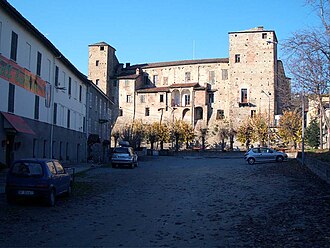 Castle
-
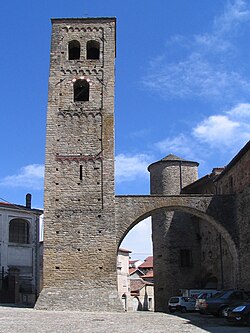 Tower
-
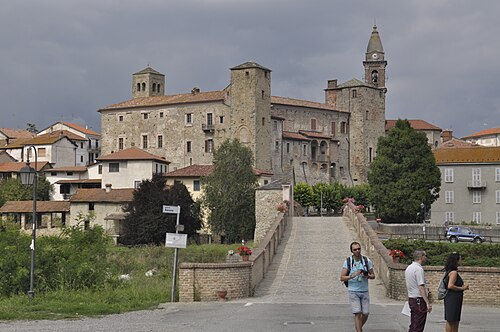 Castle
-
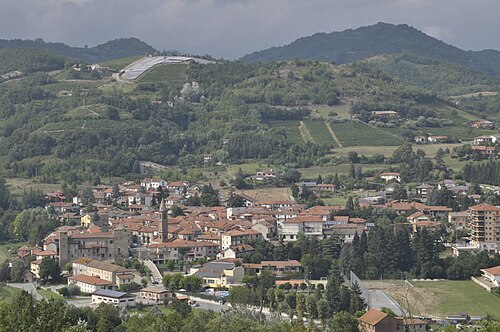 Overview
-
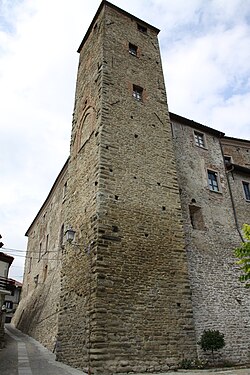 Image of the castle of Monastero Bormida
-
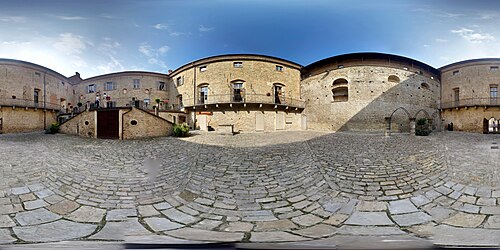 An overview of the Castle from which you can generate immersive ball views
Notes
Explore this chapter
- ^ to b Monthly demographic balance for the year 2026 (provisional data), up demo.istat.it, ISTAT.
- ^ Seismic classification (XLS), up risks.protezionecivile.gov.it.
- ^ Table of degrees/day of Italian Municipalities grouped by Region and Province (PDF), in Law 26 August 1993, n. 412, annex A, National Agency for New Technologies, Energy and Sustainable Economic Development, 1 March 2011, p. 151. URL consulted on 25 April 2012 (archived fromoriginal url on 1 January 2017).
- ^ Municipality of Monastero Bormida, Article 6 Name, municipal coat of arms and municipal gonfalone (PDF), up Municipal statute, Come on, come on.. Retrieved 14 November 2021.
- ^ Data taken from:
- Resident population of the municipalities. Censuses from 1861 to 1991 (PDF), up ebiblio.istat.it, ISTAT.
- Resident population - Time series, up exploredati.istat.it.
Please note: 2021 data refers to permanent census data as of December 31 of that year.
- ^ all'italia.it, https://www.tuttitalia.it/piemonte/16-monastero-bormida/statistiche/cittadini-stranieri-2017/ Missing title for url
url(help). - ^ to b c d And f g h the https://amministratori.interno.it/
Where to stay · Monastero Bormida
Find stays on Booking.comThe area, step by step
Trails and routes in Monastero Bormida

Astigiano area
Grande Cammino · Tappa 7: Canelli–Ponti

 CyclingAround the starting point


 WalkingAround the starting pointWalkingAround the starting point

 WalkingAround the starting point
Astigiano area