Atlas of Monferrato
Montiglio Monferrato: sights, history and trails
Asti
- Elevation
- 321 m above sea level
- Area
- 26.86 km²
- Demonym
- Monthly
- Patron saint
- San Lorenzo
A closer look
Discovering Montiglio Monferrato
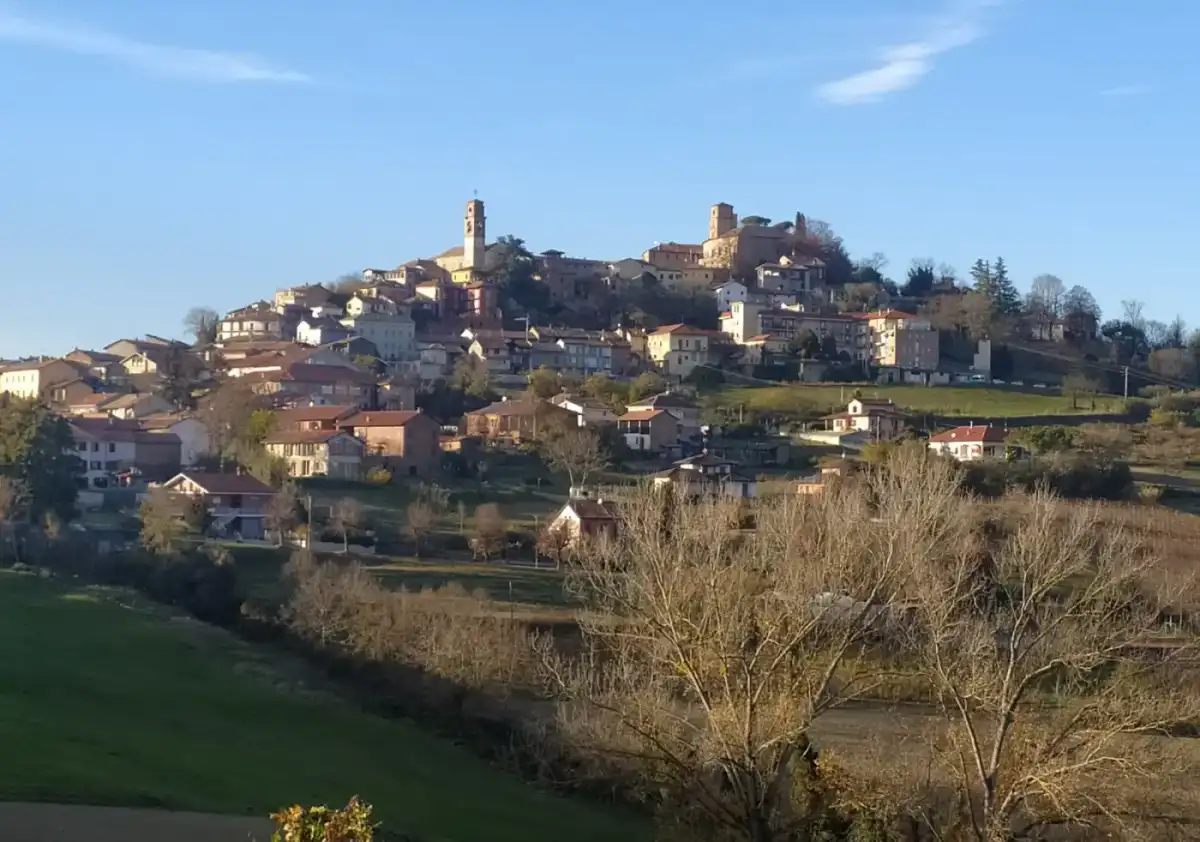
Montiglio Monferrato (Montij in Piedmont) is an Italian municipality of 1 483 inhabitants[1] from the province of Asti in the Piemonte. It was established on 1 September 1998 by the union of the three ancient municipalities of Colcavagno, Montiglio and Scandeluzza.
Origins of the name
The name derives from the Latin Montellus (small mountain), according to some scholars, or according to others by the expression Mons tilii ie "Monte del tiglio", as the...Explore this chapter
The name derives from the Latin Montellus (small mountain), according to some scholars, or according to others from the expression Mons tilii that is "Mount of the Linden", as the predominant landscape in this region was the forest.
History of Montiglio Monferrato
SymbolsExplore this chapter
In the years of World War II, between 1940 and 1943, 6 Jewish refugees from the Balkans were interned in Montiglio.[4] After September 8, 1943, with the German occupation, the group quickly dispersed. In the end all internees managed to save themselves (some remaining hidden in the area, others finding refuge in Switzerland).[5]
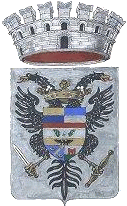
Symbols
The coat of arms of the municipality of Montiglio Monferrato was granted by decree of the President of the Republic of 9 October 2002.
What to see in Montiglio Monferrato
The municipality is located at the top of a hill overlooking the Versa Valley . At the top of the hill is the original castle of the 13th century, destroyed in 1305 and rebuilt with...Explore this chapter
The municipality is located at the top of a hill overlooking the Versa Valley. At the top of the hill is the original castle of the 13th century, destroyed in 1305 and rebuilt with underground in the 15th century.
It was the war between Monferrato And Asti to lead to the construction of this baluardo — inserted in the circuit of "Open Castles" of Basso Piemonte — already home of Boniface I in the 12th century. It has been suggested that here Rambaldo of Vaqueiras composed his Estamped.
In the park of the castle is the Romanesque chapel of Sant'Andrea, which preserves the largest cycle of fourteenth-century frescoes Piemonte.
Just outside Montiglio stands the Romanesque church of San Lorenzo, with beautiful sculptures.
The village is also known for its sundials and for the Truffle Fair which takes place in autumn.
In Region Station is present since the middle of the years '60 the recreational structure with artificial lake called "Lago di Codana". The area, after a complex renovation lasting three years, has been reopened to the public in renewed capacity in September 2017.[7]
Society
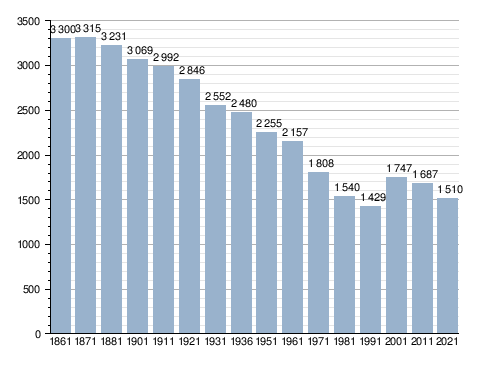
Demographic evolutionExplore this chapter
Demographic evolution
In the last hundred years, starting from 1921, the resident population has been is reduced by 45 %.
Inhabitants registered[8]
Anthropic geography
Colcavagno · Scandeluzza · RincoExplore this chapter
Colcavagno
Colcavagno (in Piedmont) Còl Cavagn) dominates the Valle Versa, downstream from Montiglio. In the center of the town stands the castle, extensively renovated in 1667.[9] The castle is first mentioned in 1003 as "castle called Corte Cavani". In 1164 the form was mentioned Curcavagnus but in 1197 the transformation emerges Corcavagnus, from which today's Colcavagno derives. In 1224 Enrico di Cocconito became first lord of Colcavagno and had the castle rebuilt. In 1667 the castle, after having been renovated several times due to war destruction, was transformed into a comfortable baroque villa in exposed brick by the Marquis Flamino Giacinto Balbiano. The Balbiano family has been known since at least the 14th century, with an Antonio from whom soldiers and courtiers descended. Gottofredo Alberico Balbiano received the title of Marquis of Colcavagno in the 17th century. The Balbiano family of Colcavagno also owned a palace in Chieri, built in the 18th century, and still today own a villa nearby.
In 1902 the Castle of Colcavagno was ceded to the Sisters of the Opera Pia Cottolengo using it as a nursing home until 2010, when it became the seat of the Opera Pia Cottolengo Fondazione Paolo Ferraris. Inside it houses the Museum "The arnesis of memory" which represents a collection of tools and materials for the conservative restoration of paper and membrane, archival and bibliography.
Inside the cemetery is the Romanesque church of Saints Vittore and Corona.
Scandeluzza
Behind Colcavagno, stands Scandeluzza (in Piedmontese Scandlu). In the highest part of the town stands the parish church dedicated to Santa Maria del Rosario.
Near the cemetery is the Romanesque church of Saints Sebastian and Fabiano while outside the village there is the other Romanesque church dedicated to Sant'Emiliano (private property).
Rinco
In Rinco hamlet (in Piedmont) Rinch) two castles stand. The first was built in the fourteenth century next to a thirteenth century tower to house the residence of the Pallio counts, lords of Rinco and Castellinaldo; in the 16th century this castle was dedicated to hosting the army and next to it a new one was built for the count's family and the officers, equipped with Italian gardens.
Recently it was refitted as a luxury private residence. The tower and the two castles are today in excellent condition and make the village of Rinco a lovely place.
Of only 57 inhabitants, within it the fraction of Rinco includes two smaller hamlets: Torretta (where no one lives permanently) and Castelcebro.
Administration
Below is a table relating to the administrations that have succeeded one another in this municipality.Explore this chapter
Below is a table relating to the administrations that have succeeded one another in this municipality.
| Period | First citizen | Match | Load | Notes | |
|---|---|---|---|---|---|
| November 30, 1998 | May 27, 2003 | Dimitri Rate | civic list | Mayor | [10] |
| May 27, 2003 | April 15, 2008 | Dimitri Rate | civic list | Mayor | [10] |
| April 15, 2008 | May 27, 2013 | Piercarlo Negro | civic list | Mayor | [10] |
| May 27, 2013 | June 10, 2018 | Dimitri Rate | List of Civics in United States to Improve | Mayor | [10] |
| June 10, 2018 | 2023 | Dimitri Rate | List of Civics in United States to Improve | Mayor | [10] |
Infrastructure and transport
The Montiglio-Murisengo station and Sant'Anna-Robella stop, which was activated in 1912 and 1937 respectively, were located along the Chivasso-Asti railway, the...Explore this chapter
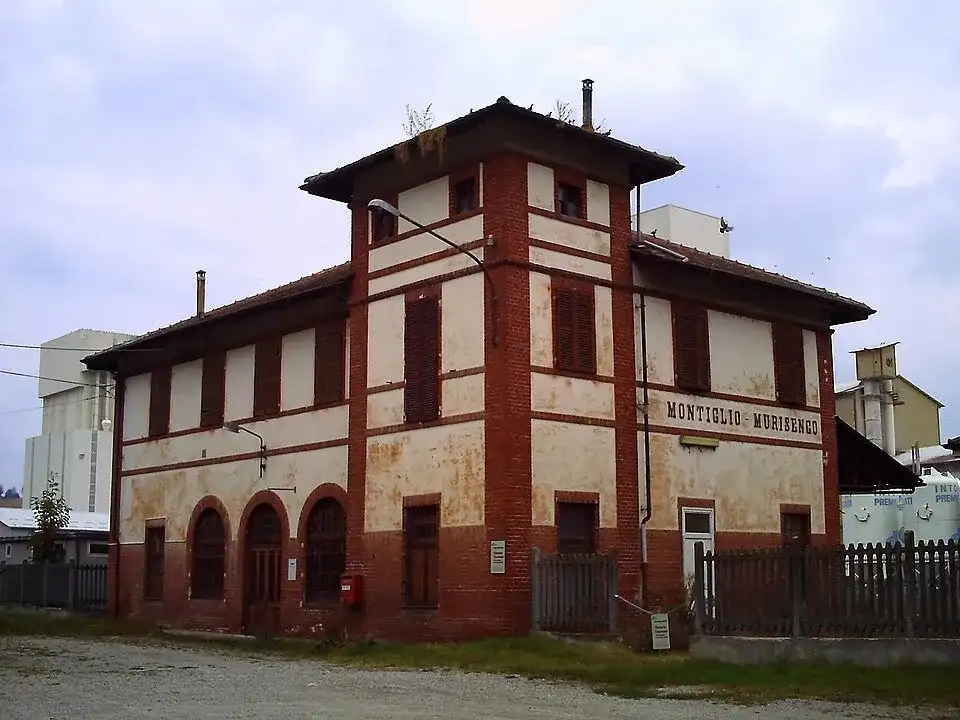
The Montiglio-Murisengo station and the Sant'Anna-Robella stop, activated respectively in 1912 and 1937, were located along the discontinued Chivasso-Asti railway, whose operation was definitively suspended in 2011.
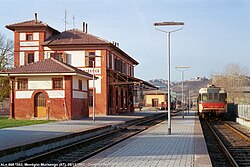
Image gallery
Explore this chapter
-
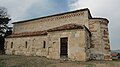 La pieve di San Lorenzo
-
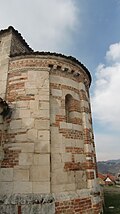 Pieve di San Lorenzo, apse of the Romanesque church
-
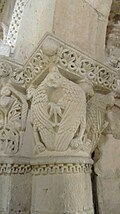 Pieve di San Lorenzo, capital
-
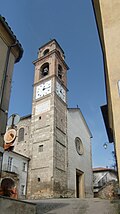 The parish church
-
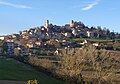 Panorama of the village of Montiglio
-
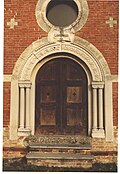 Scandeluzza, portal of the Romanesque church of Saints Sebastian and Fabiano
-
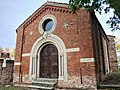 S.Fabiano and S.Sebastiano Church in Scandeluzza
-
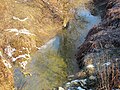 The creek Versa a Montiglio
-
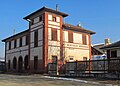 Montiglio-Murisengo railway station in February 2013
Notes
Explore this chapter
- ^ to b Monthly demographic balance for the year 2026 (provisional data), up demo.istat.it, ISTAT.
- ^ Seismic classification (XLS), up risks.protezionecivile.gov.it.
- ^ Table of degrees/day of Italian Municipalities grouped by Region and Province (PDF), in Law 26 August 1993, n. 412, annex A, National Agency for New Technologies, Energy and Sustainable Economic Development, 1 March 2011, p. 151. URL consulted on 25 April 2012 (archived fromoriginal url on 1 January 2017).
- ^ The municipalities in the Astiginano area which hosted interned foreign Jews are: Agliano, Antignano, Asti, Canelli, Castelnuovo Don Bosco, Cocconato, Mombercelli, Montechiaro d'Asti, Montiglio, Nizza Monferrato, San Damiano d'Asti, Villanova d'Asti.
- ^ Foreign Jews interned in Piemonte.
- ^ Stemma di Montiglio Monferrato, up common.montigliomonferrato.at.it. Retrieved 23 October 2021.
- ^ In Montiglio reopens Lake Codana with botanical paths, swimming pools, restaurant, hotel and riding stables, up lastampa.it.
- ^ Data taken from:
- Resident population of the municipalities. Censuses from 1861 to 1991 (PDF), up ebiblio.istat.it, ISTAT.
- Resident population - Time series, up exploredati.istat.it.
Please note: 2021 data refers to permanent census data as of December 31 of that year.
- ^ Castle of Colcavagno on preboggion.it
- ^ to b c d And http://amministratori.interno.it/
Where to stay · Montiglio Monferrato
Find stays on Booking.comStories, places and people
More about Montiglio Monferrato and the surrounding area
Follow a thread of history and see where it leads.
Hilly Community Versa Union Astigiano
The European Community, which is also known as U.V.A. , was a municipal union of seven municipalities in the province of Asti located in the Versa Valley .
Read the story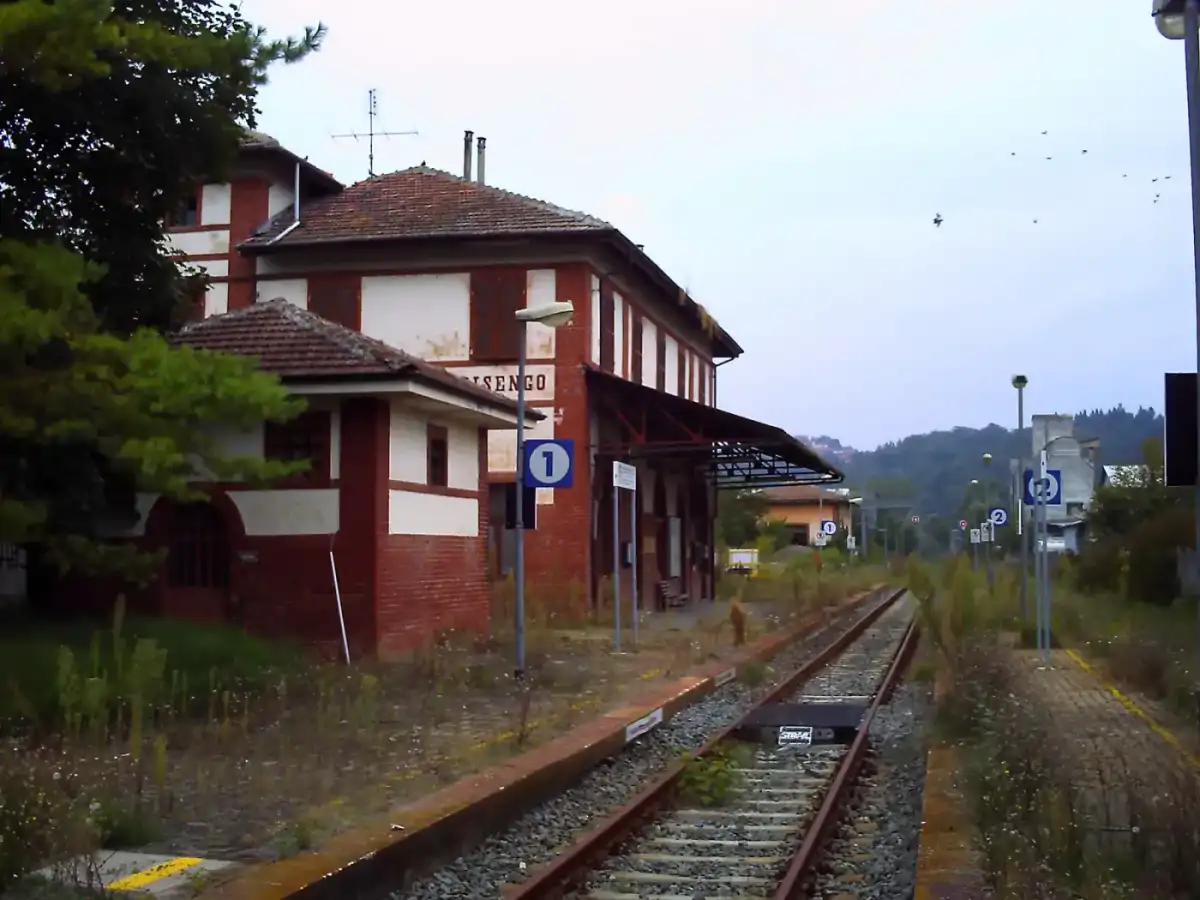 Neq00 · CC BY-SA 4.0
Montiglio-Murisengo Station
Montiglio-Murisengo station is a train station located on the Chivasso-Asti line, at the service of the town centre of Montiglio Monferrato and the neighbouring municipality of Murisengo, used only for tourist trains.
Read the story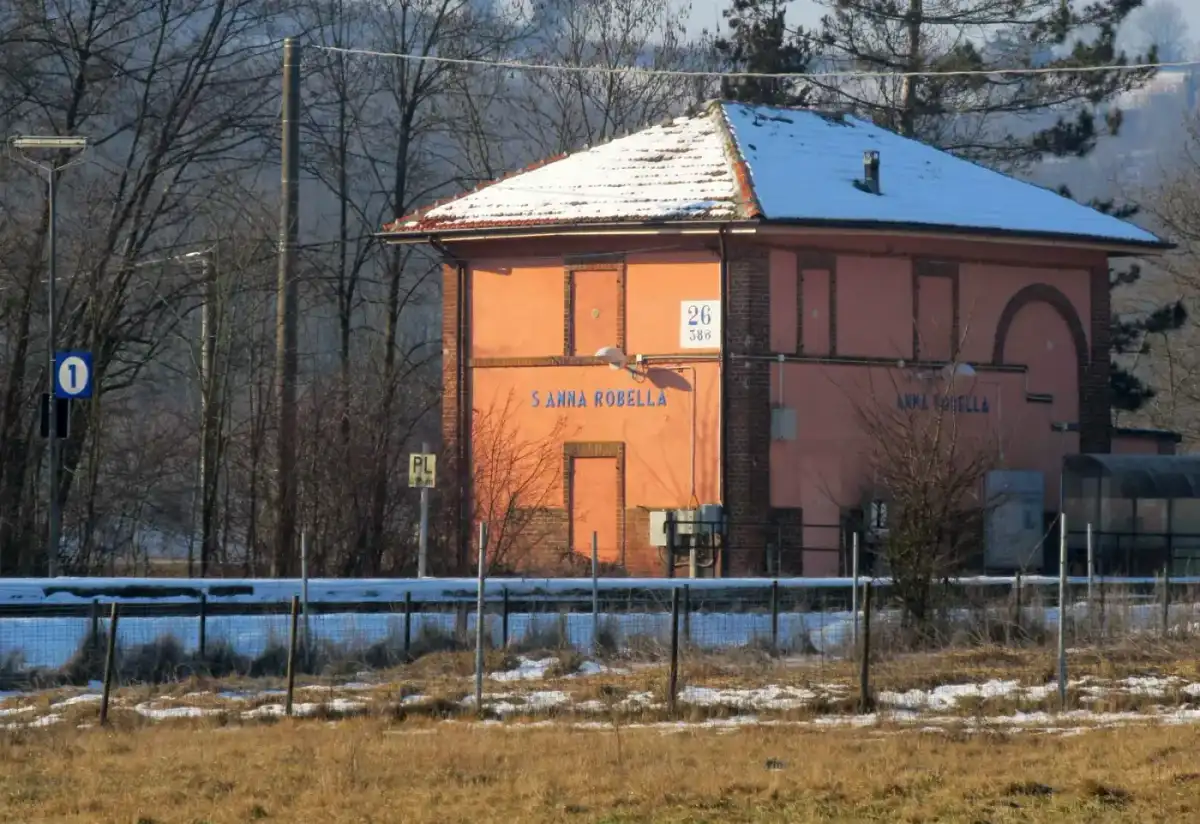 F Ceragioli · CC BY-SA 3.0
Sant'Anna-Robella Station
Sant'Anna-Robella station is a train stop on the Chivasso-Asti line, mainly serving the locality of Robella , located in the municipal territory of Montiglio Monferrato , without traffic since 2011.
Read the story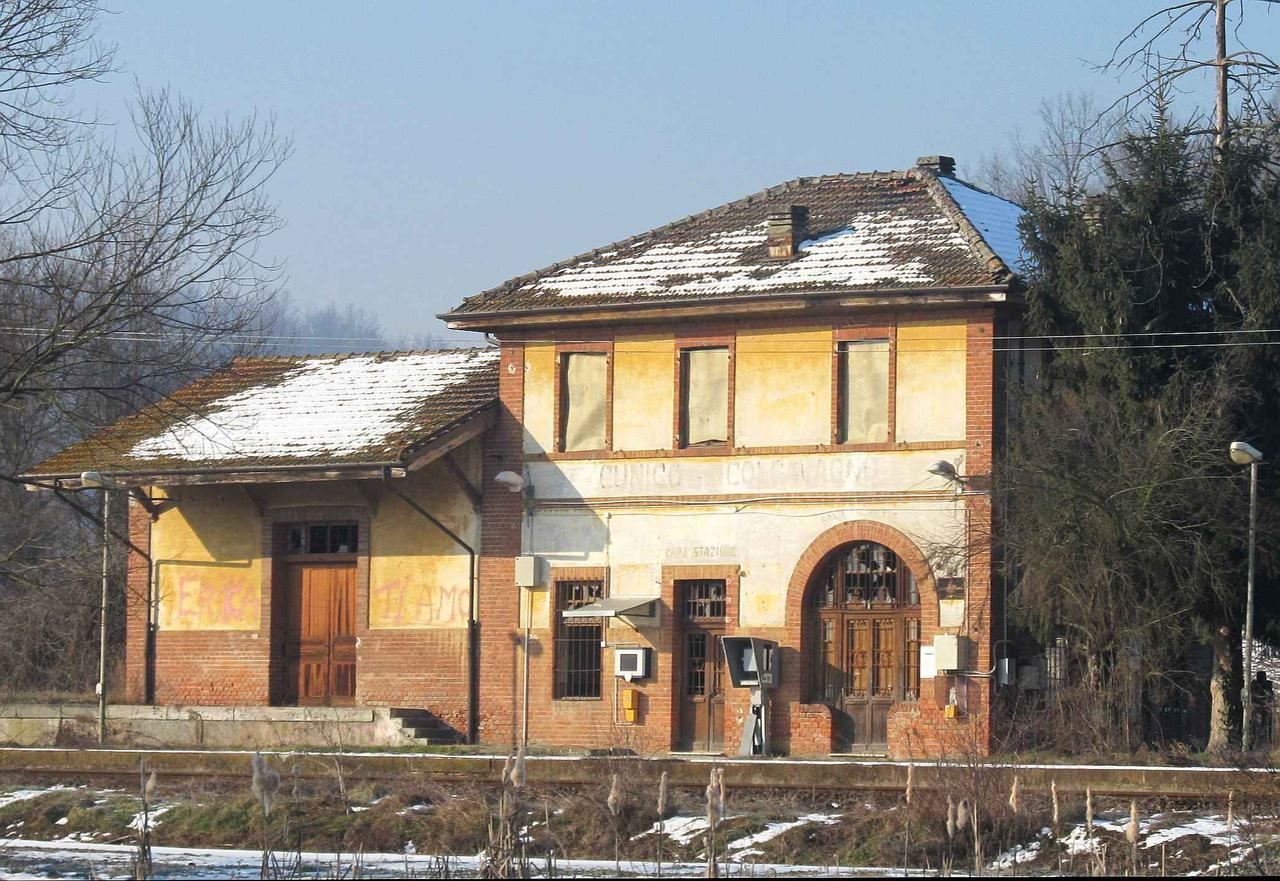 F Ceragioli · CC BY-SA 3.0
Cunico-Scandeluzza Station
The station of Cunico-Scandeluzza is a railway stop located on the Chivasso-Asti line, whose traffic is definitively suspended since 2011. Sita in the municipal territory of Cunico , also served the town of Scandeluzza , fraction of Montiglio Monferrato .
Read the storyThe area, step by step