A closer look
Astigian house: at a glance
(Carlo Vassallo)
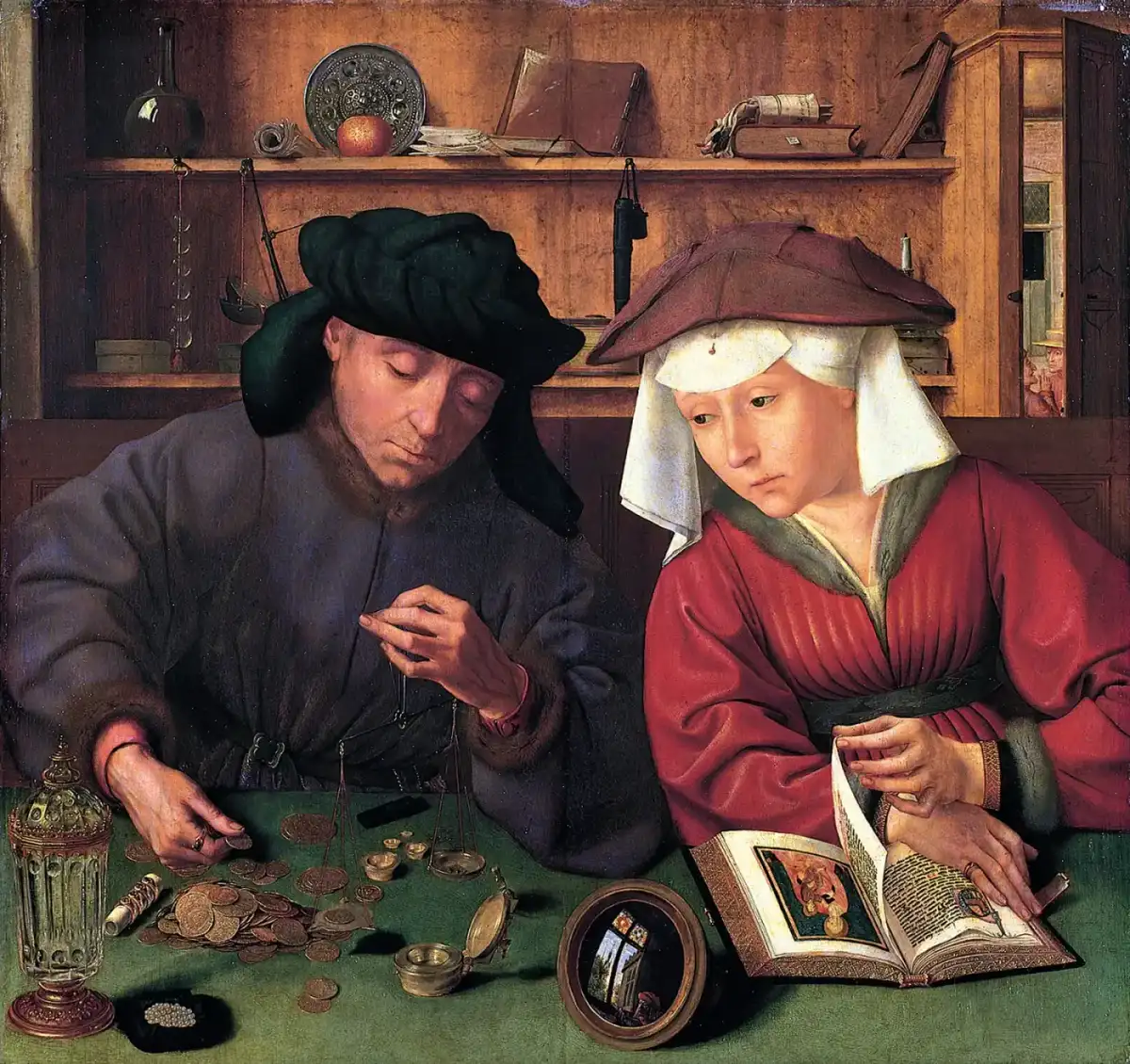
Le Astigian house were benches that they carried out Asti, in medieval times, currency exchange and pawnbroking activities.
Anna Maria Patrone, in her study on the Astisan House in Savoy, dares the possibility that the term may derive from Turkish Hazna, which in ancient times indicated the place of the public treasury. The ancient ones Home were also active in the medieval Republic of Genoa.
In all probability the term probably comes from noun Home, probably modified in a derogatory sense, since in the Middle Ages every banking activity was considered speculative, and therefore infamous or in any case not very worthy.
The beginning of trade
Explore this chapter
- 1261 - First clashes between Robaldo Catena and Bonifacio Solaro. Later the Guttuari will organize the Society of Becchincinere, created to repress the Guelph party
- 1302 - Guglielmo Turco assassinates Manuello Solaro, civil war breaks out
- 1303 - The Ghibelline party opens the doors to Marquis of Monferrato, by Saluzzo e by Incisa, escape of the Solaros and their allies
- 3 May 1304 - The Solaros, with the help of Alba and Chieri, organized an army with more than 200 knights and 5000 pedestrians, which clashed in the western area of the city. Defeat of the Ghibellines with destruction of their homes
- 1304 - 1307 - The clashes also spread throughout the territory, also involving the possessions of the allies Saluzzo, Savoy and Monferrato
- 1308 - Peace between Theodore I of Monferrato and Philip of Acaja, through the mediation of Charles II of Anjou. The Asti factions continue the war alone
- 1309 - Defeat of the Solaros a Quattordio, peace is stipulated and the Guelph faction returns to the city
- 1310 - The Guttuari accused of plotting against the municipality are removed. They take refuge in Masio, they returned to the city supported by Henry VII, who expropriated the Guelph castles and handed them over to the Ghibelline lords of Busca and Incisa. A harsh period of oppression and harassment began for the Solari, who saw their leaders imprisoned or exiled
- 1311 - The clashes between the factions resume, the Solari once again rely on the protection of Roberto D'Angiò.
- 1314 - Exile of the De Castello faction and their descendants; end of municipal freedom, the Angevin period begins
- 1314-1332 - The clashes between the two factions continue, the Guttuari are supported by Amedeo V of Savoy
- 1332 - New truce with conciliation of the factions
- 1334 - Violation of the truce, the Guttuari abandon the city
- 1339 - The De Castellos, with the help of Giovanni II Paleologo Marquis of Monferrato, penetrate the city and expel the Solaros (whose domination had lasted 35 years)
- 1342 - The Guttuari, fearing the increasingly threatening pressure of the Solaros, ask for the protection of Luchino Visconti and entrust him with the regency of the city, with perpetual banishment from the Solaros. The Visconti period begins
- 1349 - Death of Luchino Visconti, return of the Guelph families to the city
- 1356 - The fights begin between the Viscontis and the Monferrini for the supremacy of the territory, Asti makes an act of subservience towards John II
- 1372 - Galeazzo Visconti besieges the city defended by Otto of Brunswich. The city is liberated by Amedeo VI known as the Green Count
- 1377 - Peace made between the Viscontis and Secondotto of Monferrato, who marries Galeazzo II's daughter, Violante
- 1379 - Galeazzo Visconti dies. The city vows submission to his son Gian Galeazzo Visconti, who gives it as a dowry to his daughter Valentina
As it is located at the centre of the main routes between Genoa and the northern markets of ooltralpe, Asti immediately developed the commercial vocation, and consequently the figure of the intermediary of commerce among its inhabitants. But in the first decades of the 12th century it suffered the consequences of the heavy and progressive devaluation of the currency of the Italian Kingdom, beaten by the mint of Pavia and commonly used.
In order to have a more stable exchange instrument, he asked and obtained the right of Emperor Corrado II beat the beat a currency of its own. This takes place in 1141, following the concession made in the Republic of Genoa in 1138.
In 1143, it already appears in a document for payment made, the description of good currency auctions, a sign that the Zecca di Asti It immediately started to work.
The birth of the benches
The trade developed in a short time, also favoured by some contracts of the Astigians with Duke Ugo of Burgundy, to have free access on the road to...Explore this chapter
The trade developed in a short time, also favored by some contracts of the Astigians with Duke Ugo of Burgundy, to be able to have free access on the road of Chalon-sur-Saône, up to Dijon and from there to the famous six Champagne fairs.
THE Lombardi (this is how the merchants of Asti were also defined), between the 12th century and the 13th century, they concluded more than twenty investment and financing contracts relating to all six fairs. In fact, the people of Asti soon realized that the real profitable activity was that of pawned money lending, given the scarcity of silver throughout Europe.
But, in order to do this and bypass the appeal of usurers, they sought an institutional investment. This was thanks to the privilege granted in 1225 by King Louis VIII of France.
In the Chronicle by Ogerio Alfieri it is read that from 1226, the Astians began to lend with 'I'll be home. in France and the overseas regions.
The clientele appeared very varied, from the same king, to the noble, to the bourgeois, to the peasant.
In the fourteenth century, Lombardi's rates settled around 43%, and huge gains, despite always the risk of the canonical accusation of wear, caused considerable economic development on the city of Asti.
The profits were invested in land property, for the availability of land and castles left vacant by the ancient nobility expelled from municipal power, and later they were used to purchase stately rights.
Conflict
Explore this chapter
(Alfredo Bianco)
Soon, the great Astigian mercatali families began to invest abroad, inevitably creating a conflict of interest between the municipality, of which they were part of the executive paintings, and the lands that were the owners.
The phenomenon took a showy proportion at the end of the thirteenth century, accompanied by the unleashing of conflicts between the Guelph party and the Ghibelline Party. This threw the city into a perennial guerrilla climate, with significant damage to the Astian economy.
The insanable divisions between the Guelphs and the Astidian Ghibellines will eventually force the Commune to ask for help and intervention to the foreign lords. Only at the end of the fifteenth century, the struggles between families were exhausted, but by now the city had lost its freedom and economic prosperity.
Surely, in the period of maximum political-economic expansion of the city, not having succeeded in producing a local, enlightened and far-sighted ruling class that could have resulted in a local Signoria (such as Sforza for Milan, the Medici in Florence or the Scaligeri in Verona) was remarkably penalizing in the continuation of the historical events of the city, and probably in the historical-political destiny of the Piemonte, allowing Turin, and consequently the Savoy to become the most influential political-economic pole from the sixteenth century onwards.
Guelfe families
The Solar · The Falls · The Coppers of CelleExplore this chapter
The Solar

It was the most powerful Astigian Guelph family and undoubtedly the most important.
In the period of maximum splendor, they were owners of 24 castles in only municipal territory.
The Solaro/Solari were present in Genoa already in the 12th century, with property and real estate in Sestri Levante.
The commercial activities were mainly among the fairs of Provins, Troyes, in Northern France and Flanders. In the fourteenth century, the bulk of the activity is concentrated in Burgundy and Franca Contea.
Among their clients the Savoy, especially at the beginning of the fourteenth century, and Leonardo Solaro had the monopoly of the Turin house by Acaja.
Their oldest houses were in the area called Caneto dei Solaro, area delimited to the south by the current Corso Alfieri, to the north by via Carducci up to Piazza Medici. The name Cane, would derive in antiquity, perhaps from an uncultivated area, reclaimed and then urbanized by the Solari family.
It says the Bera, that this was a fortified contrada, bordered on its borders by the facades of the houses and from brick courtyards that connected them together. In 1303, the victory of the Ghibelline will lead to the complete destruction of the Caneto, but a year later, succeeding in overturning the situation, the de Solari returned to the city and rebuilt the houses included the tower (now still present, albeit lowered), that still in the seventeenth century, according to the Incense, was the most formidable of the city.
The other houses overlooking Caneto stood between Rione San Secondo and Rione San Silvestro, and a good number of houses were near the Church of San Martino.
In 1276, their intervention was decisive to conclude the peace between Asti and Carlo D'Angiò. In 1296 Sinibaldo Solaro he was appointed to be the podestà of Alba. In the same years, other members of the family took charge of power in Mondovì, Chieri, Fossano and Bra.
Thanks to an agreement with the Society of People, they can maintain their domain throughout the Angioin Period. Solar Bonifacio, he was a believer, scholar, ambassador and mayor of the municipality of Asti several times. He was the supporter of the clashes with the Ghibelline faction of the De Castello.
For his dedication to Roberto D'Angiò, he became a lieutenant in the vicar royal of Asti (1317).
After the return of the Ghibellines, coincided with the Viscountian lordship, the political influence of Solaro/Solar on the city decreased drastically, moving their range of action on the farmer's properties.
The Falls
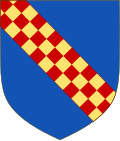
The Fallets are a very active family in the financial and commercial field since 1110; in the financial field they focus on intermediation activities and loan on pledge.
Present in a conspicuous manner Asti, specific between via “al Teatro”, via Palazzo di Città and Corso Alfieri, in the Rione San Secondo, and in Alba (although it is difficult to understand in which of the two cities the family was actually born), their activity leads them to build a large network of contacts that touches the cities of Piemonte (where they maintain relationships with other families, such as the Troja), Genoa, Tunis, the Champagne fairs and Avignon.
Through the borrowing activity they manage to acquire their first castles, obtained as a pledge to guarantee loans granted to the Angioine dynasty. The subsequent territorial expansion of the family is concentrated along two specific directions: the hills around the city of Alba and in the plain between Saluzzo and Savigliano.
In the first area, at the beginning of the fourteenth century, Falletti obtained the Barolo castle, following a dispute with the Saluzzo family. Then they continue with a campaign of feudal acquisitions (both through purchases and donations) that leads them to become lords (or, however, holders of judicial rights) of various localities such as the villages of Pocapaglia, Malvicino, Castiglione Falletto or Serralunga (today Serralunga d'Alba).
In the plain between Saluzzo and Savigliano the domain of the house was instead swinging, seeing acquisitions and cessions in equal measure; for example, in 1235 the Falletti family get from the principles of Savoy-Acaia the castle of Villanova (now Villanova Solaro), which they give in 1422 the family, or the castle of Racconigi, obtained as a pledge by the Saluzzo around 1370, but then resumed by the Savoy-Acaia in 1404. In the course of the fifteenth century, the increasingly clear affirmation of this dynasty marginalizes the political role of the Falletti family.
During the 15th century, the number of centres controlled exceeds fifty units, within which the family enjoys all judicial rights and land property present. It is hypothesized that the house, at least at first, is committed to creating a consensus base among the rustics, as suggested by a dispute with the community of Villafalletto of 1335. The dispute concerning the distribution of a tax on trade was settled with the division in half of proceeds.
Since the 15th century, this type of administration has given way to a more severe one, also thanks to the change of economic route of the family, which abandons financial and merchant activity to focus on agricultural production.
The Coppers of Celle
The Ramelli are an oriunda family from Moncalieri passed into Asti. The first traces of the Ramelli are found in 906 with the coinfeudazione together with the Ricci of the lordship of Cellarengo following the renunciation of the Garretti (cartarii of 906-7 d'Asti, book green of Giuovanni d'Alessandria, diplomas of Ludovico II S.R.I). In the year 1000 Ramelli were awarded several feuds including Graglia, Olle (SV), Vaglierano and in 1422 they were invested in Solbrito together with Ricci di S. Paul (Calendari dei Regi Stati, rogito del 1228 del notary Pocapaglia). Also together with the families Ricci, Mestiatis, Berlingeri and Malabayla the Ramelli are subinfeuded to Menabó, Corveglia, Dusino, Ferrere, San Michele d'Asti, Serralunga and Stoerda. (On the noble families of the monarchy of Savoja). Finally, in 1688 the Ramelli were unfeuded of the Celle farm until the end of 1700 with the arrival of the first Napoleonic troops.
The Troja
They were mainly active in Germany and northern Europe with docks in Metz and Lorraine (XIII century), Cologne, Bonn and Lucerne (16th century). In 1387 they were also present with a counter in the very rich Ghent in Flanders. In Italy they were mainly active in Chieri.
In the second half of the fourteenth century they are installed in the Palazzo di Piazza Medici, next to the Clock Tower, a palace that had previously been the residence of Podestà.
It is probable that the houses of the Trojas were adjacent to the Solar Caneto, with whom they also had a solid political alliance.
The Malabaila
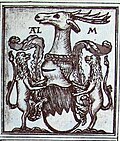
The activity was mainly in Savoy, pushing to Chalon-sur-Saône: the brothers James, Antonio And Guide, of the Castellinaldo branch, became Papal bankers in Avignon in 1342.
Probably from origin Revigliasco d'Asti, they settled in the district San Giuliano, in the Cathedral district, to the point that in 1388, the district was cited as de Malabailis. Inside the district, the Malabailas will build the most beautiful Renaissance palace in the city. Are Malabaila then the lines of Antignano and of Cantarana and Valgorrera also, since 1300, bankers in France and precisely in Bourg-en-Bresse.
The Ricci of San Paolo
Title: accounts of St. Paul, consignori di Solbrito e di Cellarengo, Menabò e Graglia.
Old noble family of the Bressa descendant perhaps from the Risses whose first traces are found in 906 with the coincidence together with the Ramelli of the lordship of Cellarengo following the renunciation of the Garetti or Garretti (cartarii of 906-7 d'Asti, green book of Giuovanni d'Alessandria, diplomas of Ludovico II S.R.I). Of this family there are scattered and unclear clues referring to an enterprise they started in northern Europe. In 1422, they were invested in the condo of Solbrito with Ramelli and Mestiatis. The latter will then buy part of Solbrito in 1653. Between 1400 and 1770, together with the Mestiatis families, Berlingeri and Malabayla eRamelli are invested in the lordship on Menabò and Graglia.
The coat of arms of the line of the accounts of St. Paul is D'argento, three curls of chestnut, leaflets of two pieces, of green while the line of Solbrito and thus represented: D'argento, a tre ricci di castagna, foliages of two pieces, of green, with the head of gold, loaded with an eagle of black.
Ghibelline families
The Guttuaries · The Isnardi · The TurkishExplore this chapter
The Guttuaries
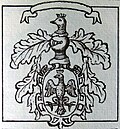
The powerful family, a Ghibelline of the Solaro, overlooks the Asian political life in the two hundred years, to have in 1270 with the figure of Emanuele Guttuari, the greatest influence on the government of the city.
Since 1200 they have been active as merchants of fabrics in Genoa, in 1235 they open a pawn shop at Provins, then in Besançon, Brussels and Berne. String alliances with the Marquis of Monferrato and with the main Ghibelline realities of the subalpine patriziato.
Although they were probably formerly located in the Rione San Silvestro, the houses of the Guttuari are mainly located on the market square of the Santo (Rione San Secondo). The large Guttuari tower, of which today, according to the Bera, remains only the lower base, above the houses of Via Gobetti dominated with the homonymous palace the square of the market.
With the Turks and the Isnardi will be the powerful consortium of De Castello.
The Isnardi
Powerful and rich house of Astigiana, he had the main trades in the Champagne area, but their agiance, allowed her to be the banker of confidence of many great medieval characters. They took money, to the Archbishop of Lyon, to Amedeo V of Savoy and Ugo of Vienne.
The political rise took place with the support of Society of the People, of which Giacomo Isnardi became rector between 1271 and 1279.
The Turkish
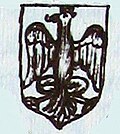
The Turks were the most modest wing of the De Castello; there are no great prominent characters in their family, except for the figure of Giovanni Turco, who in 1278 appears as a lieutenant to the follow-up of the Mellano Solaro Podestà. Their home business developed mainly on the Flemish market, and on that of Savoy, with loans to the Counts of Hainault and Namur. To a member of the Turkish family, exactly William, described as cruel and vengeful, should be charged with the cause of the recovery of fierce clashes between opposing political factions in Asti. He killed Emanuele Solaro on the road in 1300.
The Scaramps
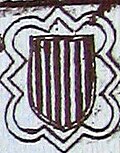
From Genoa, they developed at Champagne fairs, and then in the fourteenth century in Paris, Meux and Auxerre, to reach the Belgian markets of Malines. They were in society with the Alfiers. The Scaramps had the castle of Masio In 1337, Antonio Scarampi, in exchange for 115.000 florins, became a keeper of Bubbio, Monastero Bormida, Roccaverano, Cortemilia, Perletto, Cairo, Altare and other places in the Langhe.
The oldest town hall dates back to the middle of the thirteenth century and is located in the immediate vicinity of the Cathedral (Rione Duomo), these houses were soon abandoned to be ceded to the Pelletta, moving into the area of Piazza Catena and Piazza delle Erbe (the current Piazza Statuto).
The Alfieri
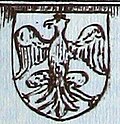
Their commercial activity took place mainly in Savoy and Freiburg, since the fourteenth century the activity seems to focus in the Netherlands (Brussels, Louvain). Martino Alfieri was appointed treasurer of Count Amedeo V of Savoy, in 1300.
In 1342 we speak in a document of an extensive contrada Alferiorum, located between Via Bruno and Via Balbo which has the Palazzo dei Leoni as its most prominent building, later owned by the Bolla family. Some towns in the Asti area still maintain the suffix Alfieri, certainly a testimony to the ancient dominion of the family, (Castell'Alfero, Magliano Alfieri, San Martino Alfieri).
Since 1176, an Alfieri has always been present in the Astigian public life. We also recall the chronicler Ogerio Alfieri, a believer and expert of the city in 1274, the poet Vittorio Alfieri and the architect of Savoy house in the eighteenth century, Benedetto Alfieri.
In Asti, the birthplace of the poet (Palazzo Alfieri) is home to the National Centre for Alfieriani Studies.
Unspoiled important families
The Roero · The Pelletta · The AsinariExplore this chapter
The Roero
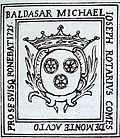
They can be drawn between the two factions and profits both in economic and political terms. In the sixteenth century more than twenty parental lines are counted.
The Pelletta
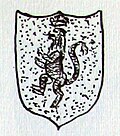
The family was partly Ghibelline and partly Guelph. They were rectors of the Society of San Secondo in the figure of Girbaudo Pelletta in 1279, with Manfredino in 1281 and Giorgio in 1282. Grenone was ambassador of Asti at Luchino Visconti in 1342.
The activity went up to Piccardia, to continue in Savoy and Flanders. The houses of the Pellettas were in the Rione Cathedral; the family is attributed the client of the Portal on the southern side of the Cathedral of Santa Maria Assunta.
The Asinari
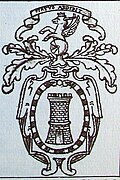
It was one of the oldest families, mainly Ghibelline. Already in 1197 Ranzone Asinari is mentioned as console of Asti. Raimondo Asinari was Podestà di Chieri in 1273, Folco was in Mondovì (1284) and in Genoa (1296).
Tolomeo Asinari, involved in civil struggles, was exiled with the family and dedicated himself to commentary on the De consolation philosophie manuscript in 1309 and illuminated by Philip of Altavilla (it is preserved in Vienna).
They can create a dense network of banks and trades across Europe, from Flanders to Germany (Siegburg, Oberswesel, St. Goar), Switzerland, Burgundy, with interest on Salins salt refineries. The loans to the Archbishop of Cologne, benefited from the markets in Cologne, Bonn, Adernach.
The Lights
The Lucii were an ancient Astigian family that, according to tradition, originated from ancient Rome. According to the notary Giacomo Borcanino did not settle in Asti when he became a Roman colony, but when Julius Caesar passed there with his troops. The Lucii family flourished in Asti until the entire 13th century, when Caesar de' Lucii, the only remaining male member of the family followed the cross-signed Ludovico of Savoy during the Crusades.
The Natta
The Natta family is one of the most important Astigian families for the number of soldiers, literary, religious and jurist who has produced over the centuries. Following trade and feneratia activity throughout Western Europe, they were greatly enriched, contributing consequently to the expansion of the Astigian municipality in the medieval period.
Bibliography
Explore this chapter
- AA.VV., Il Platano, magazine for the study of culture and astigian activities collected from 1977 to 2005
- Aldo di Ricaldone Yearbooks of the Monferrato Vol I and II
- White A. Asti Medieval . Ed CRA 1960
- Asti in the times of revolution and empire. Ed CRA 1960
- Bera G. Asti buildings and palaces in the Middle Ages. Gribaudo Editore Se Di Co 2004
- Bobba Vergano Ancient ticks of the province of Asti. Bobba ed. 1971
- Bordone R., From charity to credit. C.R.A. 2005
- B. Del Bo, The sword and grace, vine of aristocrats in the fourteenth century Subalpino, Turin, 2011 (https://www.academia.edu/32881888/LA_SPADA_E_LA_GRAZIA_VITE_DI_ARISTOCRATICI_NEL_TRECENTO_SUBALPINO)
- B. Del Bo, A noble itinerary in the Angioin twilight: the Falletti di Alba, in Gli Angiò in north-western Italy (1259-1382), Milan 2006, pp. 313-330. (http://www.rmoa.unina.it/488/1/RM-DelBo-Falletti.pdf)
- Fixer, The miniatures of codex astensis C.R.A. 2002
- De Canis G.S. Proposal for a reading of the Astigian Corography, C.R.A 1977
- Gabiani Niccola, Asti in his main historical memories vol 1, 2,3. Tip. Vinassa 1927-1934
- The towers of the fort houses and medieval noble palaces in Asti, A.Forni ed. 1978
- Fat S., History of the City of Asti vol I, II. Atesa ed. 1987
- S.G. Incense, Asti in his churches and inscriptions C. R.A. 1974
- B. Molino, Barolo, the castle, the Falletti, in W. I'll catch up, B. Molino, P. Vacchetto, I Falletti di Barolo. The place and their main castle, Barolo, 2010, pp. 13-88. (https://fupress.com/capitoli/la-signoria-nel-gioco-politico-una-lettura-strutturale-(area-subalpina-secoli-xiv-xv)/7356)
- A.M. Patron, The Astigian House in Savoy, Dep. subalpina of homeland history, Turin 1959.
- Peyrot A. Asti and Astigiano, typ. Torinese Ed. 1983
- Ruggiero M. Briganti del Piemonte Napoleonico, Le Bouquiniste 1968
- Scapino M. The cathedral of Asti and its ancient village, C.R.A.
- Taricco S. Small history of Astigian art. Quaderno del Platano Ed. Il Platano 1994
- Head d. History of Monferrato second expanded edition, Tip. S.Giuseppe 1951
- V. Asti ancient and noble houses. The Portichetto 1982
- Vergano L., History of Asti Vol. 1,2,3 Tip. Asti1953, 1957
- Historical Vicendes of Refrancore, The author 1996
Continue your journey