Atlas of Monferrato
Agliano Terme: sights, history and trails
Asti
- Elevation
- 263 m above sea level
- Area
- 15.45 km²
- Demonym
- Aglianese
- Patron saint
- Saint James the Greater
A closer look
Discovering Agliano Terme
Agliano Terme (Ajan in Piedmont) is an Italian municipality 1 541 inhabitants[2] from the province of Asti in the historical territory ofAstesana, in Piemonte.
Landscape and area
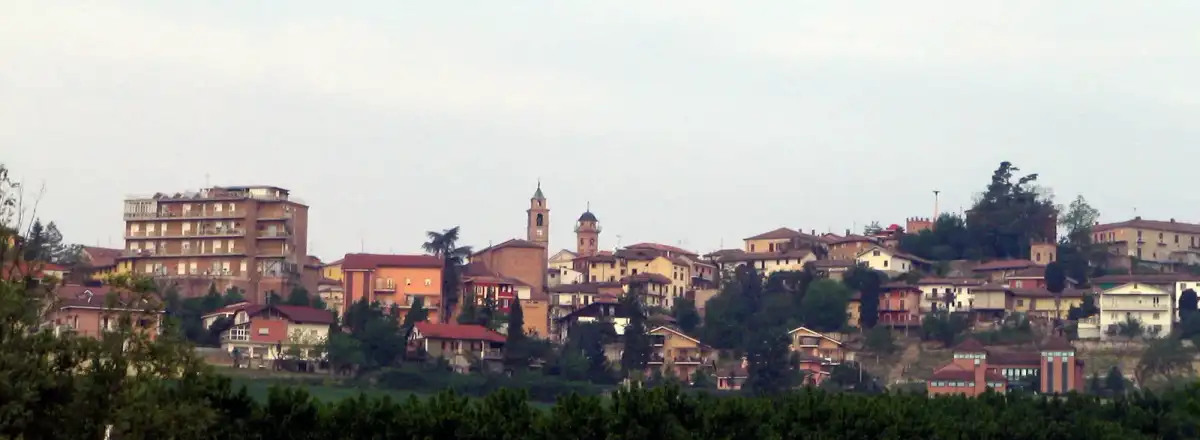
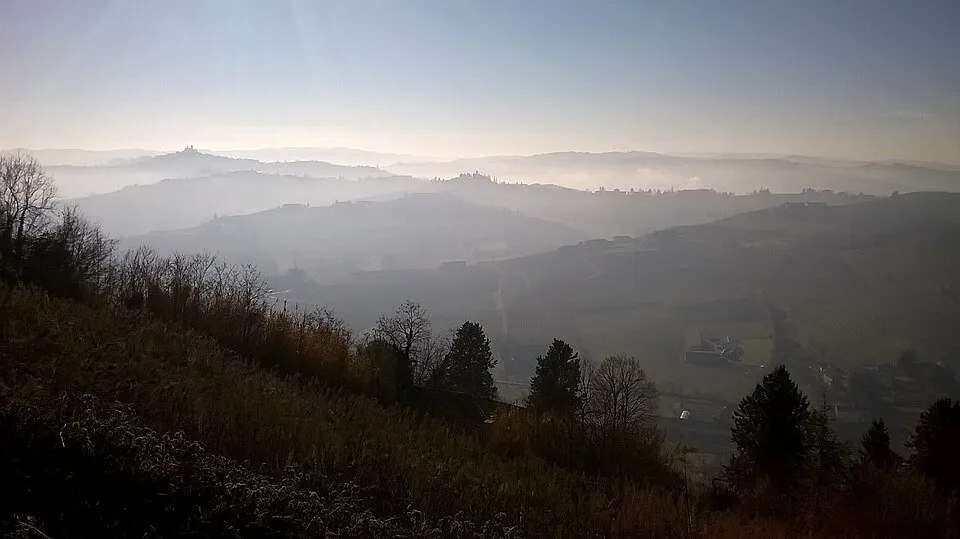
About 19 km from Asti, lies Agliano, located on a hill between the Nizza and Tiglione valleys in a panoramic position.Explore this chapter
Origins of the name
Its toponym, of Roman origin, derives from the noble Allius, and appears for the first time in medieval texts since 993 as Alljanus, then as Aglanus.Explore this chapter
Its toponym, of Roman origin, derives from the noble one Allius, and first appears in medieval texts as early as 993 as Alljanus, then how Aglanus.
History of Agliano Terme
The Middle Ages · The Renaissance · Contemporary ageExplore this chapter
The Latin origin is demonstrated by some archaeological finds found on the site, for example the plaque engraved in honor of Antonio Scapula, probably the same one sent to Britain in the mid-1st century AD. in order to quell an insurrection. The inscription was found in the foundations of the ancient Church of SS. Michele and Bovo. But the historians of Agliano judge the Middle Ages as the era of greatest interest.
The Middle Ages
The Lords of Agliano of the first lineage descend from an Alineo of Salic Nation and Law, Viscount in Neustria, who came to Italy around the year 900 and became Viscount of Auriate. The last of the first lineage of the Lords of Agliano, she married Ottone, Lord of Lanerio, son of Manfredo di Brozolo of the Manfredingi lineage[5]. In Agliano from this marriage the following noble families were born: d'Agliano, Gatto, Musso, Sclasso, Presbitero[5]. The aforementioned families also known as the Lords of Agliano and belonging to the first lineage, together with other Lords of Lanerio and Canelli founded the consortium of Acquosana[5]. The first house of the Lords of Agliano ended with the dominion of the Lancia Aleramici, who gave rise to the second house of the Lords of Agliano. The notoriety of Agliano began with the third lineage of the lords of Agliano: Boniface of Agliano, son of Belda and Guglielmo of Moncucco, married the widow of Manfredo I Lancia, who moved to Agliano and brought with her her daughter Bianca from her first husband. Emperor Frederick II of Swabia, struck by Bianca's shining beauty, fell madly in love with her and, although he was already married, had three children with her: Costanza (1230 -1307) who married Giovanni III Ducas Vatatze, emperor of the East, Manfred of Sicily (1232 - 1266) who later succeeded his father in the government of the kingdom of Sicily and Violante (1233-1264) who married Riccardo Sanseverino, count of Caserta.
The Renaissance
In 1531 Agliano passed to the Savoy family. In 1629 the population of the town was decimated by the plague, while the Spanish were responsible for the definitive destruction of the castle, already besieged by the Solaro family of Asti in the early years of the 14th century, and later rebuilt thanks to the noble Guttuari family from Asti, a long-time feudal lord.
Contemporary age
In the early years of the Second World War, between 1941 and 1943, Agliano was one of the municipalities designated as a place of free internment for foreign Jews.[6] There were 49 Jewish refugees from the Balkans (including some children) who stayed there for more or less long periods.[7] Net of the frequent transfers, those present in the village in the summer of 1943 were 22. After 8 September 1943, with the German occupation, the group immediately dispersed. In the end all the former internees managed to save themselves (some finding refuge in Switzerland, others heading south to meet the Allied army). No Jew, Italian or foreign, was arrested in Agliano.
Symbols
The banner is a blue and white banner.
Honors
In 1998 the ANPI awarded Agliano Terme the Gold Medal for partisan merit for its role during the Resistance.
What to see in Agliano Terme
Hot springsExplore this chapter
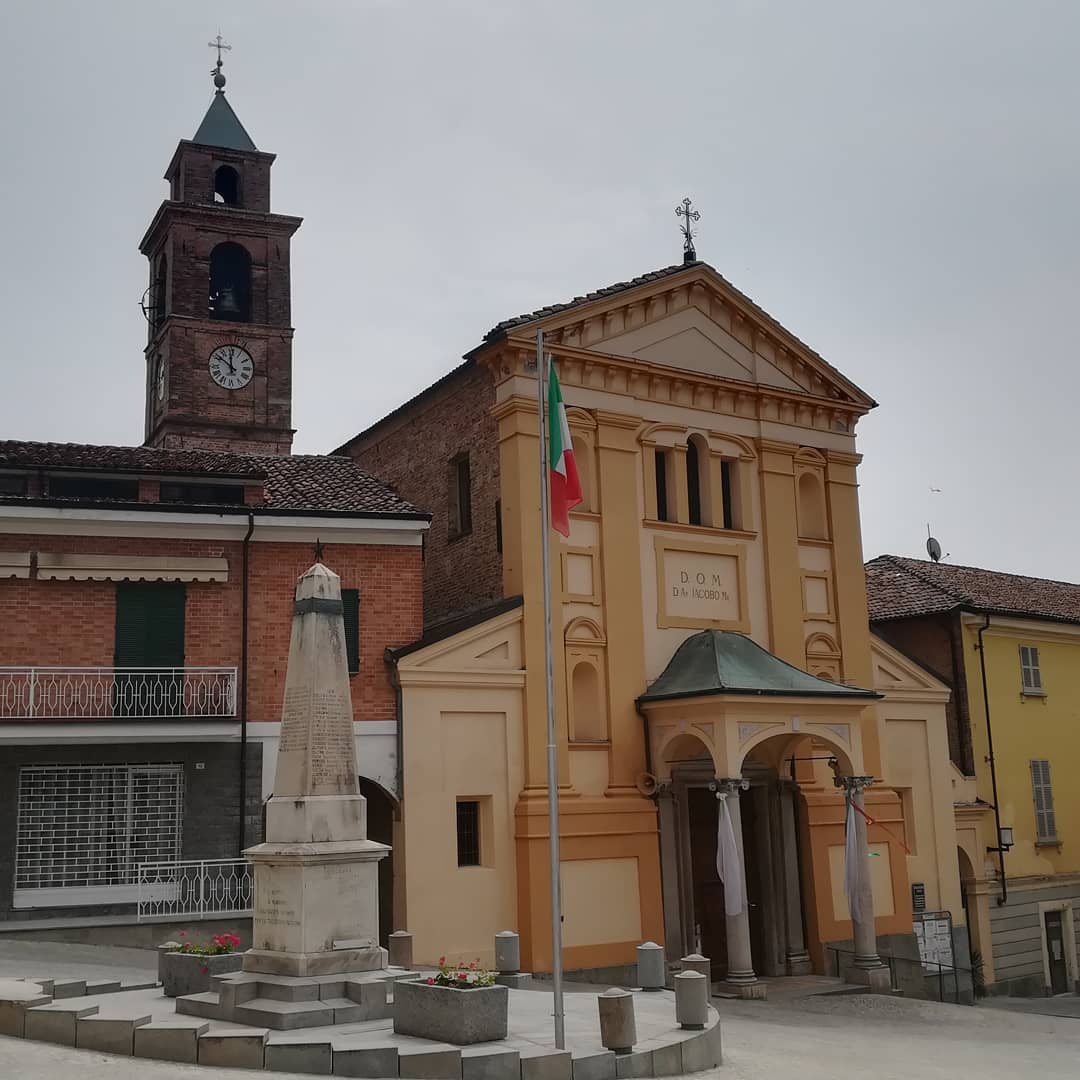
The church of San Pietro was built on the ruins of the castle, subsequently demolished in 1770. In the town square, from which you can enjoy a suggestive panorama of theAstesana, there are two churches: first you come across the parish church of Saint James the Greater, built to replace the three previous ones dedicated to San Michele, San Pietro and San Gaudenzio. It was subsequently rebuilt in 1657 by the entire community after the destruction of the previous building by the Spanish. Inside you can see numerous polychrome marble altars, built in the mid-eighteenth century, and the valuable fifteenth-century wooden crucifix. Not far away we can find the Confraternity of San Michele dating back to the Baroque era, currently deconsecrated.
In Piazza Castello it is possible to admire the Tower of the Ancient Castellan who resided there. That tower can currently be visited and is owned by the aqueduct
In the hamlet of Molizzo, located to the north near the municipality of Montegrosso, stands on a hill, surrounded by centuries-old cypresses, the sanctuary of the Annunciation, originally home to hermit monks. The origin of the toponym of the hamlet, according to some historians, could be connected to some member of the Giordano family of Agliano who had roles and honors in the principality of Molise, in the Kingdom of Naples.
Near the hamlet of Monsarinero it is possible to admire the church of S. Sebastiano and Bovo. The church stands on an ancient cemetery of Roman origin (identifiable by the discovery of a tombstone). The hamlet probably takes its name from the demolished church of San Michele e Bovo where the current church was built.
Hot springs
Agliano today is renowned for its thermal springs, the Fons Salutis and the Fonte San Rocco from which water flows Sale-magnesic at the temperature of 13.8 °C. If drunk, its waters are currently effective in cases of inflammatory diseases of the digestive system, liver and biliary tract, if inhaled they are healthy for problems of the upper respiratory tract.
Society
Demographic evolution · Foreign ethnic groups and minorities · Institutions, bodies and associationsExplore this chapter
Demographic evolution
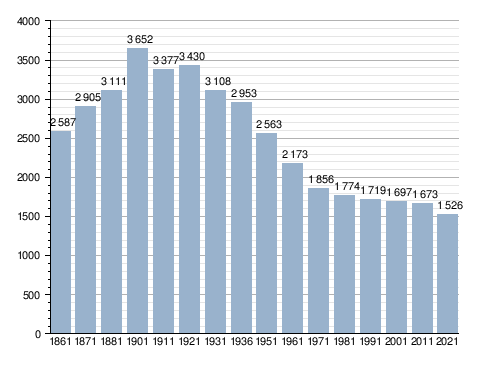
Inhabitants registered[9]
Foreign ethnic groups and minorities
According to ISTAT data as of 31 December 2009, the resident foreign population was 131 people. The most represented nationalities based on their percentage of the total resident population were:
- Romania 54 3.22%
- Republic of Macedonia 23 1.37%
Institutions, bodies and associations
"Maria Gianussi" musical band
With the Banda di Asti it is the longest-running in the province having been founded in 1847.
He had an intense activity until the years '60 then followed by swinging moments of operational stasis.
It has a stable staff of over 30 musicians, reaching up to 45 members in concerts.
Culture
Events · CinemaExplore this chapter
Events
The following parties are organized in Agliano:
- patronal feast
- Barbera d'Asti Days
- Barbera Fish Festival
- Barbera and Champagne
- The Color Hills
Cinema
Some scenes of the film were shot in Agliano Terme The devil in the hills by Vittorio Cottafavi.[10]
Anthropic geography
HamletsExplore this chapter
Hamlets
Banchetti, Bansella, Bologna, Brusasacco, Crena, Dani, Dogliani, San Rocco, Goretta, Lovetta, Monsarinero, Mola - Francia, Molizzo, Montà, Ogniprato, Paludo, Salere, San Bernardino, San Rocco, San Zeno, Vialta, Vianoce, Monsarinero, Spessa.
Economy
In addition to the spa activity, Agliano does not forget agriculture: cereals are cultivated, including wheat, vines, from which excellent Barbera d'Asti and…Explore this chapter
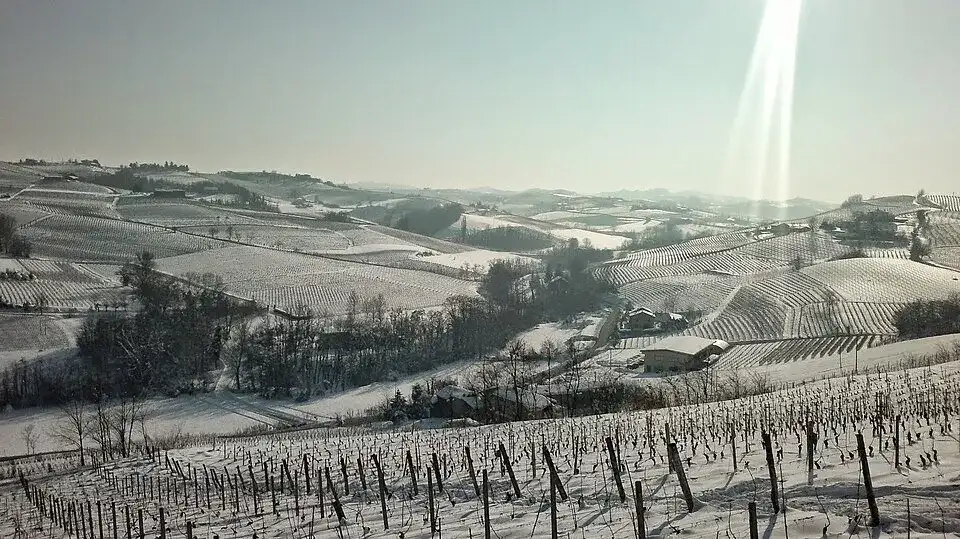
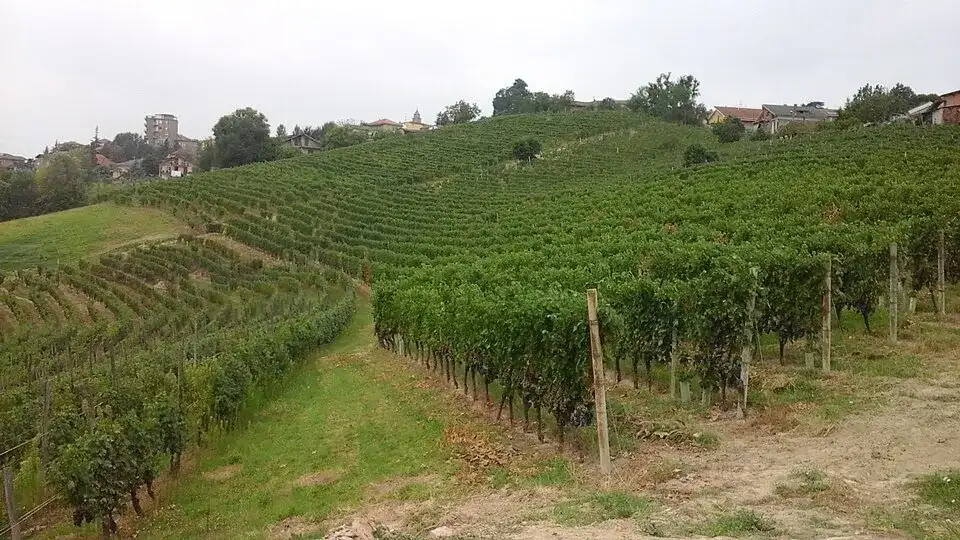
In addition to the spa activity, Agliano does not forget agriculture: cereals are cultivated, including wheat, and vines, from which excellent Barbera d'Asti and Nizza docg are obtained. Since 1996 it has been declared a Thermal Municipality; it was previously known as Agliano d'Asti. It should be remembered that Agliano is one of the few municipalities in Asti, in addition to the capital, which offers secondary education, in fact there is a hotel institute.
Infrastructure and transport
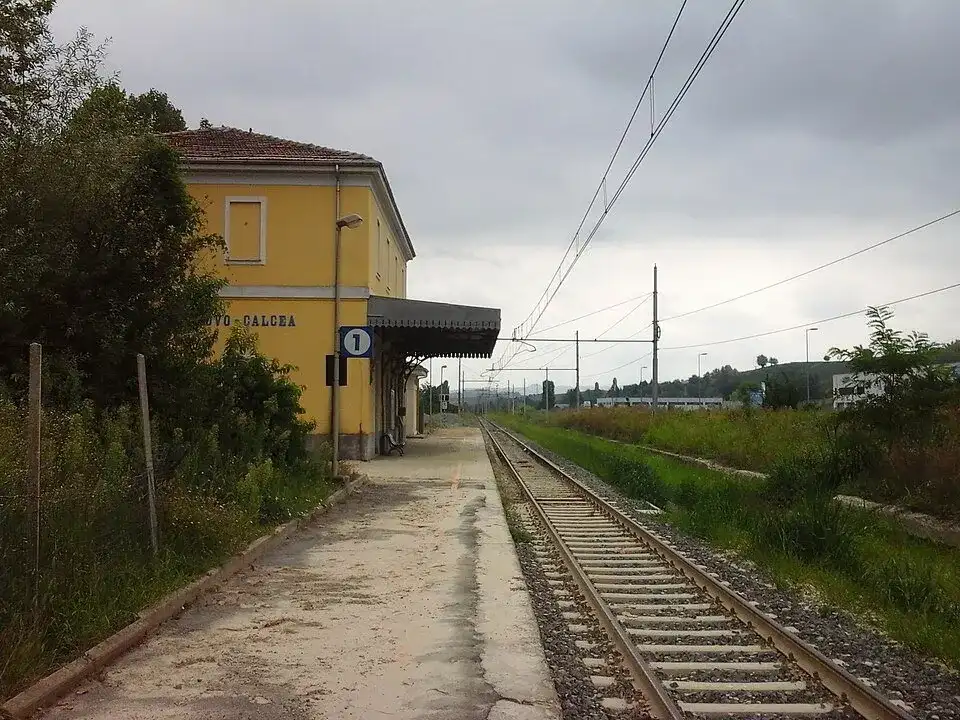
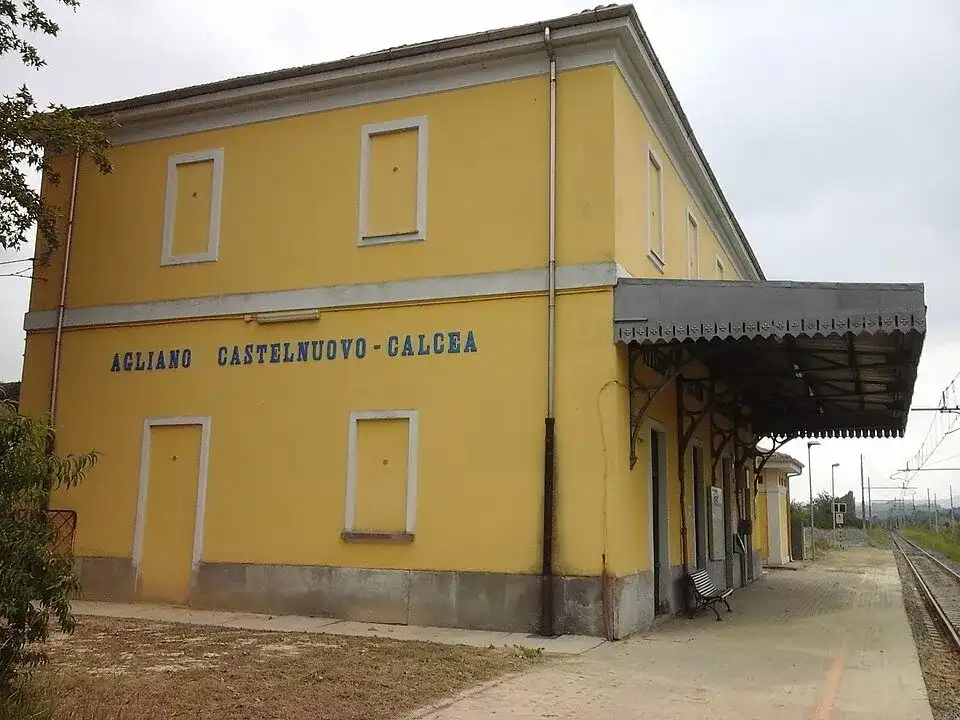
The town is served by the Agliano-Castelnuovo Calcea station, located along the Asti-Genoa railway.Explore this chapter
The town is served by the Agliano-Castelnuovo Calcea station, located along the Asti-Genoa railway.
Administration
Below is a table relating to the administrations that have succeeded one another in this municipality.Explore this chapter
Below is a table relating to the administrations that have succeeded one another in this municipality.
| Period | First citizen | Match | Load | Notes | |
|---|---|---|---|---|---|
| April 24, 1995 | June 14, 1999 | Warden Aluffi | center | Mayor | [11] |
| June 14, 1999 | June 14, 2004 | Warden Aluffi | civic list | Mayor | [11] |
| June 14, 2004 | June 8, 2009 | Franco Giuseppe Serra | civic list | Mayor | [11] |
| June 8, 2009 | May 25, 2014 | Franco Giuseppe Serra | civic list For the future of Agliano | Mayor | [11] |
| May 26, 2014 | May 26, 2019 | Franco Giuseppe Serra | civic list For the future of Agliano | Mayor | [11] |
| May 27, 2019 | in office | Marco Biglia | civic list The alternative for Agliano | Mayor | [11] |
Sport
EquitationExplore this chapter
Equitation
The municipality of Agliano Terme achieved 2 victories at the Palio di Asti:
- 6 May 1810 (Michele Ranco, for the N.S. of Molisso di Agliano), with F. Manè, on a Turkish horse
- 5 May 1811 (Michele Ranco, for the N.S. of Molisso di Agliano), with B. Nattino
Notes
Explore this chapter
- ^ Municipality of Agliano Terme : Municipal Administration and Mayor - City of Agliano Terme and city, Asti, Piemonte, up www.comune-italia.it. URL consulted on 4 August 2026.
- ^ to b Monthly demographic balance for the year 2026 (provisional data), up demo.istat.it, ISTAT.
- ^ Seismic classification (XLS), up risks.protezionecivile.gov.it.
- ^ Table of degrees/day of Italian Municipalities grouped by Region and Province (PDF), in Law 26 August 1993, n. 412, annex A, National Agency for New Technologies, Energy and Sustainable Economic Development, 1 March 2011, p. 151. URL consulted on 25 April 2012 (archived fromoriginal url on 1 January 2017).
- ^ to b c Francesco Guasco, "Feudal Dictionary of the Ancient Sardinian States and Lombardy", 1911 Pinerolo in the Library of the Subalpine Historical Society
- ^ The municipalities in the Astiginano area which hosted interned foreign Jews are: Agliano, Antignano, Asti, Canelli, Castelnuovo Don Bosco, Cocconato, Mombercelli, Montechiaro d'Asti, Montiglio, Nizza M.to, San Damiano d'Asti, Villanova d'Asti.
- ^ Foreign Jews interned in Piemonte.
- ^ Piedmontese civic coat of arms, vol. I, A-L, Regional Council of Piemonte, 2016, p. 2COM(87) 436 final 978-88-96074-98-5.
- ^ Data taken from:
- Resident population of the municipalities. Censuses from 1861 to 1991 (PDF), up ebiblio.istat.it, ISTAT.
- Resident population - Time series, up exploredati.istat.it.
Please note: 2021 data refers to permanent census data as of December 31 of that year.
- ^ Dictionary of Cinematographic Tourism: The Devil on the Hills, the locations, up FilmTV.it. URL consulted on 10 November 2018.
- ^ to b c d And f http://amministratori.interno.it/
Bibliography
Explore this chapter
- The Piemonte country by country Ed. Bonechi - 1993
Where to stay · Agliano Terme
Find stays on Booking.comStories, places and people
More about Agliano Terme and the surrounding area
Follow a thread of history and see where it leads.
The area, step by step
Trails and routes in Agliano Terme
 WalkingAround the starting point
 WalkingAround the starting point
 WalkingAround the starting point

 WalkingAround the starting point


 WalkingAround the starting point
Astigiano area
AGLIANO TERME - Percorso della Barbera
 CyclingAround the starting point