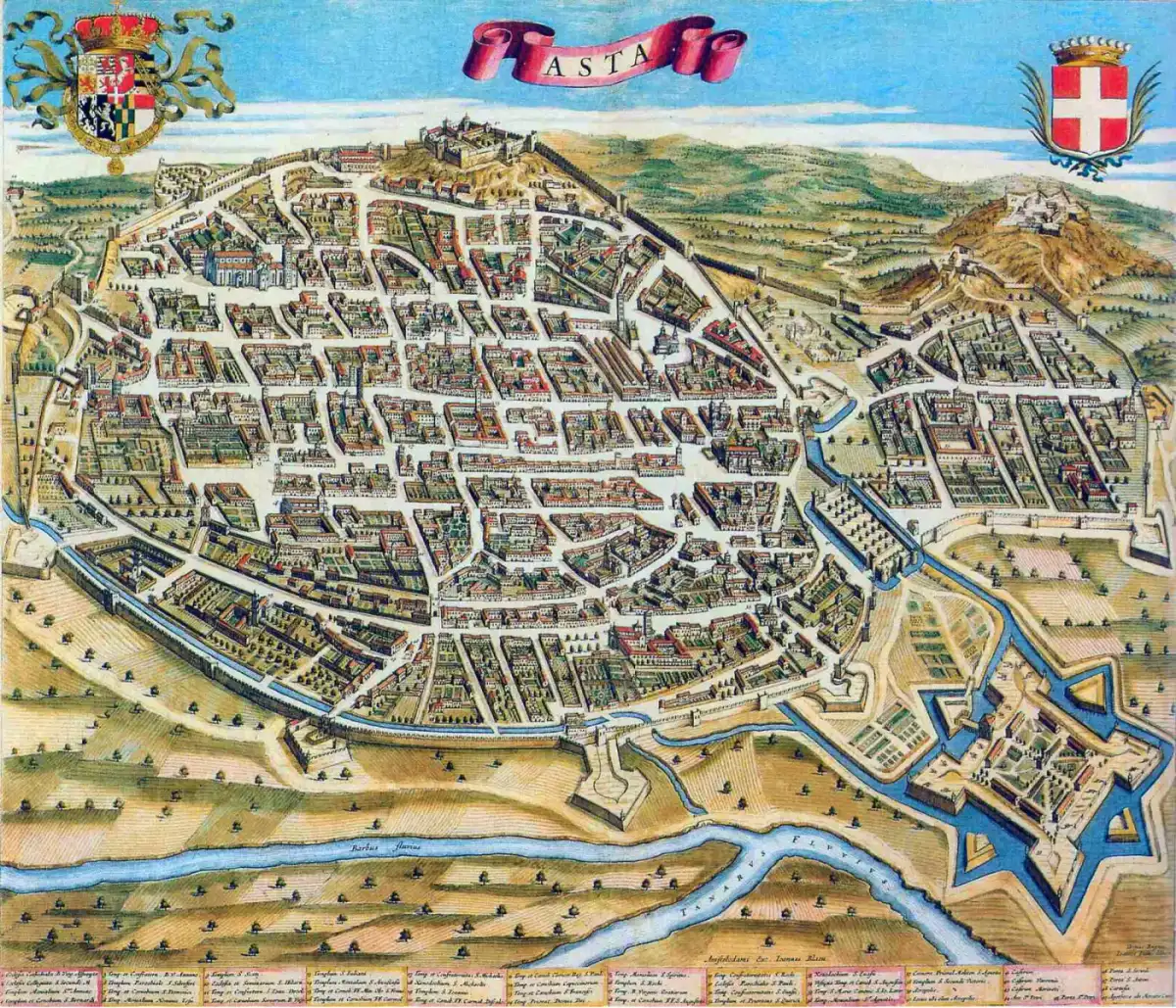
A closer look
History of Asti: at a glance
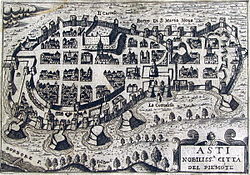
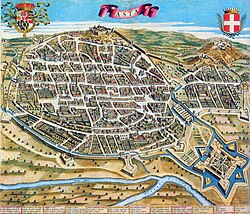
(from an inscription of the Theatro delle città d'Italia with nine additions. Padova, Bertelli, 1629)

Origins
Until a few decades ago it was opinion of many scholars, including Lodovico Vergano, that the name Asti derived from the Ligurian matrix “ast” altura, to call the first...Explore this chapter
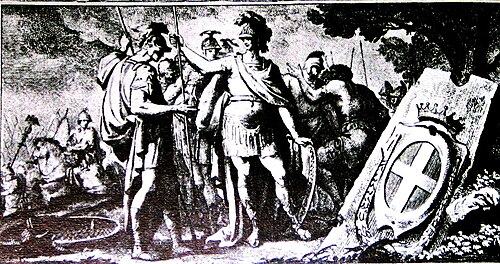
Until a few decades ago it was opinion of many scholars, including Lodovico Vergano, that the name Asti derives from the Ligurian matrix “ast” seam, to name the first settlement inhabited on the hill called “Varroni”. Even according to Strabo, Auction means rock rising from the plain.
In the Naturalis Historia by Pliny (book III, chapter V), Asti is “a strong Ligurian village bordering the tribes of the Staziels, populated with industrious people, shepherds, farmers, artisans”. In the new hypotheses of 1991, Canon P. Dacquino doubted the Ligurian presence in Piedmont, claiming that there was no trace of writings or important archaeological findings that could be attributed to those people. In fact, over the last few decades archaeology has demonstrated inconfuctably the existence of vast and well-structured settlements of iron age both along the Tanaro valley and Belbo valley, certainly attributable to the ethnicity that Greeks and Romans defined "Ligure", but which called "Ambrones" their own peoples.
Also the legend that Pompey wants to have planted his “noble auction” in this place to indicate the site of construction of the city, flaunting the Latin voice Hasta which indicates the common property of the Roman citizens, does not find any objective feedback. Only towards the 2nd century the primitive name of Asti is approached by the Latin voice, and its pre-Roman origin is also demonstrated through the existence of a homonymous place, now disappeared, in the Ligurian Riviera. According to the Dacquino, it is likely that the name derives from the Indo-European owi-s (sheep), to indicate the place of sheep farming. The first settlement is that of the Neolithic, on the left bank of the Tanaro, which moved around 1800 BC. - 1500 BC on the Varroni hill.
A bronze helmet of the type of Veio, found in the river bed Tanaro in the territory of Astese, it makes us presuppose contacts with Etruscan populations, that around 1000 BC. – 600 BC. They expanded their range of action. There is no archaeological evidence of regular trade with the Etruscan.
The local substrate Ligure then had remarkable cultural mixes with the Celtic populations that descended from the north, remaining influenced by the language and customs. Celtized Ligurians were the inhabitants of the Astigiano territory, which collided with Roman armies.
According to classical authors, the tribe of "Euburiates" was established along the Tanaro valley, perhaps confederated with that of the "Statellates" allocated between Belbo and Bormida.
Romans
The process of “romanization” will last from 200 BC. up to 122 BC. , bringing Asti and his territory to constitute a Roman “municipium” with the name of Hasta. It precedes...Explore this chapter
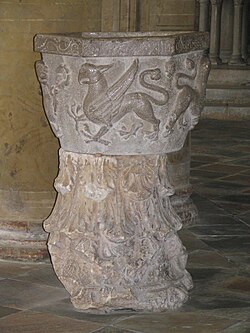
The process of “romanization” will last from 200 BC. until 122 BC, bringing Asti and his territory to constitute a Roman “municipium” with the name of Hasta. It precedes that of the albese area, and substantially anticipates the construction of Augusta Taurinorum.
There are few finds from the Roman era found on the territory of Astese: some stoneware, pots and furnishings in terracotta and glass, a few marble remains such as, for example, the two bronze capitals today in the Cathedral of Santa Maria Assunta.
Under the architectural aspect, there are the Red Tower or St. Second in the Rione Santa Caterina, probably an element of one of the towers of the north gate of the wall, adapted to bell tower and elevated with a 12th century bell-cell; the remains of the Roman amphitheatre of the middle of the 1st century in Via Massimo d'Azeglio and part of a "domus" in via Varrone. Recent excavations have allowed to identify the vast Terme, (area between Piazza Cagni, Via Mazzini, via Malabaila and via Roero) the Forum (under the monastery complex of Sant'Anastasio), several sections of urban roads in basolato, numerous remains of domus and buildings of various nature. Precise recontrials have allowed to define the Roman city in a square perimeter of 700 meters on the side, which contains an area of 49 hectares. The road link is generally superimposed to the contemporary one.
The city's urban agglomeration was located in a favorable position: according to the Peutingerian tabula, which is the geographical atlas of antiquity, was exactly on the Fulvia street, had the typical “scacchiera” conformation, crossed at the center by the maximum decuman, continuation of the consular road (the current Alfieri Course) that, coming from Dertona (Tortona), we headed towards Vardacate (Casale Monferrato), Industry (Chivasso), Carreum Potentia (Chieri) and Pollentia (Pollenzo).
Longobards
The Lombards came to Italy in 568 through the Carnic Alps; he led the invaders King Alboino, who chose Pavia as capital and divided the kingdom into three regions: the...Explore this chapter
The Lombards came to Italy in 568 through the Carnic Alps; he led the invaders King Alboino, who chose Pavia as capital and divided the kingdom into three regions: Austria, Neustria and Tuscia. Each region in turn was divided into duchies. Asti became a duchy of Neustria. Its territory extended to Liguria, including Albenga and Savona.
At the head of the Duchy of Asti there was Gunualdo, brother of Queen Teodolinda; they were his nephews Godeberto and Pertaritus, sons of Ariperto already ruler Lombard, in perennial conflict between them, to the point that the brother-in-law Grimoaldo, Duke of Benevento, could take advantage of it, killing the first and forcing to escape the second. Pertarito turned to the nearby Franks of King Clotario, who collided with Grimoaldo in 663 in the locality Refrancore, about ten kilometers from Asti. The first clash favored Pertarito and his Frankish allies, but during the night Grimoaldo fell into the camp and massacred the enemies. The toponym Refrancore is in fact to remember the place of the bloody massacre “Rivus ex sanguine Francorum”.
Although the passage from Romans to new invaders was not as traumatic as in other Italian cities, we can assume that even at Asti the nobility was understood and the goods confiscated for advantage of the new Lombard patrician class. This led the city to a considerable demographic and economic involution, so that the chronicler Paolo Diaco, referring to Asti, once "civitas", the name of civitaula.
Longobard domination lasted until 774, when Charlemagne defeated the last Lombard king Desiderio.
Subsidies
The Molina in his “Storical Notes of the struggle of Asti”, tells that Charlemagne, in 774 arrived at Asti in the Abbey of the Most Holy Apostles to “receive”...Explore this chapter
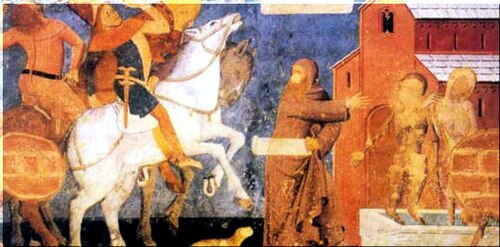
The Molina in his “Storical Knowies of the struggle of Asti”, says that Charlemagne, in 774 arrived at Asti in the Abbey of the Most Holy Apostles to “receiving” the obedience of the city, on this occasion he would dispense with the nobility of Astigian titles and privileges. It is from the same period that the construction of the Abbey of Vezzolano was made on order of the same Charlemagne, witness of a vision while hunting in the wild of Albugnano.
Carlo Magno, in 801, would have also granted the privilege of the two-time event a year of the fair of Asti, ancestor of the current fair "Carolingia", which is still held on the first Wednesday of May on occasion of the patronal festivities for San Secondo but that was actually established in 1810 by the Napoleonic government.
Asti became Franca county, but after 815, the year of the death of Charlemagne, the Holy Roman Empire crumbled in endless small feuds, with many descendants, each of which encamped rights on multiple territories So it happened, that at the end of the 9th century, Italy was claimed by three lords:
- Berengario, Marchese del Friuli, crowned in Milan in 888
- Guido di Spoleto, crowned in Pavia in 890
- Arnolf of Carinthia, Germanic ruler, crowned in Rome in 895
Following the succession of intrigues and struggles for the kingdom of Italy, Berengario, after much battle and plot, remained only ruler of Italy. He died in the church of Sant'Anastasio in Verona in 924, also murdered.
Ability of Bishops
The other European political events saw, in the X and XI centuries, a displacement of the sphere of action of emperors in Italian "things" and in particular Astigian,...Explore this chapter
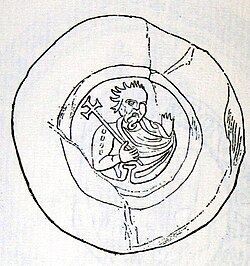
The other European political events saw, in the X and XI centuries, a displacement of the sphere of action of emperors in Italian "things" and in particular Astigian, increasingly engaged in central struggles for succession and supremacy of the empire. This increased the episcopal influence, increasing its power even under the political- territorial aspect. In Asti, for almost three centuries, from 1000 to 1300, the right to appoint the Bishop was of the presence of the Canons of the Curia, who often chose him in his own Chapter.
The bishops of that period were grasped, oculated and embodying for the people the supreme power, that is divine, thus enjoying full respect and popular benevolence. The emperors knew this well and tried to use them, almost as official public, in the evolutionary process of feudalism. In order to contain the Bishops under their authority, the emperors issued goods and privileges. Since 938, Ugo and Lotario, as a sign of gratitude, granted to Bishop Bruningo, their archchancellor, the Castel Vecchio, stronghold of the city, whose remains can still be seen in the grove of partisans in Piazza Martiri della libertà.
In this way Otto I in 962, with the confirmation of privileges, invested practically Bishop Brunigo of the “signory” of the city, including administrative legal power.
The diocese of Asti, as is apparent from the diploma of Emperor Henry III of 1041, it included much of the Piemonte southern (Mondovì, a part of the diocese of Cuneo, including Cherasco, Bra, part of Fossano and Alba) reaching to the valleys of Ellero, Pesio, Gesso, up to the valics of Col di Tenda e delle Finestre; eastwardly, it belongs to the territory of Casale Monferrato And Alessandria; to the north many parishes of Turin including Poirino, Buttigliera d'Asti And Cerreto d'Asti. Also included were the court of Benevagienna, with the castle surrounded by walls and aqueduct, Lequio with surrounding lands and castles, the court of Niella Tanaro, with its dependencies and the county of Bredulo.
Bishop Oddone III, on the end of the 11th century, at the death of Adelaide di Susa (the only descendant of the Arduinica brand), became Count of Asti and Bredulo.
The Bishops of Asti, according to the Cipolla, in “Di Audace, Bishop of Asti“, they never lost the concept of their spiritual dignity and their mission, indeed according to Vassallo, the government of the Bishops improved the socio-economic conditions of the city, up to the example of Bishop Boniface I (1198-1206), who during his mandate handed over part of the funds and properties of the church to the civil powers of the Municipality of Asti. In January 1206, Pope Innocent III removed him from the episcopal chair, confining him to the Abbey of Valleombrosa (Certosa di Valmanera), but by now the process of secularization, which would lead to the triumph of municipal autonomy, was unstoppable.
The Commune
Bishop Oddone III, on 28 May 1095, invested the Municipality of Asti, in the form of his consuls, the Castle and the village of Annone, with all rights to it...Explore this chapter
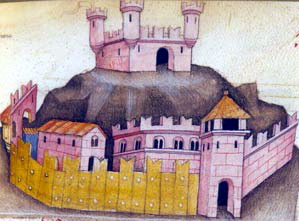
Bishop Oddone III, on 28 May 1095, invested the Municipality of Asti, in the figure of his consuls, the Castle and the village of Asti Castello di Annone, with all rights pertaining thereto. This document, present in the Codex Astensis, is very important because it mentions the city's consuls for the first time. The deed that testifies to the already existing Municipality of Asti is prior to that of Milan (1097), Genoa (1098) and Pavia (1105). In 1141 the prestige of the Municipality increased with the privilege given by Emperor Conrad III to mint money. The Municipality of Asti immediately began both an economic expansionist policy, with its merchants having banks throughout Europe, and a territorial one, with continuous encroachments into the bishop's lands or into the Aleramica brand, into the territories of powerful feudal families such as for example the marquises of Del Carretto, of Incisa, of Busca or the counts of Costigliole d'Asti.
The expansion of the Municipality of Asti caused considerable problems to these feudal lords who, in the person of Bishop Anselmo and the Marquis of Monferrato, in 1154 they went to Roncaglia trying to block the rise of the Municipality of Asti through the intercession of Emperor Frederick I of Swabia (Barbarossa). The latter immediately proved hostile towards the central-northern municipalities: in 1155 he laid fire to the city and asserted his authority over the gifts (rights to impose taxes, mint money, stipulate treaties, etc. which had been acquired or usurped by the municipalities at the time of Henry IV), and re-established the power of the Bishop and his noble allies, who brought Asti, for a short period, to take sides against the Municipalities of the Lombard League.
The city, aiming to oppose the emperor and his allies, the Marquis of Monferrato, in 1168 joined the Lombard League, but was again besieged and destroyed in 1174. After 22 years of struggle, the Lombard League, with the Peace of Constance of 1183, had recognized extensive municipal freedom: election of its magistrates, fortification of cities, formulation of local laws.
...Therefore, let all the faithful of the Empire, present and future, know that we [Frederick I] through the usual kindness of our grace, opening the bowels of our innate piety to the faith and respect of the Lombards.....that we clements forgive them all the offenses and sins with which they had provoked our indignation and that, having regard to the services of loyal affection that we expect from them, we judge to to count them among our beloved and faithful subjects....Therefore we have commanded you to subscribe and confirm with the seal of our authority the peace which on this page we have kindly granted to them.....We Frederick, emperor of the Romans, and our son Henry, king of the Romans, grant to you cities, lands and people of the league your gifts and customs both in the city and outside...outside then exercise without our contradiction all the customs as you have exercised until today, that is, on the fodro, on the woods, on the pastures, on the bridges, on the waters and mills, as you used in ancient times or do now, in forming an army, in the fortifications of the cities, in the jurisdiction, as well as in criminal and pecuniary cases, internal and external, and in all the other things that belong to the profits of the cities....It is permissible for the cities to fortify themselves and build fortresses even outside...
...These are the places and cities that received together with Us, upon oath of the Lombards, the aforementioned Peace and they swore to observe it: Pavia, Cremona, Como, Tortona, Asti, Caesarea (Alessandria), Genoa, Alba, and other cities, places and people who belonged and belong to our party"
(Constitutiones et Acta public imperatorum et regum, Constance, 25 June 1183)
The Municipality of Asti opened itself to a great expansion season – commercial, and when Frederick II of Svevia returned to have mire on the Piedmontese territory, the asthesis with the help of Alessandria and Genoa forced him several times to defeat; the same occurred later for Thomas II of Savoy: after years of hard and bloody confrontations, he was defeated in the battle of Montebruno in 1255, captured by the Turinese and translated into prison in Asti; thus they expanded the domains of Asti on Moncalieri, the hill of Cavoretto, Carignano and Cavour.
The death of Thomas II in 1259 made hope for the Astigians during a period of rise and territorial hegemony, as a result of the victories reported. But the Astigians had to re-believe, since the expansionist aim of Charles I d'Angiò on northern Italy began to develop. The city ran away with alliances with Pavia, Genoa and Guglielmo VII of Monferrato. He began a period of bitter struggles culminated in 1275 at the Battle of Roccavione, where the troops of Angioin reported serious losses. It was on that occasion that the Astigians, for joke, ran their Palio under the walls of the enemy city of Alba. In 1290 William VII of Monferrato tried in vain to capture the city, but the Astisans plotted behind him in concert with the Alexandrians who took him prisoner and kept him segregated until his death.
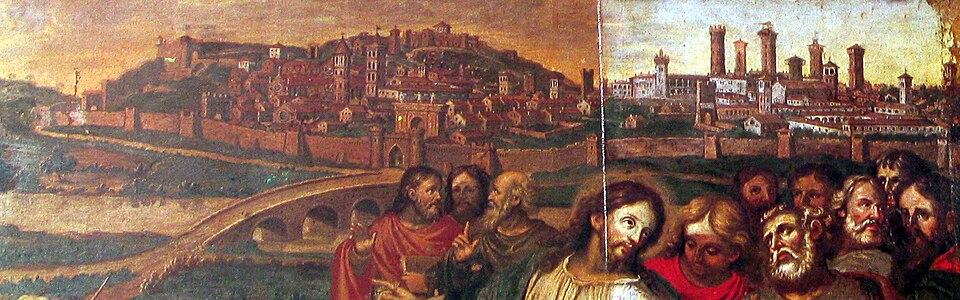
After these events the municipality reached its peak: in the 12th century the city was endowed with a considerable wall, noble families raised towers as symbol of their economic power – military – the great table of 1937 by painter Ottavio Baussano of Palazzo Mazzetti, depicting the city in the Middle Ages, shows us a town characterized by a “wild” of towers (more than 120 in the 13th century). The economic power developed by the powerful Astigian mercatali families increased thanks also to sodalizi stipulated with the Oltralpe rulers.
The activity developed by the “Lombardi” (because Asti was included in the Longobard territory), spread to oil stain throughout Europe, with the stable settlement of pawn agencies (or “ Home”) first in France and Burgundy, then in Germany and Flanders, and in 1342, to the failure of the great Florentine banks, the same papal curia Avignonese, he entrusted himself to the Malabayla house, raising them to the rank of pontifical bankers. The city of Asti in the thirteenth century it was thus to the eighth place among the northern cities alongside Bergamo and Parma, not by chance the chronicler Benvenuto da Imola, referring to the Astigiani, considers them "the richest of all Italians", even if he added "because they are the greatest wearers". It had now more than 40,000 inhabitants and could have increased its expansion and influence in Piemonte, but this did not happen for the almost permanent state of guerrilla warfare that characterized the city because of the deep divisions between the Guelph and Ghibelline factions of the Abstensi families. The guelphs headed by the Solaris, with Malabaila, Garretti, Troya, Falletti, Ricci, Damiani, backed by Filippo di Acaja and the Ghibelline headed by the Guttuari, Turco, Isnardi (who formed the Consortium of De Castello), with the Alfieri, Scarampi, Chain, Buneo, Cacherano, helped by the Marques of Monferrato, they battled each other for almost a century, with alternating events that saw one or the other faction in turn exiled or defeated.
This state of feuds, killings and reprisals towards one or another faction, greatly weakened the Commune; it was lacking that cohesion and communion of intent which had allowed the city its political – economic expansion. In a short time the government of the city passed to the Visconti and on 14 August 1342, the citizens exasperated by the continuous struggles, were placed under the government of Luchino Visconti.
It was the end of the period of free commune. Some years later, the city was included in the wedding dowry of Valentina Visconti in marriage to Louis de Valois Duke of Orléans. From this marriage five children were born, of which two became king of France.
Dominion Orleanese
Under the Orléans, the city had a new period of reflowering and economic recovery. Luigi di Valois left the relatively free astronomers to administer the city. He amplified and...Explore this chapter
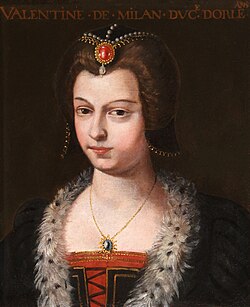
Under the Orléans, the city had a new period of reflowering and economic recovery. Luigi di Valois left the relatively free astronomers to administer the city. He expanded and modified the ancient “bealera”, a channel to deviate waters from the Borbore river to the south of Asti, rich in textile manufactures. The son Charles of Orléans (1394–1465), ruled the city Philip Maria Visconti and in 1415 he was taken prisoner at the Battle of Agincourt, remaining in England until 1440. While Carlo d'Orléans was a prisoner, Philip Maria died without children and his next relatives also demanded Asti: the Visconti, the Valois (maternal family), the Sforza and the enemy of all time, Marquis Giovanni del Monferrato.
Asti then lived a period of about twenty years between continuous assaults and defensive attempts. Reacquired liberty, Charles of Orléans appointed regent Rinaldo of Dresden who was always engaged in strong fights. At the death of Charles, Asti passed directly to the court of France, with King Louis XI, friend of the Sforzas, under whose power he rereaded the city. On 9 September 1495, Charles VIII, the son of Louis XI, entered Asti, to Ludovico's ossequi il Moro, in an attempt to extend his domains but some Italian states began to worry. He failed to achieve his purpose, he died at age 36 and with him the branch of the Valois. Louis XII, Duke and son of Charles d'Orléans, who was determined where Charles VIII was not: he held an alliance with Venice and the pope, he sought war with Moro, who feared now to lose the Duchy for his descendants between Louis XII and Valentina Visconti. Then they formed an Anti-French League, which also joined Ferdinand the Catholic and Emperor Maximilian I. In the summer of 1499, French troops gathered around Asti. The Moro, already committed against Venice, sent an army in search of the arrival of Emperor Maximilian, but defeated, his possessions passed under French rule.
After the battle of Ravenna, the city passed under the Palaeologist and then under the Sforza, but in 1515 it was defeated by the troops of King Francis I and returned to France.
The Savoy
During the war between Francis I and Charles V, Asti often changed his master, but in 1531 Charles V gave it to his brother-in-law and cousin Beatrice of Portugal (1504 - 1538 ), wife of...Explore this chapter
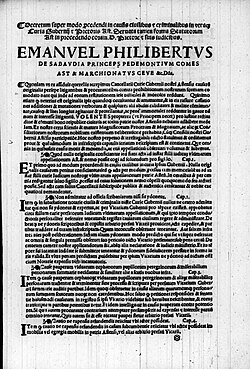
During the war between Francis I and Charles V, Asti often changed his master, but in 1531 Charles V gave it to his brother-in-law and cousin Beatrice of Portugal (1504-1538), wife of Duke Charles III of Savoy.
The son Emanuele Filiberto succeeded him, who granted the city the old privileges including the race of Palio, which was regulated on the occasion, and the San Secondo fairs. In the first half of the seventeenth century, war raged between the French and the Spanish; Carlo Emanuele I of Savoy, son of Emanuele Filiberto, opposed the Spanish Emperor and started the war in Monferrato. Five times the clashes were favorable to the Duke of Savoy, culminating in the battle of 1615 east of the city of Asti, in the area of the fort. The victory led to the convention known as "Second Treatise of Asti", stipulated in the Certosa of Asti on 21 June 1615.
In the following fifty years, Asti was dilaunched by wars: in 1639 he passed into the hands of Prince Tomaso and the Spanish, in 1643 he returned to the Savoy. In 1703 she was occupied by the Duke of Vendome. In 1705 he returned to the Savoy, to be reconquered by the French, again driven by Vittorio Amedeo III. In 1723 the ghetto was established where the dynamic Astigian Jewish community was gathered, already present numerous in the city since the 15th century.
The peace of Aquisgrana (1748) brought a period of stability, but when the French Revolution broke out, Vittorio Amedeo III was forced to draw alliances with the enemies of the revolution, Austria, Prussia and England. In the 1792 the French revolutionary army invaded Savoy. The Prince defended himself for five years, with great expense of economic and human resources for the populations of Piemonte even though not all of them stood with their kings, 1791 there was a student revolt in Turin and 1794 a Jacobin conspiracy. In the end, abandoned by Austria, he signed Cherasco's armistice (followed by Paris Peace in 1796), with which he sold to France, Nice and Savoy.
On the death of his father Vittorio Amedeo III, on 16 October 1796, he succeeded him to the throne Carlo Emanuele IV of Sardinia. It was an extremely difficult time: the crates of the state were empty, the army was weakened and disorganized, the king asked and obtained from Pope Pius VI that the clergy contributed to the expenses of war, but this was not enough, several religious congregations were suppressed and confiscated. Carlo Emanuele suffered a series of serious defeats from France, until 6 December 1798 he abdicated on the remaining territories of the Italian peninsula and kept sovereignty solely on Sardinia. The definitive annexation of the Piemonte France took place on 21 September 1802, prepared by the provisional government after Marengo. Carlo Emanuele IV abdicated in favor of his brother Vittorio Emanuele I; he moved from Rome to Sardinia under English protection.
Republic of Estonia
On the night between 27 and 28 July 1797, the Astigians, tired of the Savoy and exhausted by military operations and economic crisis, rose against the government and...Explore this chapter
On the night between 27 and 28 July 1797 the Astigians, tired of the Savoy and stremated by military operations and economic crisis, rose against the government and proclaimed the constitution of Republic of Estonia. On 24 July 1797 a new administration was established led by Count Carlo Giuseppe Gabuti and composed of lawyers Secondo Arò, Gioachino Testa, Michele Peracchio, Felice Berruti.
The military commander of the city, Francesco Signoris of Buronzo, in order to avoid shedding blood had delivered his weapons to the riots, as the Commander of the Castle, Major Ardizzone had surrendered.
The banner was raised with civic, white and red colours, and the same colors were worn; Monsignor Pietro Giuseppe Arborio Gattinara participated in a thank-you function in San Secondo. The Republic, however, lasted very short as it was immediately defeated after only three days.
According to the Crose, 17 revolutionary leaders were arrested, tried and sentenced to death. The Mazzetti Palace Frinco, containing the art gallery and the civic museum, preserves a section dedicated to the Astese Republic.
Neapolitan period
On June 22, 1800 Napoleon entered Turin; Piazza “Carlina” was baptized "Place de la Liberté" and the guillotine was installed.Explore this chapter
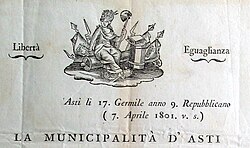
On June 22, 1800 Napoleon entered Turin; Piazza “Carlina” was baptized "Place de la Liberté" and the guillotine was installed.
The Piemonte was a state strewn by the lost war. Between August and September all the astigiano was subjected to hard contributions, with wine, hay, butter, horses, mules, of which they needed the fortresses of Alessandria And Tortona. Riots and opposition broke out in almost all countries; the most serious events occurred at Castell'Alfero, where peasant resistance was crushed with killings and imprisonment. Throughout the region, soldiers indulged in acts of vandalism, looting and violence. These facts significantly developed brigandage phenomena in the entire region.
During the Napoleonic period, Asti became the capital of the Tanaro Department. Even the pal bears the symbols of the French Revolution: on the sendallo were painted the frigio cap and the image of the "woman of freedom" bare breast.
Return of the Savoy
In 1814, after Napoleon's defeat, the European powers re-seated the Savoy. It was years of political and economic recession, due to the collapse of export...Explore this chapter
In 1814, after Napoleon's defeat, the European powers re-seated the Savoy. It was years of political and economic recession, due to the collapse of silk export; this increased the poverty of the people and the phenomena of staggering.
In May 1817, an epidemic of petecular typhus and smallpox molcided the city. In the first decades of the nineteenth century, Asti slowly began to transform himself: while the ancient wall circle disappeared, he started to a deep urban arrangement of which remains as a tangible sign the new reorganization of Piazza Alfieri.
The reforms of Carlo Alberto stimulated the rebirth of the city, with the foundation of cultural institutions, such as the Alfieri Theatre, and economics, like the Cassa di Risparmio di Asti.
The abolition of the ghetto favoured the rise of the dynamic local Jewish community, which had as a prominent character Isacco Artom, secretary of Camillo Benso Count of Cavour.
The development of industrialization had as a counterpart, since the second half of the nineteenth century, the crisis of the ancient agricultural economy and the consequent emergence of an emigration movement.
With the passage to the 20th century Asti was in 1935 the provincial capital, which had lost in 1853 in favor of Alessandria.
Second World War
The arrival of the second world war, despite the vastness of the Astigiano agricultural territory, brought scarcity of products resulting in an increase in prices. Besides, after...Explore this chapter
The arrival of the second world war, despite the vastness of the Astigiano agricultural territory, brought scarcity of products resulting in an increase in prices. In addition, after the armistice of 8 September, the city suffered from 17 July 1944, 22 aerial raids and several rallies in the Astian countryside. In October 1944, in order to avoid further ambushs, the peasants were given orders to reap all the fields of stoppie.
On April 24, 1945, German troops folded over Milan. On April 30, the first U.S. troops entered Asti.
After the war
From 1939 to 1951 the worrying trend of the peasant population in the province emerges to abandon the countryside for the city. The FIAT, with its development, brought...Explore this chapter
From 1939 to 1951 the worrying trend of the peasant population in the province emerges to abandon the countryside for the city. The FIAT, with its development, consequently led to a flourishing of metalworking companies also in Asti. In the 1950s, thanks to the powerful call of the Turin industry, a wave of immigration occurred, which invested not only Turin, but also the nearby Asti. They were mainly families from the Triveneto and the meridian regions. At the end of the 1960s, Asti counts 80,000 inhabitants, of which more than 40,000 are employed in the industrial sector.
With the automotive crisis of the late 1970s - 1980s, industrial restructuring processes reduced employment in industry to the tertiary sector. The city has tried to reinvent itself, investing mainly in its ancient wine and gastronomic vocation; in recent decades there has been a counterexodus towards the countries of the province with an increase in quality wine production. In recent years, the city and its territory have become aware of its food and wine potential by developing also the agrituristic sector.
Bibliography
Explore this chapter
- The Platano, magazine for the study of Asti culture and activities collected from 1977 to 2007
- Aldo di Ricaldone, Yearbooks of the Monferrato Vol I and II
- White A., Asti Medieval, Ed CRA 1960
- White A., Asti at the time of revolution. Ed CRA 1960
- Bera G., Asti buildings and palaces in the Middle Ages. Gribaudo Editore Se Di Co 2004 ISBN 88-8058-886-9
- Bobba/Vergano, Ancient ticks of the province of Asti. Bobba ed. 1971
- Bollea L.C. The Astigian cards of the Boatteri-Sotteri collection. Pavia, Typical School. Artigianelli 1911
- Bordone R., From charity to credit. C.R.A. 2005
- Araldica astigiana, Allemandi 2001
- De Canis G.S.Proposed for a reading of the Astigian Corography, C.R.A 1977
- Cipolla Carlo, Notes for the history of Asti, 1891
- Crosa Giuseppe, Asti in the eighteenth century, Gribaudo Editore. 1993 Cavallermaggiore
- Iron, Arleri, Campassi, Antique Cronists Auctionists, ed. dell'Orso 1990 ISBN 88-7649-061-2
- Fixer, The miniatures of the Codex Astensis , C.R.A. 2002
- Gabiani Niccola, Asti in his main historical memories vol 1, 2,3. Tip.Vinassa 1927-1934
- The towers of the fort houses and medieval noble palaces in Asti,A.Forni ed. 1978
- Gabotto F., The oldest cards in the chapter archive of Asti (Corpus Chart. Italy and XIX). Pinerolo Chiantore-Mascarelli 1904
- Gorrini G., The Municipality of Asti and its historiography. Florence Ademollo & c. 1884
- Fat S., History of the City of Asti vol I,II. Atesa ed. 1987
- Big C.L., The Republic of Asti in the 1797, Asti at C.Cocito 1851.
- Incisa S.G., Asti in his churches and inscriptions C. R.A. 1974
- Damn V., Asti ancient and noble houses. The Portichetto 1982
- Peyrot A., Asti and Astigiano, typ.Turinese Ed. 1983
- Ruggiero M. Briganti del Piemonte Napoleonico,Le Bouquiniste 1968
- Scapino M, The cathedral of Asti and its ancient village, C.R.A.
- Saddle Q., Codex Astensis, Rome typ. of the Lincei 1887
- Taricco S., Small history of Astigian art. Quaderno del Platano Ed. Il Platano 1994
- Head D., History of Monferrato, second expanded edition, Tip.S.Giuseppe 1951
- Vergano L., History of Asti Vol. 1,2,3 Tip.S.J. Asti, 1953, 1957
- Historical Vicendes of Refrancore, ed. The author 1996
- Statutes
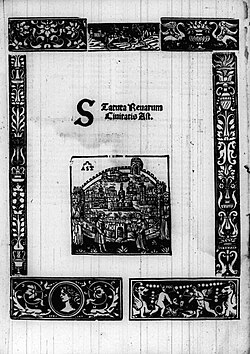
- (THE) Statue revarum civitatis Astensis, Asti, Francesco Garrone, 1534.
- (THE) Emanuele Filiberto of Savoy, Decretum super way proceed in causis civilbus et criminalbus in utraque curia gubernii et pretoris Astensis, 1544.
Continue your journey