Atlas of Monferrato
San Marzano Oliveto: sights, history and trails
Asti
- Elevation
- 301 m above sea level
- Area
- 9.68 km2
- Demonym
- Sanmarzanti
- Patron saint
- Mary Magdalene
A closer look
Discovering San Marzano Oliveto
San Marzano Oliveto (San Marsan in Piedmont) is an Italian municipality of 916 inhabitants[1] from the province of Asti in the historical territory ofAstesana, in Piemonte.
Landscape and area
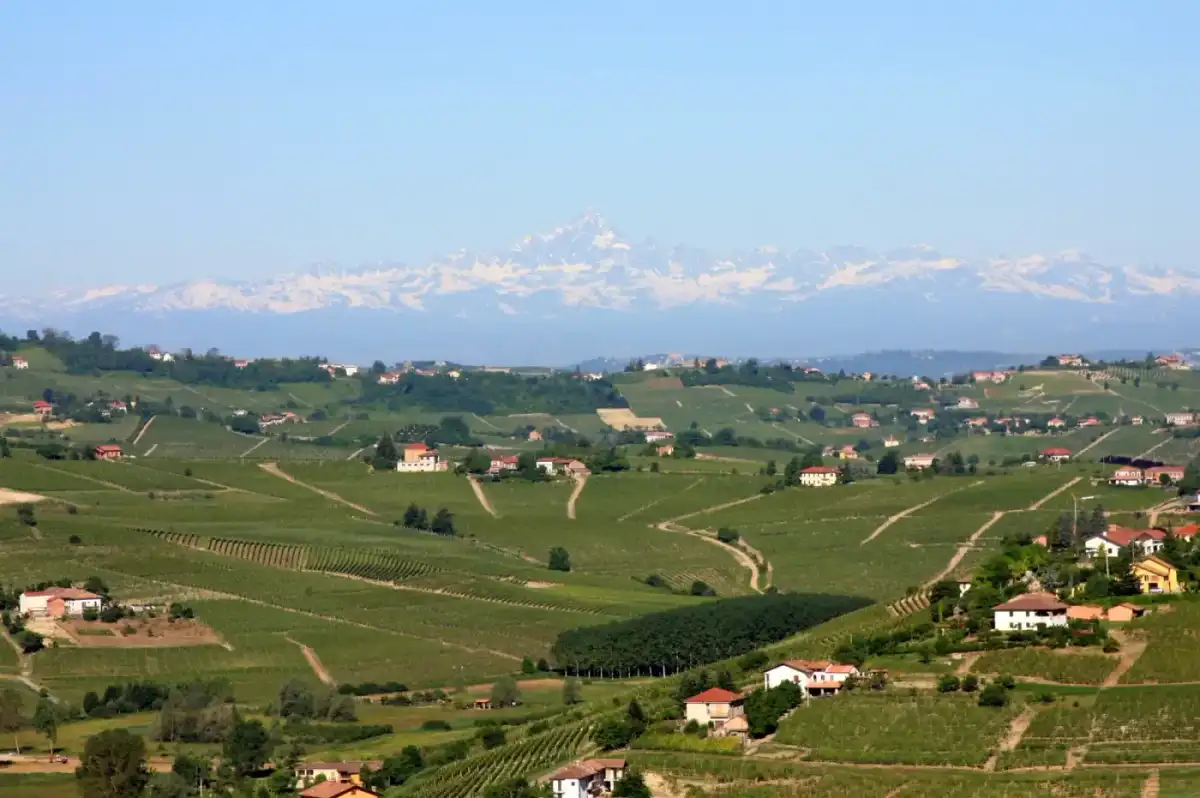
The municipality of San Marzano Oliveto is located in a panoramic position, 300 meters above sea level. It is visible from the provincial road n. 6 (for Asti ).Explore this chapter
The municipality of San Marzano Oliveto is located in a panoramic position, 300 meters above sea level. It is visible from the provincial road n. 6 (for Asti).
The landscape of S. Marzano recalls at times the Tuscan and Umbrian one and for its almost mystical quiet, an irresistible attraction on foreigners, not few of whom chose it as their residence, at least for a part of the year. Among these, the German painter Viktor Mòllerstaedt, whose works, exhibited in several local exhibitions, consisting of scenic projects, are inspired by the fifteenth-century Italian art.
History of San Marzano Oliveto
Origins · The Middle Ages and the Asinars · Modern ageExplore this chapter
Origins
The name of San Marzano was imposed by deference to Saint Martian, perhaps first bishop of Tortona (4th century) or bishop of Ravenna martyred at Tortona.
In 1862 the name "Oliveto" was added, since, according to some, the olive tree flourished in ancient times.
An exceptional ice cream would have destroyed most of the plants. At the comfort of this hypothesis, suffragated by the existence of an ancient peat in the nearby Santo Stefano Belbo, are indicated olive trees that, nowadays, continue to thrive, even if not numerous, in some funds.
The hypothesis of a cultivation of the olive tree practised in the Middle Ages is questioned by what makes the toponym derived from "pendium" (rev.).
In fact, the village rises on a slightly steep hill (at 301 meters above sea level).
The origin of the country is traced back to the ancient Ligurians, but it is with the arrival of the Romans who have the first news and testimonies of Sanmarzanese antiquity.
According to tradition, the four towers of the castle, now disappeared, were Roman construction.
A license plate of the Superintendency to Cultural Heritage refers to this in presenting the work:
The Middle Ages and the Asinars
The story of San Marzano Oliveto as that of Moasca (with which from 1929 until after the war he unified his administration), of Calamandrana, by Rocchetta Tanaro, by Calosso is tied to that of Canelli.
All involved in the fight between Asti And Alessandria and the Marquis of Monferrato.
From the middle of the fourteenth century San Marzano is in hand to Asinari, also lords of Costigliole and Moasca and other countries.
In 1280 Bonifacio Asinari, rich astigiano merchant He left his wealth to his sons; two of them, Bonifacio and Thomas became a co-owner of the fief of San Marzano.
In memory of the presence of this family, in the territory of San Marzano there is a place that has preserved the name of Asinari valley.
Modern age
In 1771, Philip Valentino Asinari was infeuded the first marquis of San Marzano and Caraglio; his son Filippo Antonio Maria (1767-1828), he was a state councilman and sent by Napoleon Bonaparte as ambassador to Berlin. It became in 1808 count of the Empire and in 1813 senator and regent of the Empire Piemonte.[4]
Resistance to San Marzano began before in other countries of the area.
On 24 and 25 December 1943, first from Nizza Monferrato and then Asti, there were harsh roundups by soldiers of the Republic of Salò, with searches of houses.
Not finding partisans, four hostages were taken and brought to the prisons of Asti. The black brigades, the soldiers of the "Muti", of the Germans repeated with anger.
Symbols
The ancient coat of arms of the municipality was granted by decree of the President of the Republic of 12 May 1953[5] and she's blasona: of blue, to the silver castle, one torricellato, put on the guelfa, open and windowed of the field, surmounted by an ancient golden crown[6], with the motto Virtus abidit. The symbol of the tower is taken from the coat of arms of the Asinari family, lords of San Marzano between the 13th and 17th centuries.
The gonfalone is a blue drape.[5]
What to see in San Marzano Oliveto
Civil architecture · Castle · Religious architectureExplore this chapter
Civil architecture
Castle
Cited by Alfieri as San Marzano di Acquosana, the first documents regarding the castle date back to the birth of the Contado di Acquosana (the ancient territory of Acqui Terme).
The castle, perhaps of Roman origin[7] by the Asinari He assumed the characteristics of a real defensive bastion by building on the four sides square corner towers, one of which is still equipped with caditories.
After the occupation of the Spanish in 1655, the Asinari took possession of it and transformed the fortress into a country residence.
Religious architecture
Parish Church of San Marziano
Worthy of note is the church dedicated to St Martian, in classical Renaissance style, to a nave with presbytery and choir in neoclassical style, which rises on the Piazza del Castello, founded in the thirteenth century, was enlarged between 1758 to 1763 and restored in 1843.
The interior paintings date back mainly to the 19th century and are attributed to Lorenzo Ivaldi's school, active in Piemonte at that time.
Church of the Baptists
Built under the stables of the castle, the former church- oratory of Saints Peter and Paul and owned by the Confraternity of the same name (now decoded) was built at the beginning of the eighteenth century and enlarged and restored after the middle of the same century adding the sacristy.
After the conservative and reconstructive restorations of 2003 with European funding, on indications by architect Maurizio Testa, now is the headquarters of the Multipurpose Cultural Centre, inaugurated on 22 October 2005.
Country churches
San Marzano presents four country churches of artistic interest:
- St. Anthony,
- San Rocco, in the Chierina region,
- Santissima Annunziata, in the Corte region,
- Santa Libera named after a previous 17th century construction on Monte Oliveto which now no longer exists, the new church is located in Marziano region
Methodist Temple
The Methodist Community of San Marzano Oliveto was born thanks to the testimony of some members of Metodism from America, and during the period in which throughout Italy the word of God was spread by missionaries, found fertile ground in San Marzano to grow and spread the Gospel, the first conversions since 1886. The nascent community grew in number and spirit, and before the great emigration from 1910-1920 members exceeded 100. Testimonials told that the faithful during the Sunday Cult were forced to stand and in some cases, even outside, in front of the door because there was no longer a seat. Several cultural activities and initiatives led to the growth of prestige and community and also of the country; in particular a library was founded; evening classes of physiology and hygiene were held, admirable was the institution of the elementary school which prepared even the pupils of the country; it must be remembered that public schools ended at the 3rd grade, while in the Metodist Temple students were prepared until 5th and 6th grade; then they accessed the state. The building is located at the beginning of the village where the hill slopes with harmony, in the most illuminated area, to the south. Inside there is a large hall of worship where six cast iron columns are truncated; in front, on the left wall is frescoed parchment the Our Father, while on the right the Grand Proceeding, Matthew 22 v. 37, and in the center We preach Christ, Crucified Christ. On the upper floors there are the rooms of the ancient classrooms, and the pastoral apartment. Outside stands a magnificent, panoramic crenellated tower, where inside there is a bell, perhaps the only one in Italy in a Methodist Temple. The cellars are also very large, they have been restored in recent years, there is a large hall and a baptismal pool, and also a spring water well in its centre. On a side wall of the worship hall there is a carved marble plaque commemorating the inauguration which bears the following words: The Methodist Episcopal Church, with the generous assistance of the brothers of America and San Marzano, under the auspices of the aged president Dr. William Burt, and the direction of the pastors G. Pons, P. Gay and P. Innocenti, erected this Temple, and dedicated it to the Glory of God on September 20, 1897. Even today there is a small community that gathers here and carries forward its testimony of faith and example, in the challenges of life and in future times.
Society
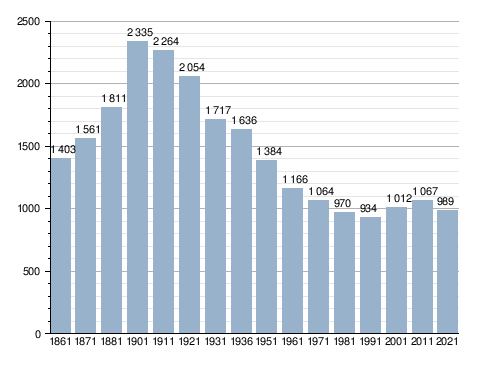
Demographic evolutionExplore this chapter
Demographic evolution
Inhabitants registered[8]
Economy
Industry · Food and wineExplore this chapter

Agriculture is the main and traditional activity of S. Marzano.
The cultivable surface is 75% of the total area. Agriculture workers are about 300. The mild climate and geomorphological characteristics favour fruit growing (to which 220 hectares are destined) and in particular meliculture (with about 200 employees) that, after a period of crisis due to the competition of the north-eastern regions of Italy, has recovered well.
The annual production of apples is about 40 000 quintals thanks to the intake of some producers. For 80% of Golden Delicious quality, the remaining 20% of Stark and Cuper types.
A group of producers from Sanmarzanesi established, a few years ago, a Consortium for apple promotion with the brand "Divine".
There is also a good wine production (especially Barbera).
For a few years, on the initiative before the Methodist Church, then of the Municipality, it hosts fields of work: many young people from other regions of Italy and Europe spend a summer period at the service of the community, doing useful jobs.
Industry
Also linked to agriculture is the industrial reality, recently built on the slopes of the hill, along the guidelines for Canelli And Nizza Monferrato. These are small and medium-sized mechanical and wine-mechanical companies.
Food and wine
Enogastronomy is a recent source of income for some families who support the agricultural activity of traditional land cultivation.
Administration
Other administrative informationExplore this chapter
Below is a table relating to the administrations that have succeeded one another in this municipality.
| Period | First citizen | Match | Load | Notes | |
|---|---|---|---|---|---|
| 8 July 1985 | May 19, 1990 | Giovanni Scagliola | - | Mayor | [9] |
| May 19, 1990 | April 24, 1995 | Giovanni Scagliola | - | Mayor | [9] |
| April 24, 1995 | June 14, 1999 | Ezio Terzano | center | Mayor | [9] |
| June 14, 1999 | June 14, 2004 | Ezio Terzano | civic list | Mayor | [9] |
| June 14, 2004 | June 8, 2009 | Giovanni Scagliola | civic list | Mayor | [9] |
| June 8, 2009 | May 26, 2014 | Giovanni Scagliola | civic list | Mayor | [9] |
| May 26, 2014 | May 26, 2019 | Giovanni Gabri | Civic list Unione sanmarzanese | Mayor | [9] |
| May 26, 2019 | June 9, 2024 | Giovanni Scagliola | civic list Insieme per San Marzano Oliveto | Mayor | [9] |
| June 9, 2024 | in office | Pierangelo Bordino | Lista civica San Marzano Oliveto: Giovani per il territorio | Mayor | [9] |
Other administrative information
The municipality of San Marzano Oliveto has deliberated the withdrawal from the hilly community Val Tiglione and its surroundings since 1 January 2022. He joined the community on 1 January 2014; he was part of the community together with the municipalities of Agliano Terme, Azzano d'Asti, Castelnuovo Calcea, Mombercelli, Montaldo Scarampi, Rocca d'Arazzo, Vinchio.
Notes
Explore this chapter
- ^ to b Monthly demographic balance for the year 2026 (provisional data), up demo.istat.it, ISTAT.
- ^ Seismic classification (XLS), up risks.protezionecivile.gov.it.
- ^ Table of degrees/day of Italian Municipalities grouped by Region and Province (PDF), in Law 26 August 1993, n. 412, annex A, National Agency for New Technologies, Energy and Sustainable Economic Development, 1 March 2011, p. 151. URL consulted on 25 April 2012 (archived fromoriginal url on 1 January 2017).
- ^ V. Damn it. Asti ancient and noble houses, Il Portichetto 1982, p. 38.
- ^ to b Bozzetti di coat of arms and gonfalone del Comune di San Marzano Oliveto already San Marzano Moasca, up ACS, Collection of drawings from the coat of arms of municipalities and cities. Retrieved 28 September 2024.
- ^ Coat of arms and banner, up Municipality of San Marzano Oliveto. Retrieved 29 July 2025.
- ^ Common website of San Marzano http://www.comune.sanmarzanooliveto.at.it/
- ^ Data taken from:
- Resident population of the municipalities. Censuses from 1861 to 1991 (PDF), up ebiblio.istat.it, ISTAT.
- Resident population - Time series, up exploredati.istat.it.
Please note: 2021 data refers to permanent census data as of December 31 of that year.
- ^ to b c d And f g h the http://amministratori.interno.it/
Where to stay · San Marzano Oliveto
Find stays on Booking.comThe wine landscape
This village in wine country
Follow the link between the country, the vineyards and the neighboring territories.
The area, step by step